US military deployment Iran 2025: A Reckless Buildup?
Key Takeaways
- •Peter Zeihan breaks down what may be one of the most consequential — and potentially reckless — U.S.
- •military buildups in recent memory.
- •Around 8,000 troops, including Marines aboard the USS Tripoli and USS Boxer and elements of the 82nd Airborne, are deploying to the Middle East by the second week of April, though the ultimate deployment decision rests with the President.
The Buildup Nobody Is Calling What It Is
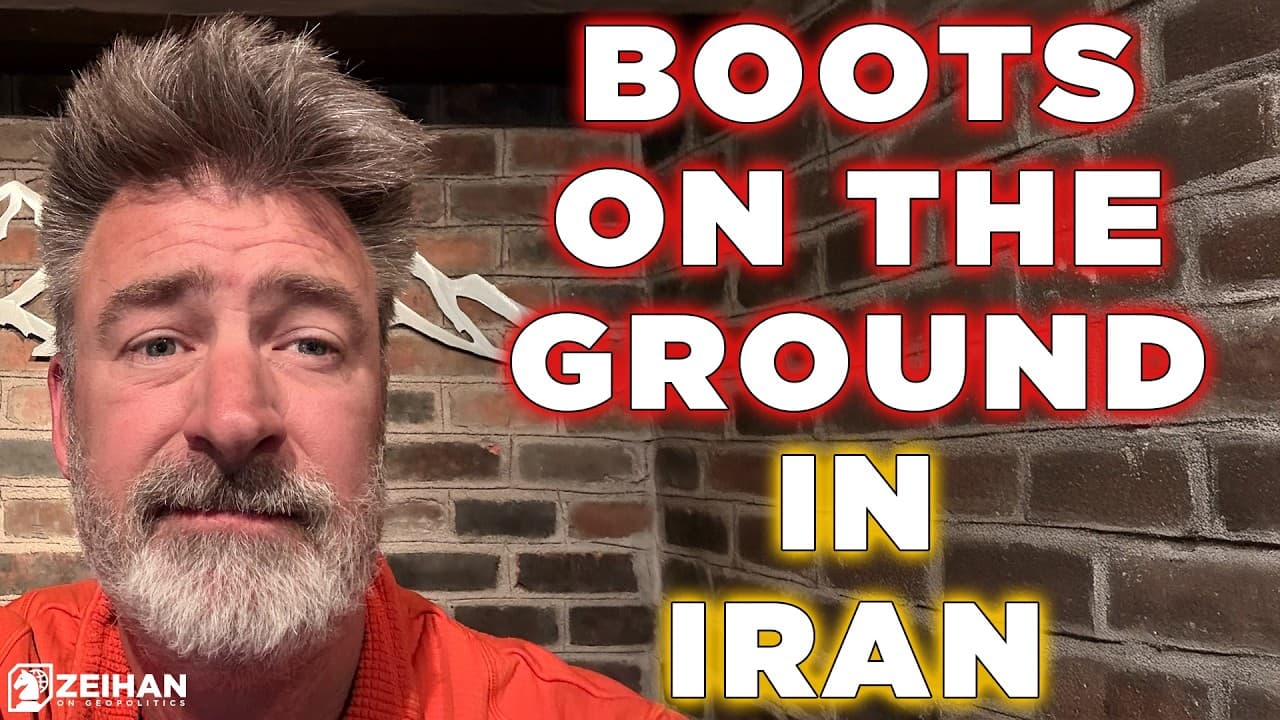
Two amphibious assault carriers are moving. The USS Tripoli, carrying F-35s and a Marine contingent, is already en route. The USS Boxer is following. And the 82nd Airborne — the U.S. military's rapid reaction force — has received deployment orders. In his video U.S. Ground Troops Coming to Iran || Peter Zeihan, Peter Zeihan puts the full package at roughly 8,000 troops in place by the second week of April (with the ultimate deployment decision resting solely with the President). That is not a show of force. That is a force.
The important caveat here is what these units are built for. The 82nd Airborne and Marine expeditionary units are lightly armed, fast-moving, and designed for rapid direct action — not for holding territory against a sustained conventional threat. They are the scalpel, not the hammer. Whether the plan they've been handed calls for a scalpel or demands a hammer is exactly where this gets uncomfortable. Related: US intelligence failure Iran policy: Ex-CIA on Misconceptions
The Kharg Island Gambit
Kharg Island handles the overwhelming majority of Iran's oil exports. Seize it, the logic goes, and you've cut off Tehran's primary revenue stream — instant leverage for a new deal over the Strait of Hormuz. On paper, it sounds like the kind of bold move that makes for a clean press conference.
In practice, Zeihan tears this apart. The island sits close enough to the Iranian mainland that it becomes an immediate target the moment U.S. forces land. Defending it without robust naval support nearby is a logistical nightmare. And here's the part the strategy seems to miss entirely: cutting off Iran's oil income doesn't make Tehran more cooperative. It removes the last thing they have to lose. A government with nothing left to protect financially is not one that sits down to negotiate — it's one that escalates hard, fast, and without a clear ceiling. Related: Yakutsk Permafrost Construction Challenges & Solutions
This is the kind of strategic miscalculation that looks obvious in hindsight and baffling in the room where it was approved. Related: North Africa economic growth potential: The Next Big Market
What Happens When You Take Away the Money
Iran's oil revenue isn't just a government budget line. It's the thread holding together a fragile internal political structure. An occupation of Kharg Island doesn't just pressure the regime — it removes their ability to manage the population, pay loyalists, and sustain the economic arrangements that keep the military and security apparatus functional. The resulting instability doesn't necessarily produce a more pliable Iran. It produces an unpredictable one.
Our Analysis: What Zeihan is describing isn't just a tactical debate — it's a window into a deeper structural problem with how the current administration is approaching high-stakes foreign policy. When you strip out the institutional expertise that typically stress-tests these plans, you don't get bolder strategy. You get strategy that hasn't been properly interrogated.
The Kharg Island logic has a seductive internal consistency: control the revenue, control the behavior. But that framing treats Iran like a rational economic actor operating in a stable environment — which it isn't. The regime's calculus is shot through with factional pressures, ideological commitments, and survival imperatives that don't map neatly onto a sanctions-style pressure model. Seizing Kharg doesn't hand Washington a lever. It hands Tehran a narrative — one about foreign occupation of sovereign territory — that could unify a population that is otherwise deeply frustrated with its own government.
Zeihan's preferred alternative, controlling the Strait of Hormuz, is worth sitting with. The Strait is the jugular of global oil transit. Roughly 20 percent of the world's petroleum passes through it. A credible U.S. posture at the Strait doesn't require holding Iranian territory — it projects power without the exposure of a land occupation, and it gives Washington something to negotiate with rather than something to defend under fire.
There's also the question of what 8,000 lightly armed troops are actually capable of doing once they're there. Rapid reaction forces are designed to create facts on the ground quickly — but those facts still have to be sustained. The 82nd Airborne and Marine expeditionary units are not designed for the long hold. If the operation runs longer or hotter than planned, the U.S. either escalates or withdraws, and neither of those outcomes is cost-free. The window between initial success and strategic overextension can close faster than planners expect, especially when the adversary has short interior supply lines and a strong motivation to bleed the occupier.
The broader concern here is institutional. Military operations of this scale typically pass through layers of review — combatant commanders, civilian defense leadership, intelligence assessments, interagency coordination. When those layers are thinned out or bypassed, the plan that reaches execution may look nothing like the plan that should have been approved. That's not a partisan observation. It's an operational one. And it's the kind of thing that tends to matter more than anyone admits until after something goes wrong.
Frequently Asked Questions
What is the US military deployment to Iran in 2025 actually targeting?
Why is Kharg Island significant to a potential US military operation against Iran?
Is the 82nd Airborne equipped for a sustained ground operation in Iran?
Why does Zeihan think controlling the Strait of Hormuz is smarter than taking Kharg Island?
Could a US occupation of Kharg Island actually destabilize Iran internally?
Based on viewer questions and search trends. These answers reflect our editorial analysis. We may be wrong.
Source: Based on a video by Peter Zeihan — Watch original video
This article was created by NoTime2Watch's editorial team using AI-assisted research. All content includes substantial original analysis and is reviewed for accuracy before publication.