North Africa economic growth potential: The Next Big Market
Key Takeaways
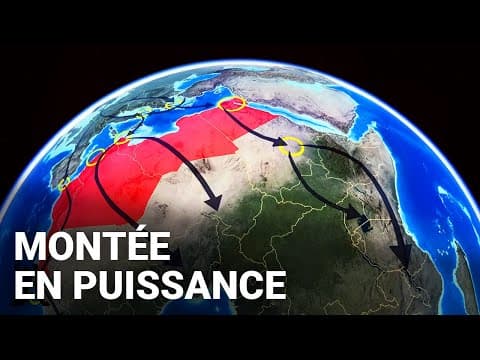
- •North Africa is sitting on one of the most underleveraged economic positions on the planet, and Caspian Report's video 'L'ascension économique de l'Afrique du Nord' makes a compelling case for why that might be about to change.
- •Morocco, Algeria, Tunisia, Libya, and Egypt collectively control strategic access to the Mediterranean Sea and Atlantic Ocean, border Europe's southern flank, and are home to a rapidly expanding youth population that could become a formidable workforce or a source of mass unemployment depending on what governments do next.
- •The video maps out the infrastructure investments, commodity dependencies, and geopolitical fault lines that will determine which outcome wins.
The Crossroads Nobody Is Talking About
Sit a map down in front of anyone and ask them where the next major emerging market corridor is, and they'll probably say Southeast Asia or Sub-Saharan Africa. North Africa barely gets a mention. That's strange, because the region sits at the junction of Europe, the Middle East, and Sub-Saharan Africa, with Mediterranean and Atlantic coastlines that make it a natural trade and logistics hub. In L'ascension économique de l'Afrique du Nord, Caspian Report argues that this geographic position is not incidental — it is the foundational argument for why the region's economic trajectory matters well beyond its own borders. The rest of the world just hasn't priced it in yet.
A Young Population That Could Go Either Way
North Africa has a youth bulge. That phrase gets used so often it stops meaning anything, but the underlying math is blunt: a large share of the population is entering working age at the same time, and the economies absorbing them are not growing fast enough to keep pace. Caspian Report frames this as a genuine fork in the road. Handle it well — expand education, build vocational training pipelines, create real employment — and the region gets a productivity surge that funds the next generation of development. Handle it badly, and you get mass youth unemployment, social instability, and brain drain, as educated graduates leave for Europe rather than stay and build. It is the same demographic story playing out in slow motion across the developing world, except here the pressure is amplified by how close these countries sit to a continent that has historically absorbed exactly the kind of migration that unemployment tends to produce.
Morocco Bets on Ports and Solar Panels
While Algeria and Libya lean on hydrocarbon exports and hope global prices stay friendly, Morocco has been quietly building a different kind of economy. The Caspian Report video points to heavy investment in port expansion and renewable energy as the backbone of Morocco's industrial ambition. The country has developed automotive and aerospace manufacturing sectors that are genuinely competitive on a global scale, not just regional vanity projects. Renewable energy infrastructure, meanwhile, positions Morocco as a potential electricity exporter to Europe — which is a very different revenue model than pumping oil until the well runs dry. Energy infrastructure vulnerability has become a recurring theme in global security discussions, as covered in analysis of Our Analysis: Caspian Report frames North Africa's trajectory with measured optimism, and that framing holds up. The geographic arbitrage argument is real. Proximity to Europe and sub-Saharan trade routes gives this region leverage that Southeast Asia had to earn over decades. What the video underweights is the Algeria problem. An unreformed hydrocarbon economy with a restless youth population is not just a domestic risk, it sets the ceiling for regional integration. Morocco and Tunisia cannot pull the bloc forward alone. Watch the Morocco-Atlantic coast corridor. If that infrastructure build-out lands, it rewrites the manufacturing conversation entirely. There is also a timing dimension the video touches on but does not fully develop. Europe's green transition is accelerating demand for both clean electricity and nearshored manufacturing — two things North Africa is uniquely positioned to supply. The window to capture that demand is not indefinitely open. If Morocco and Tunisia cannot scale their industrial bases in the next decade, the opportunity shifts to whoever moves faster, whether that is Eastern Europe, Turkey, or eventually Sub-Saharan corridors further south. Proximity to Europe is an advantage, but proximity alone does not close deals. The political economy question is the one that keeps getting deferred. Infrastructure investment is visible and measurable. Institutional reform — the kind that actually lets private capital flow freely, protects contracts, and reduces the friction of doing business — is harder to photograph and slower to show results. The countries in this region that figure out the second piece will pull dramatically ahead of the ones that only manage the first. That divergence, more than any single infrastructure project, is probably the real story of the next twenty years in North Africa. Based on viewer questions and search trends. These answers reflect our editorial analysis. We may be wrong. Source: Based on a video by Caspian Report — Watch original video This article was created by NoTime2Watch's editorial team using AI-assisted research. All content includes substantial original analysis and is reviewed for accuracy before publication.Frequently Asked Questions
What is North Africa's economic growth potential compared to other emerging markets?
Why does North Africa have so much youth unemployment, and can it be fixed?
How is Morocco's economic strategy different from Algeria and Libya?
Can North Africa really become a major trade hub between Europe and Africa?
Is North Africa a good region for foreign direct investment right now?
Related Articles