Gas Prices Iran Blockade Oil Shortage: $6/Gallon Risk
Key Takeaways
- •The Strait of Hormuz closure is already cutting 13 million barrels per day from global supply — blocking Iranian exports pushes that to 15 million, a gap no alternative source can fill.
- •Oil futures are trading around $100 a barrel, but physical spot prices for immediate crude deliveries are already exceeding $150 — markets are pricing in a resolution that isn't happening.
- •US gas prices are projected to surpass $5 and potentially hit $6 a gallon if the blockade holds, with diesel and jet fuel inflation spreading costs across the entire economy.
How a Naval Blockade Becomes a $6 Gas Problem
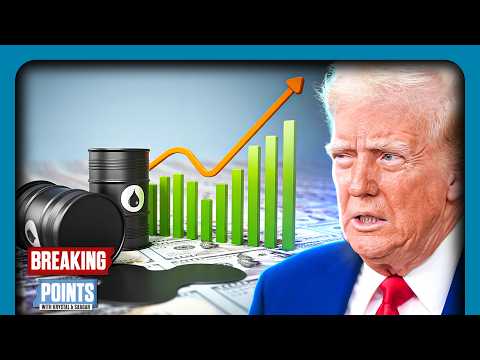
In their recent video $6 GAS COMING After Trump Iran Blockade, Breaking Points breaks down how the Trump administration has announced a full naval blockade of Iran — not sanctions, not diplomatic pressure, but a physical interdiction of any vessel attempting to enter Iranian ports. The stated goal is to choke off Iran's oil exports, which have continued growing in value despite years of sanctions. The first ship that gets intercepted is the moment this stops being a policy announcement and becomes a military incident, and Iran has already signaled it would respond by targeting regional oil production assets.
The mechanism from blockade to pump price is not complicated. Iran exports roughly 2 million barrels per day. Block that, and you're adding to a supply hole that already exists. As explored in Iran's control over Strait of Hormuz oil flows, this chokepoint has always been the pressure point — and right now, it's already closed. The question was never whether this would hurt. It's how much.
The Strait Is Already Shut — This Makes It Worse
The 13-15 Million Barrel Daily Supply Gap
Here's the number that matters: 13 million barrels per day cannot currently exit the Gulf due to the Strait of Hormuz closure. That's not a projection — that's the existing daily deficit. Adding Iranian export disruption brings the total to approximately 15 million barrels per day of missing supply. There is no combination of OPEC spare capacity, US shale output, or strategic reserve releases that covers a hole that size. The only mechanism that balances supply and demand at that scale is price — it rises until enough demand is destroyed to match the reduced supply. That's not a theory. That's how commodity markets work, and it's already showing up in jet fuel shortages and flight cancellations across Europe and Asia. The broader picture of what Hormuz disruption does to the global economy is something we've covered in detail before, but the current numbers are worse than most of those scenarios assumed.
Iran's Floating Oil Reserves Complicate Everything
Iran didn't wait around to see how this played out. A significant volume of Iranian crude is already sitting in floating storage on tankers positioned outside the Gulf of Oman — pre-positioned, primarily for Chinese buyers, and accessible without touching a blockaded port. This means the blockade's immediate impact on Iranian revenue is softer than the White House probably wants to admit. Iran can keep supplying China for a period from that floating inventory, which reduces the short-term economic pressure on Tehran while the US absorbs the political cost of an aggressive naval posture. Whether that inventory buys Iran weeks or months isn't clear from the available data, but it's enough to make the blockade look less decisive than it was announced to be. A policy designed to look like maximum pressure has a built-in delay before it actually bites — and that delay is Iran's negotiating window.
Futures Say $100. The Physical Market Says Otherwise
Spot Prices Already Above $150 a Barrel
This is the part that should be getting more attention. Brent crude futures are trading around $100 a barrel. That sounds bad but manageable. The problem is that futures prices reflect what traders expect oil to cost in the future — and right now, traders are collectively betting this gets resolved quickly. The physical spot market, where actual barrels of crude are bought and sold for immediate delivery, is telling a completely different story. Some physical crude deliveries are already trading above $150 a barrel. That gap between paper prices and real-world prices is a measure of how much optimism is baked into the futures market — and optimism is not a supply source. If the blockade holds and no diplomatic off-ramp materializes, futures prices will have to catch up to physical reality, not the other way around. When that happens, the move is fast and it's large.
What $150 Crude Actually Costs You
Diesel, Jet Fuel, and the Inflation That Follows
Gas at $5 or $6 a gallon is the headline, but diesel is the number that runs the economy. Trucking, freight, agriculture, construction — all of it runs on diesel, and diesel prices are moving in the same direction as crude. When diesel gets expensive, everything that moves gets expensive. Amazon deliveries, grocery restocking, building materials — the cost gets passed through, and it shows up as inflation across categories that have nothing obvious to do with oil. Jet fuel is already causing flight cancellations and route reductions. Airlines don't absorb fuel costs — they pass them to ticket prices or cut the routes that can't support the margin. Central banks that were preparing to cut interest rates are now looking at an inflationary shock they have no good tool to fight, because you can't lower rates into a supply-driven price surge without making everything else worse. The administration came in promising lower prices. The blockade is the policy most likely to deliver the opposite.
Asia Gets Hit Hardest
Refinery Cuts and the Subsidy Trap
Western consumers will feel this at the pump. Asian economies will feel it in ways that are structurally harder to absorb. Countries across Asia are heavily dependent on oil routed through the Strait of Hormuz, and they don't have the domestic production base or the strategic reserve depth that the US has. Jet fuel prices in Asia have already surged sharply, and refineries are cutting back operations. Governments are floating the kind of interventions — work-from-home mandates, driving restrictions — that signal they're running out of market-based options. The deeper problem is subsidies. Many Asian governments have kept consumer energy prices artificially stable through subsidies, which means their populations are accustomed to prices that don't reflect global market reality. If those subsidies get pulled — because the fiscal cost becomes unsustainable — the price shock hits consumers all at once rather than gradually. As the vulnerability of Gulf-adjacent economies shows, the downstream effects of this crisis reach further than the conflict zone itself. That's a political problem as much as an economic one, and it's the kind of thing that destabilizes governments.
Our Analysis: The futures-versus-spot price gap is the most underreported part of this story. Markets are essentially pricing in a diplomatic resolution as the base case, which means if the blockade holds for another few weeks without a deal, the repricing event in futures will be sudden and steep. Traders who are long on a quick resolution are going to get squeezed, and that squeeze will show up at the pump faster than most people expect. The floating storage play by Iran is smart — it buys time and makes the blockade look porous without requiring Iran to do anything provocative.
The inflation angle is also being underplayed. This isn't just a gas price story. Diesel-driven cost increases move through supply chains over weeks and months, which means the CPI impact from a sustained blockade won't peak immediately — it'll keep building. Central banks that already paused rate cuts are now looking at a second inflationary wave with fewer tools than they had the first time around.
Frequently Asked Questions
How will the Iran blockade impact gas prices and could we really see $6 per gallon?
Why are oil futures around $100 if physical crude is already trading above $150 a barrel?
How is Iran still supplying oil to China if there's a naval blockade?
What does an oil shortage from the Strait of Hormuz closure mean for everyday inflation beyond gas prices?
Can OPEC spare capacity or US shale output cover a 15 million barrel per day supply gap?
Based on viewer questions and search trends. These answers reflect our editorial analysis. We may be wrong.
Source: Based on a video by Breaking Points — Watch original video
This article was created by NoTime2Watch's editorial team using AI-assisted research. All content includes substantial original analysis and is reviewed for accuracy before publication.