US military intervention Iran endless war: Hannity Dismisses Vet

Key Takeaways
- •Hannity called a retired Air Force veteran 'not very smart' and an 'idiot' for suggesting US involvement in Iran could become an endless war
- •The stated US objective is nuclear disarmament only — but critics argue the pattern of removing leaders and leaving failed states tells a different story
- •The Syria precedent — arming groups including al-Qaeda to depose Assad — produced a failed state, not a stable outcome
What 'Endless War' Actually Means
The veteran's complaint wasn't abstract. He was pointing to a recognisable cycle: the US gets involved, a government falls, chaos follows, and American forces remain or return indefinitely. Hannity's pushback was that no such war exists with Iran — that the objective is narrow, surgical, and finite. But the veteran's argument was about patterns, not just the current stated mission. The phrase 'endless war' wasn't a slogan. It was a description of what keeps happening. The fact that it provoked that reaction rather than a rebuttal says more than the rebuttal would have.
The Nuclear Disarmament Narrative vs. Regime Change Reality
Hannity's position is that the US wants one thing from Iran: no nuclear weapons. Once that's resolved, the US walks away. That's the clean version. What the veteran and the TYT hosts pointed to is that US interventions rarely end at the stated objective. Iraq wasn't supposed to become a decade-long occupation. Libya wasn't supposed to become a failed state. The nuclear threat framing gives the operation a legible endpoint — but history suggests the endpoint moves once you're inside the conflict. The gap between the mission statement and the eventual outcome has been consistent enough that treating it as a coincidence requires real effort. Related: Sykes-Picot Agreement Middle East borders Explained
How Israel Fits Into the Iran Calculation
The commentary raised a specific claim worth taking seriously: that the nuclear weapons framing may be a presentable version of what Israel actually wants, which is either regime change or a weakened, destabilised Iran that can no longer threaten Israeli regional dominance. That's not a fringe reading — it's a structural argument about whose interests US Iran policy actually serves. As we explored in AIPAC's lobbying influence on US Congress, the degree to which Israeli strategic interests shape American foreign policy decisions is a documented and contested reality, not a conspiracy theory. Whether the US is acting as a genuine partner or a proxy is the uncomfortable question that rarely gets asked on primetime.
Syria as a Case Study
The Obama administration's Syria intervention came up as the clearest recent example of how badly this can go. The US armed groups to counter Assad — groups that included al-Qaeda-affiliated factions — and the result was a failed state with no functioning government, mass displacement, and ongoing violence. The goal was regime change by proxy. The outcome was destruction without any replacement. What makes Syria relevant here isn't just that it failed, but that the failure was predictable from the strategic logic being applied. You don't get a stable outcome by arming whichever faction opposes the current government, because the faction you armed still needs to govern once the fighting stops — and it usually can't. Related: Pam Bondi Attorney General Firing: The Real Story
The Destruction-Without-Rebuilding Pattern
There's a specific critique here that goes beyond 'interventions fail.' The argument is that recent US military strategy has dropped even the pretence of post-conflict reconstruction. Iraq, for all its catastrophic mismanagement, at least had some stated plan for what came after Saddam. The more recent pattern — according to the TYT hosts — is to level the infrastructure, remove the government, and leave. No occupation, no rebuilding, no Marshall Plan logic. Just a failed state where a functional one used to be. Understanding why these regions fracture the way they do requires some history; the Sykes-Picot Agreement's legacy on Middle East borders explains how the entire regional architecture was built on external imposition, which means external disruption tends to collapse everything at once.
Military Expertise vs. Media Commentary
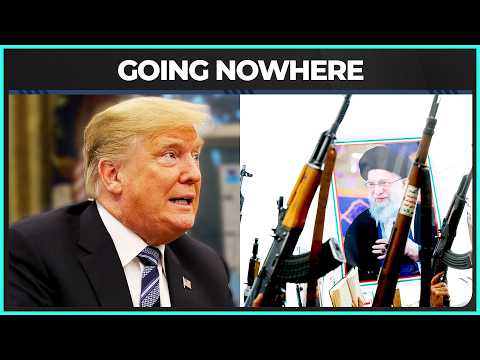
In Hannity BERATES Veteran Over Iran War, The Young Turks (TYT) highlighted an exchange that speaks for itself: the veteran on the call almost certainly knew more about what sustained military engagement looks like from the inside than anyone hosting a cable news segment. That's not a political point — it's a factual one about who has direct experience with the consequences of the policies being discussed. Hannity's response was to call him unintelligent for applying that experience to reach a different conclusion. The irony isn't subtle: the person with direct knowledge of what wars cost gets dismissed by the person with a platform but no comparable experience. What's telling is that the dismissal wasn't based on a counter-argument — it was based on the veteran reaching the wrong conclusion, which apparently disqualified the expertise entirely. Related: AIPAC lobbying influence US Congress: Kiriakou's view
The veteran didn't lose that argument on the merits. He lost it because he used a phrase — 'endless war' — that carries political freight Hannity didn't want attached to a policy he supports. The actual substance of what the veteran said, that US involvement tends to outlast its stated objectives and that removing leaders without a replacement plan constitutes nation-building by destruction, was never addressed. It was just shouted down. That's not a media criticism. That's what happens when the stated rationale for a military action can't survive contact with someone who's watched the last five iterations of it play out.
The Syria comparison is the one that should stick. The US armed factions to remove Assad, those factions included al-Qaeda affiliates, Assad survived anyway, and what remained was a failed state. Nobody went back on television to explain how that happened. The Iran conversation is happening in the same information vacuum — with the same confident predictions about limited, targeted objectives — and there's no structural reason to expect a different result.
Frequently Asked Questions
Is US military intervention in Iran likely to become another endless war?
Is the Iran nuclear deal the real goal of US policy, or is it regime change?
What does the Syria intervention teach us about how a US conflict with Iran might go?
Does Israel's strategic interest in a weakened Iran actually shape US foreign policy decisions?
Why did Hannity react so strongly to a veteran questioning the Iran mission?
Based on viewer questions and search trends. These answers reflect our editorial analysis. We may be wrong.
Source: Based on a video by The Young Turks (TYT) — Watch original video
This article was created by NoTime2Watch's editorial team using AI-assisted research. All content includes substantial original analysis and is reviewed for accuracy before publication.