Yakutsk Permafrost Construction Challenges & Solutions
Key Takeaways
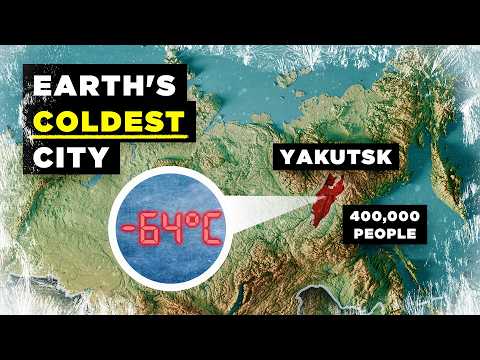
- •Yakutsk, a Siberian city of over 370,000 people, sits entirely on permafrost — and that single geological fact turns every construction project into an engineering and financial nightmare.
- •In his video 'Why 400,000 People Live in Earth's Coldest City', RealLifeLore breaks down how building on frozen ground demands radically different engineering logic, while a planned bridge across the Lena River has watched its price tag climb from $855 million to $1.7 billion with no completion date in sight.
- •Repeated geopolitical shocks — the Soviet collapse, the annexation of Crimea, COVID-19, and Russia's 2022 invasion of Ukraine — have each taken their turn derailing the project.
Why Standard Construction Simply Does Not Work Here
Permafrost sounds like a stable foundation until you put a heated building on top of it. The moment warmth transfers from a structure into the ground, the ice binding the soil together starts to melt, and what was solid becomes something closer to wet sand. In Why 400,000 People Live in Earth's Coldest City, RealLifeLore makes clear that this is not a theoretical risk in Yakutsk — it is an ongoing engineering reality that every builder in the city has to design around from day one. The permafrost beneath Yakutsk can extend hundreds of meters deep, which makes the problem simultaneously massive in scale and invisible to anyone just walking down the street. You cannot simply pour a concrete slab and call it a foundation here, because the slab itself becomes the agent of destruction.
Stilts, Piles, and Pipes in the Open Air
The solution Yakutsk settled on is visually strange to anyone arriving from a temperate climate. Buildings are raised on concrete piles or stilts, creating a deliberate gap between the structure and the ground so that heat cannot conduct downward into the permafrost layer. Utilities — pipes, wires, the infrastructure that in most cities runs underground — are instead routed above the surface for the same reason. Burying a heated pipe in permafrost terrain is essentially burying a slow-motion disaster. What looks like an engineering quirk is actually the only rational response to a ground condition that punishes any attempt to treat it like normal soil. The entire city is, in a sense, floating just above the thing it is built on, which is either an architectural marvel or a permanent source of existential anxiety depending on your disposition.
Climate Change Is Not an Abstract Threat Here
Rising global temperatures are a general concern in most places. In Yakutsk, they are a structural crisis already in progress. As RealLifeLore explains, warming conditions are accelerating permafrost thaw across the region, and buildings that were engineered to stable specifications decades ago are now showing the consequences. Foundations shift. Walls crack. Roads buckle. The engineering solutions that made Yakutsk functional were calibrated to a climate that is measurably changing, which means the city is essentially racing to maintain infrastructure against a ground condition that is becoming less predictable every year. This dynamic plays out across resource-dependent regions globally — a pattern also visible in how Our Analysis: RealLifeLore gets the engineering constraints right and the Gulag history right, but the framing sells Yakutsk short. This isn't really a story about cold. It's a story about what a state will tolerate when the ground underneath produces diamonds. The bridge delay is the sharpest detail in the video. A single crossing has been stalled by sanctions, budget collapses, and two different wars across three decades. That's not bad luck. That's a city Russia finds useful but not quite worth fixing. What the video gestures at but doesn't fully develop is the compounding trap Yakutsk now faces. The resource wealth that justifies the city's existence is extracted from permafrost. The permafrost is thawing. The infrastructure built to survive extreme cold was never designed to survive a warming trend, and the geopolitical instability that repeatedly killed the bridge project also limits the foreign investment and engineering expertise that might help retrofit the city for a different climate reality. These aren't separate problems — they're the same problem wearing different faces across different decades. There's also a population question the video leaves hanging. Yakutsk has held its numbers reasonably well because resource industries pay wages that justify staying. But if permafrost thaw accelerates building instability faster than revenue justifies repairs, the calculus changes. Cities in similarly extreme or resource-dependent situations — think of post-boom towns in Canada's north or coal regions facing energy transition — often lose population faster than planners expect once the underlying economic logic cracks. Yakutsk's insularity, which is partly logistical and partly cultural, may be its greatest buffer against that kind of spiral. But insularity only holds when the ground does. Watch what happens to Yakutsk's population if permafrost thaw accelerates building instability faster than resource revenue justifies the repairs. Based on viewer questions and search trends. These answers reflect our editorial analysis. We may be wrong. Source: Based on a video by RealLifeLore — Watch original video This article was created by NoTime2Watch's editorial team using AI-assisted research. All content includes substantial original analysis and is reviewed for accuracy before publication.Frequently Asked Questions
What are the biggest Yakutsk permafrost construction challenges builders actually face?
Why is building construction so much more challenging and expensive in Siberia than elsewhere?
Why doesn't Yakutsk have underground water pipes like most cities?
Why has the Yakutsk bridge over the Lena River taken so long and cost so much?
Is permafrost thaw actually threatening Yakutsk's buildings right now, or is that a future risk?