New Guinea Uncontacted Tribes First Contact: Why Isolation Hides Wonders
Key Takeaways
- •Western explorers didn't reach New Guinea's populated highlands until the 1930s — by air — discovering approximately one million people living in complete isolation from the modern world.
- •Papua New Guinea has over 840 languages, the highest linguistic diversity of any nation on Earth, a direct product of terrain so rugged it prevented any centralised authority from forming.
- •Michael Rockefeller almost certainly didn't drown in 1961 — missionary testimony and a Dutch internal investigation pointed to ritual killing by Asmat warriors, and the colonial government covered it up.
New Guinea's Extreme Isolation and Hidden Populations
Why the World's Second-Largest Island Remained Unexplored
New Guinea has the third-largest rainforest on the planet and a mountain chain comparable in scale to the Rocky Mountains, with peaks higher than anything between the Himalayas and the Andes. That combination — dense jungle floor, extreme altitude, no navigable rivers cutting through the interior — made overland exploration essentially impossible for anyone trying from the coast. Early European contact was limited to coastal and lowland groups. The highlands, where the terrain gets genuinely brutal, stayed off the map entirely. Not metaphorically. Literally absent from Western knowledge.
The island's indigenous populations had also been genetically and culturally isolated for an extraordinarily long time. Archaeological evidence puts agriculture in New Guinea at around 8,000 years ago — independent development, not borrowed from anywhere else — with crops like bananas and taro being domesticated locally. Papuans also carry the highest concentration of Denisovan DNA of any population on Earth, a marker of ancient interbreeding that speaks to just how long these communities developed without outside contact. The isolation wasn't recent. It was deep.
First Contact in the 1930s: Discovering Unknown Civilizations
Here's the part that should stop you mid-scroll: humans reached the South Pole before they knew the New Guinea Highlands existed. Western explorers only discovered the densely populated interior by flying over it in the 1930s, looking down and realising there were approximately one million people living in organised highland societies that the outside world had never encountered. One million people. Unknown. In the 20th century. The scale of that oversight is almost impossible to process.
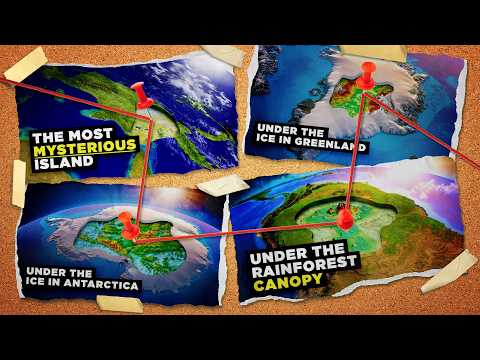
The communities they found were, by Western technological standards, still in the Stone Age. That framing carries its own problems — these were complex, functioning societies with agriculture, trade, and social structure — but the material gap between what highland Papuans were using and what a 1930s Western explorer carried in his pocket was genuinely vast. The encounter went both ways: for highland communities, these were the first outsiders they had ever seen. In a recent video, RealLifeLore's What's Hidden Under the World's Most Mysterious Places? explores how that first contact reverberated through both cultures — and how the outside world's arrival set in motion consequences that are still unresolved today.
Our Analysis: The Rockefeller section is where the video earns its runtime. The Dutch government's decision to suppress the cannibalism findings wasn't irrational — they were mid-transfer of a territory to Indonesia, the last thing they needed was a story about colonial violence producing indigenous retaliation that killed a famous American. But the suppression also meant the Asmat community's grievance, which was entirely legitimate given that Dutch forces had shot their people, never got acknowledged. The cover-up protected Dutch diplomatic interests and erased the context that made the killing comprehensible.
The West Papua section deserves more than the video gives it. The 1969 'Act of Free Choice' — 1,025 hand-picked voters deciding the fate of hundreds of thousands — is one of the more brazen UN-supervised frauds of the 20th century, and the US pressure that made it happen gets a single mention before the video moves on. Fifty-plus years of documented repression followed that vote. Calling it underreported is an understatement.
What the video gestures at but doesn't fully reckon with is the compounding nature of New Guinea's isolation problem. The 840-plus languages aren't just a curiosity — they represent a governance crisis that independent Papua New Guinea has never resolved. When your population can't communicate across valleys, building national institutions isn't a political challenge, it's a logistical one. The same geography that made first contact so dramatic in the 1930s continues to make basic service delivery, legal enforcement, and democratic participation functionally impossible in large parts of the country. The isolation didn't end when the planes flew over. It just became someone else's administrative headache. That longer arc — from Denisovan DNA to a modern state struggling to function — is the story the video keeps circling without quite landing on.
Frequently Asked Questions
Has anyone ever contacted uncontacted tribes in New Guinea, and when did first contact happen?
What tribe has had no human contact with the outside world?
Why did New Guinea's interior populations stay unknown to the outside world for so long?
Why does Papua New Guinea have so many languages — over 800?
Who were the first people to arrive in Papua New Guinea?
Based on viewer questions and search trends. These answers reflect our editorial analysis. We may be wrong.
Source: Based on a video by RealLifeLore — Watch original video
This article was created by NoTime2Watch's editorial team using AI-assisted research. All content includes substantial original analysis and is reviewed for accuracy before publication.