US intelligence failure Iran policy: Ex-CIA on Misconceptions
Key Takeaways
- •Former CIA officer Robert Baer told Breaking Points that U.S.
- •intelligence agencies are operating on 'caricatures' of Iran rather than real knowledge — and that this gap is actively driving the country toward catastrophic policy decisions.
- •Baer, drawing on deep field experience, argues that Washington fundamentally misreads Iran's resolve, relies on biased sources including Israeli intelligence and exiled Iranians, and pursues assassination strategies that history has already proven useless.
The CIA's Iran Problem Is Worse Than You Think
Robert Baer isn't some think-tank analyst who spent his career behind a desk. He was a field officer. And when he says the CIA doesn't understand Iran, that should stop you cold — because he's admitting it includes himself.
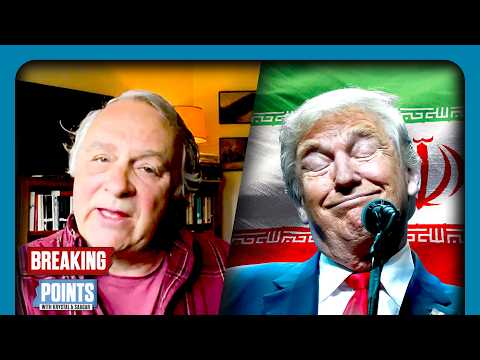
According to Baer, in CIA Legend: Trump CLUELESS On Iran War on Breaking Points, U.S. intelligence agencies are not working from current, nuanced assessments of Iran. They're working from caricatures. The Farsi speakers are scarce. The reliable in-country sources are essentially nonexistent. What fills the vacuum is worse than nothing: perspectives from exiled Iranians who haven't lived inside the country in decades, and intelligence passed through Israeli channels that is tactically sharp but strategically narrow. Israeli intelligence, Baer explains, is genuinely effective at locating and targeting individuals. Understanding the inner logic of Iran's ruling class — the people who make decisions largely offline, in decentralized structures specifically designed to survive decapitation — is a different problem entirely, and one Israel hasn't solved either. Related: Yakutsk Permafrost Construction Challenges & Solutions
The blunt implication is that whoever is briefing Trump on Iran is almost certainly not handing him a clear picture of what that country actually is.
What Washington Gets Wrong About the People, Not Just the Politics
Baer's sharpest point isn't about intelligence tradecraft. It's about cultural misreading at a fundamental level. Washington keeps looking at Iran and seeing a regime one good push away from collapse — a population waiting to be liberated, a government propped up by fear rather than conviction. Baer says that's wrong. Related: North Africa economic growth potential: The Next Big Market
He describes a society with genuine historical depth, a government that frames every external conflict in existential terms, and a population that — whatever their grievances about domestic life — is prepared to endure severe destruction rather than capitulate to foreign pressure. He uses the phrase 'death cult' not as a slur but as a descriptor of ideological commitment: the willingness to absorb catastrophic losses and keep fighting. The U.S. has not faced an adversary with that psychological profile in a long time, and it has apparently forgotten what it looks like.
This is the kind of miscalculation that doesn't announce itself until the bombs have already dropped. Related: Kuwait Airport Drone Attack Ignites Fuel Tanks
The Assassination Treadmill
Baer has written specifically about assassination as a strategic tool, and his conclusion is uncomfortable for anyone who thinks killing the right person changes the outcome of a conflict. It usually doesn't.
His reasoning is structural. Organizations like Hezbollah, or the Iranian military and intelligence apparatus, don't function like corporate hierarchies where removing the CEO leaves the company rudderless. The second and third tiers of command often turn out to be more capable than the leaders above them — sharper, more adaptive, battle-tested. When you eliminate the top, you don't create a vacuum. You run an involuntary promotion cycle for people who survived by being competent.
The martyrdom dynamic compounds this. Iran's ideological framework doesn't treat the death of its leaders as a defeat. It treats it as fuel. Baer's position is that even removing a major Iranian figure would more likely consolidate internal resolve than fracture it — and history in the region offers little evidence to the contrary.
Our Analysis: What makes Baer's assessment particularly significant is not just what he says, but who he is when he says it. This isn't a foreign policy critic lobbing critiques from the outside. This is someone who operated inside the machine and is describing its failure modes from memory. That kind of testimony carries a weight that think-tank white papers simply cannot replicate.
The structural intelligence problem he identifies — scarce Farsi speakers, no reliable in-country sources, a reliance on exiled diaspora perspectives and Israeli-filtered intelligence — isn't a new complaint. Versions of it have been raised since at least the 1979 revolution. What's striking is that nearly five decades later, the same gaps apparently remain. That's not an oversight. That's institutional entrenchment. It suggests the U.S. intelligence community has, at some level, made peace with not understanding Iran in granular terms, substituting tactical targeting capability for genuine strategic comprehension.
The assassination critique deserves particular attention because it cuts against one of Washington's most persistent instincts. There is an enduring belief — in policy circles, in media coverage, in public discourse — that conflicts can be resolved or at least meaningfully disrupted by removing key individuals. The Soleimani strike in 2020 was justified in exactly these terms. Baer's framework suggests that logic is not just flawed but potentially counterproductive, accelerating the very consolidation of resolve it was meant to shatter. If he's right, the U.S. has been running the same failed play on repeat, each iteration generating more martyrs and fewer strategic advantages.
Perhaps most underreported is the Strait of Hormuz dimension. The economic fragility exposed by a potential closure — roughly 20 percent of global oil supply passing through a narrow chokepoint — represents a systemic risk that financial markets have largely discounted. Baer's Great Depression comparison may be hyperbolic, but the underlying vulnerability is real and consistently underweighted in public analysis of what a hot war with Iran would actually cost. The conversation tends to focus on military outcomes. The economic cascade is the part that would hit ordinary people first and hardest.
Frequently Asked Questions
Why do US intelligence agencies keep failing to accurately assess Iran's military capabilities and political determination?
What would happen to the global economy if Iran closed the Strait of Hormuz?
Does assassinating Iranian military leaders actually weaken Iran's military effectiveness?
Is US reliance on Israeli intelligence for Iran assessments a problem?
Why does Washington keep expecting the Iranian government to be on the verge of collapse?
Based on viewer questions and search trends. These answers reflect our editorial analysis. We may be wrong.
Source: Based on a video by Breaking Points — Watch original video
This article was created by NoTime2Watch's editorial team using AI-assisted research. All content includes substantial original analysis and is reviewed for accuracy before publication.
Related Articles


You Might Also Like
Apr 17
Politics | Pentagon Official's Pulp Fiction Prayer: weaponizing Christianity military justification?

Apr 11
Politics | Iran Closes Strait of Hormuz: Ceasefire Violation Fallout

Apr 7
Politics | Trump Iran Military Escalation 2024: Civilian Targets?
May 1
Politics | Candace Owens Trump attack Time magazine: Her Shocking Response