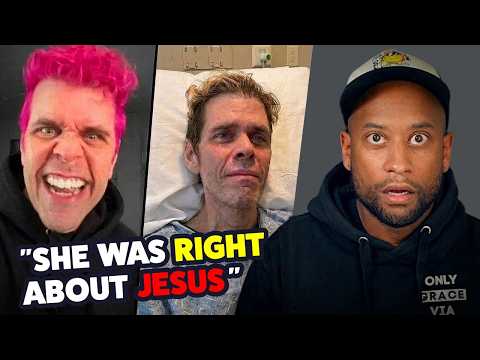
Pentagon Official's Pulp Fiction Prayer: weaponizing Christianity military justification?
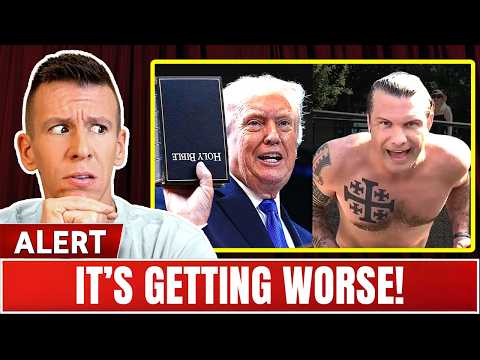
Key Takeaways
- •A Pentagon official quoted Pulp Fiction in a prayer, falsely attributing it to Ezekiel 25:17 — intended as religious justification for military action against Iran.
- •Officials including Hegseth are explicitly framing the US-Iran conflict in Christian terms, comparing military operations to biblical miracles and labeling critics as Pharisees.
- •Pope Leo has directly condemned leaders who use religion to justify war, stating God ignores the prayers of those with 'hands full of blood' — widely read as a rebuke of the current US administration.
The Pulp Fiction Prayer
A high-ranking Pentagon official stood up and delivered what was framed as a holy invocation — except the words were lifted almost verbatim from Samuel L. Jackson's iconic monologue in Pulp Fiction. The quote was attributed to Ezekiel 25:17. The actual biblical verse at that reference bears almost no resemblance to what was said. When the misattribution was identified, the embarrassment was immediate and public. But the embarrassment, as Philip DeFranco argues in American Christianity Is Being Twisted on Purpose, is almost beside the point — the intent was to provide religious cover for military action, and the fact that the scripture was fabricated tells you something about how seriously the theology is actually being taken.
Iran Through a Biblical Lens
The Pulp Fiction incident isn't a one-off. Officials, most notably Hegseth, have been framing the US conflict with Iran in explicitly Christian language — describing military operations as miracles, and characterizing journalists and critics who push back as Pharisees. That last move is particularly calculated. Calling your critics Pharisees doesn't just dismiss them; it casts them as enemies of God. It transforms policy disagreement into spiritual betrayal, which makes dissent not just wrong but morally illegitimate. For more context on where US-Iran tensions currently stand, the Iran nuclear deal negotiations in 2025 have their own complicated trajectory worth understanding alongside this rhetoric.
The Young Men Filling the Pews
Here's the demographic detail that makes the broader picture stranger: studies cited in the video show a notable surge in church attendance and Bible sales among men under 30, specifically young Republican men. This is happening against a backdrop of overall declining religiosity in America. The rest of the country is becoming less religious. This specific group is becoming more religious, and the timing tracks almost perfectly with political polarization rather than any identifiable spiritual revival. The church, for this cohort, appears to be offering something that political identity alone wasn't — a sense of purpose, structure, belonging. Whether that's a healthy development depends entirely on what the church is telling them once they're inside.
What the Pope Said
Pope Leo didn't mince words. He publicly stated that God ignores the prayers of leaders whose hands are full of blood, and condemned the use of religion to justify war and military spending. He also drew a direct line between money spent on weapons and the scarcity of resources available for healing and humanitarian work. The remarks were widely interpreted as a direct rebuke of the current US administration's posture — which puts the White House in the unusual position of being criticized by the leader of the world's largest Christian denomination for not being Christian enough in its conduct. The administration's response, per the video, was to attack him rather than engage with the substance.
The Theocracy Mirror
DeFranco makes an observation in the video that's hard to shake: the US spent decades pointing at Iran as a cautionary example of what happens when religious leaders gain control of state power and start blessing violence with scripture. The pattern now visible in Washington — officials invoking God before military strikes, the president attacking clergy who advocate for peace, rhetoric framing enemies as targets for righteous violence — is structurally similar to what the US once condemned abroad. That's not a comfortable comparison to sit with, and it's not meant to be. As we've explored in coverage of figures who blend Christian identity with firearms culture, the fusion of religious language and military action has been building at multiple levels of American life for some time.
Our Analysis: The Pulp Fiction prayer is getting most of the attention because it's funny and embarrassing, but it's actually the least important part of this story. The more consequential move is the Pharisee framing — labeling critics of military action as enemies of Christ. That's not sloppy theology. That's a deliberate rhetorical structure that makes any opposition to policy into a form of heresy. Once that frame is established, accountability journalism doesn't just become inconvenient; it becomes spiritually suspect.
The young Republican men flooding into churches is the thread nobody seems to know what to do with. If the motivation is political identity rather than genuine faith, the church becomes a vehicle for whatever ideology brought those men through the door — not a moderating institution but an amplifying one. The question isn't whether their faith is real. It's who's doing the teaching once they arrive.
Frequently Asked Questions
How do Christians justify being in the military?
What is weaponizing Christianity as military justification, and what does it look like in practice?
Why are young Republican men suddenly going to church more?
What did Pope Leo say about leaders who use religion to justify war?
Is the US government actually becoming theocratic?
Based on viewer questions and search trends. These answers reflect our editorial analysis. We may be wrong.
Source: Based on a video by Philip DeFranco — Watch original video
This article was created by NoTime2Watch's editorial team using AI-assisted research. All content includes substantial original analysis and is reviewed for accuracy before publication.
Related Articles

You Might Also Like
Apr 2
World News | US intelligence failure Iran policy: Ex-CIA on Misconceptions
May 1
Faith | Theo Von's Prayer: Spiritual Transformation, Fear of Change, Christianity
Apr 11
Life Stories | Ivanka Trump White House Accomplishments: A Detailed Look
Apr 2
Faith | Atheist Converted to Christianity Near-Death Experience