US Ground Operations Iran Military Options Debate Heats Up
Key Takeaways
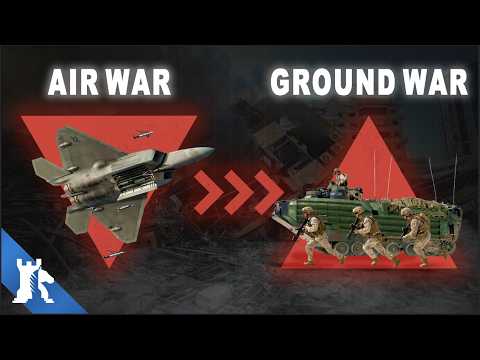
- •Airstrikes against Iran's weapons programs have not altered its strategic trajectory, pushing Washington toward considering ground force options ranging from special operations to full invasion.
- •Securing Iran's highly enriched uranium stockpile is a top special forces objective, but the extended on-site presence required makes those units unusually vulnerable to Iranian counter-action.
- •A full-scale invasion of Iran would require hundreds of thousands of troops, far exceeding the 2003 Iraq invasion, and would likely result in a lengthy, resource-draining occupation with no guaranteed outcome.
Airstrikes Ran Out of Road
The premise of Caspian Report's analysis is blunt: the strikes happened, and Iran kept moving. American military action against Iranian weapons programs has not produced a change in direction from Tehran. Washington officials are now openly discussing what comes after air power, which is a sentence that should give anyone pause. The gap between 'discussing ground options' and 'executing them' is enormous, but the fact that the conversation has moved this far tells you something about how badly the current approach is performing.
Why Special Forces Are the Politically Safe Answer
When policymakers want to act without fully committing, special operations are the answer they reach for first. These missions run small, run quiet, and tend to stay out of Congressional hearings until something goes wrong. Elite units can deploy rapidly against specific targets, whether that's a facility, a stockpile, or a person, without triggering the kind of public debate that a carrier group steaming toward the Persian Gulf would. As we explored in this critical look at US military strategy against Iran's nuclear facilities, the covert route has real appeal precisely because it lets decision-makers maintain deniability while still doing something. The political comfort of special operations is, of course, exactly why they tend to get used well past the point where they're actually the right tool.
The Uranium Problem Nobody Wants to Talk About
One of the most specific and sobering objectives Caspian Report raises is securing Iran's stockpile of highly enriched uranium. It sounds like a clean mission on paper: find it, secure it, neutralize it. The problem is that 'securing' a nuclear materials stockpile is not a smash-and-grab operation. Forces would need to remain on-site for an extended period, which runs directly against the core logic of special forces tactics, move fast, hit hard, disappear. The longer a small team sits in hostile territory waiting for extraction or transfer, the more exposure they accumulate. It is one of those situations where the objective is critical and the method of achieving it is almost purpose-built to go badly.
Sabotage and Assassinations Miss the Point
Faster special forces missions could target nuclear research sites or facilities tied to missile and drone production. The catch, as Caspian Report notes, is that Iran's industrial base is deliberately dispersed. Destroying one facility slows a program; it does not end it. Targeted killings of military commanders face a similar ceiling. Iran has built a decentralized defense structure specifically so that losing individual leaders does not collapse the overall operation. These missions might be executable. They would not be decisive, and the distance between 'executable' and 'decisive' is where military strategies go to die.
Marines at the Strait of Hormuz
If the conflict escalated beyond what special forces could handle, the next tier Caspian Report identifies involves Marine Expeditionary Units conducting limited amphibious operations along Iran's coastline. The Strait of Hormuz is the obvious pressure point, controlling maritime traffic that matters enormously to global energy markets, and seizing coastal infrastructure or nearby islands could give the US meaningful leverage without crossing the threshold of a full invasion. The operational logic is sound. The execution is where it gets complicated, because Iran has had decades to think about exactly this scenario, and the defenses it has built reflect that. For context on how economic pressure tools interact with military strategy in this region, the US approach to the Cuba oil embargo offers a useful parallel in how Washington uses geographic chokepoints as instruments of coercion.
The Amphibious Assault Is a Nightmare Scenario
Caspian Report does not dress this up. Attempting contested landings near major Iranian coastal cities like Bandar Abbas or Chabahar would mean running assault forces directly into Iranian drones, anti-ship missiles, and coastal artillery, all while operating thousands of miles from home and very close to Iranian supply lines. Urban combat after a successful landing would favor the defenders. Logistics would be a constant liability for the US and a constant advantage for Iran. Even the 'successful' version of this operation looks punishing. Amphibious assaults are one of the most complex military operations that exist, and doing one against a prepared, motivated adversary with layered defenses is a different category of problem than the training exercises suggest.
Full Invasion Would Make Iraq Look Small
A full-scale invasion of Iran would require hundreds of thousands of troops, according to Caspian Report's analysis, a commitment that dwarfs the 2003 Iraq War. Iran is larger, more mountainous, and more populous than Iraq. It also has had twenty years to observe what happened in Baghdad and adjust its defense planning accordingly. The regional and domestic political coalition required to sustain such an operation does not currently exist. And even setting aside whether the military campaign could succeed, the aftermath is the part that should terrify planners the most. As the failures of post-invasion stabilization in Iraq demonstrated, winning the war is the easy part. The occupation that follows is where resources go and do not come back, a dynamic that benefits every rival power watching from the outside. The broader pattern of why negotiated solutions collapse before military options get seriously considered is something this analysis of failing Middle East peace negotiations traces in detail. What Caspian Report is describing, across all these options, is a ladder where every rung is harder to stand on than the last, and nobody at the top is sure what they're climbing toward.
Our Analysis: Caspian Report maps the escalation ladder accurately, but buries the most important point: none of these options solve the core problem. Airstrikes didn't change Iranian behavior. Ground operations won't either, because the goal itself is unclear.
Washington keeps reaching for military tools while the political objective keeps shifting between regime change, nuclear rollback, and regional deterrence. That ambiguity is what makes a ground incursion genuinely dangerous. Troops don't go in without a defined end state, and right now the US doesn't have one.
Watch the special operations framing closely. It's how administrations test public tolerance before committing to something larger.
Frequently Asked Questions
What are the realistic US ground operations against Iran being considered beyond airstrikes?
Why have US airstrikes against Iran been ineffective at changing Iranian behavior?
Could US special forces realistically secure Iran's enriched uranium stockpile?
How prepared is Iran for a US amphibious assault near the Strait of Hormuz?
How would a full-scale invasion of Iran compare to the 2003 Iraq War?
Based on viewer questions and search trends. These answers reflect our editorial analysis. We may be wrong.
Source: Based on a video by Caspian Report — Watch original video
This article was created by NoTime2Watch's editorial team using AI-assisted research. All content includes substantial original analysis and is reviewed for accuracy before publication.
Related Articles



You Might Also Like
Apr 17
Politics | US Iran Nuclear Deal Negotiations 2025: What's the Catch?

Apr 17
Politics | Pentagon Official's Pulp Fiction Prayer: weaponizing Christianity military justification?

Apr 14
Politics | Iran Nuclear Negotiations US Demands: Theater or Chaos?
Apr 11
Politics | Iran Closes Strait of Hormuz: Ceasefire Violation Fallout