US Military Strategy Iran Nuclear Facilities: A Critical Look
Key Takeaways
- •Reported US military plans to storm Kharg Island or seize enriched uranium from Isfahan don't hold up to basic scrutiny, according to geopolitical analyst Peter Zeihan.
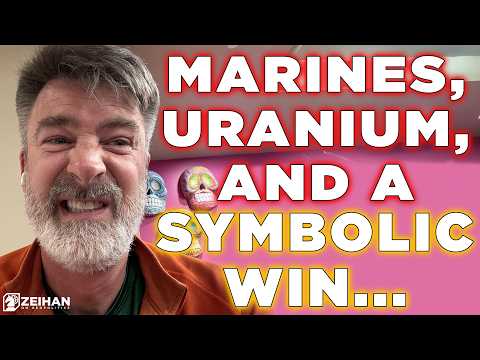
- •In his video 'Marines, Uranium, and a Symbolic Win?
- •|| Peter Zeihan,' he argues the proposed operations fail on logistics alone.
Why a US Marine Assault on Kharg Island Makes No Strategic Sense
Current US military strategy around Iran nuclear facilities has attracted serious scrutiny, and Zeihan's take on the Kharg Island theory is blunt: sending a Marine Expeditionary Unit to seize Iran's main oil export hub is a tactically broken idea before it even leaves the planning room.
Kharg Island moves roughly 90% of Iran's oil exports through a single pipeline. That pipeline has one onshore pumping station. One well-placed strike ends the flow. A ground invasion does the same job at enormously greater cost and risk.
The Pipeline Pumping Station Alternative
Zeihan points out that the entire strategic rationale for a Marine landing collapses the moment you look at a map. The onshore pumping station is the chokepoint — hit that, and Kharg Island becomes irrelevant without putting a single boot on the ground.
It's the military equivalent of unplugging the fridge instead of storming the kitchen.
Naval Vulnerability to Iranian Drones
Any amphibious operation requires naval vessels sitting close to shore. Iran's drone capabilities — well-documented and battle-tested — turn those ships into stationary targets the moment ground troops are exposed on the island.
As explored in our piece on Iran's asymmetric warfare strategy, Tehran has spent years building precisely this kind of layered threat to neutralize conventional US naval superiority. A Marine landing on Kharg Island walks straight into it.
Isfahan's Uranium: Logistically Impossible to Seize
The other theory making rounds in media — that Marines could recover enriched uranium stockpiles from Isfahan — is, if anything, even less grounded.
Isfahan is a major Iranian city with significant nuclear infrastructure. It is also 400 miles from the nearest coastline, already heavily damaged by strikes, and partially buried under rubble. None of those facts are minor complications. They're disqualifying ones.
400 Miles Inland and Buried Under Rubble
Zeihan's analysis is straightforward: a small Marine unit cannot reach Isfahan, excavate a damaged and collapsed nuclear facility, secure weapons-grade uranium in any usable quantity, and extract it — all without air superiority, heavy equipment, and a logistics chain that simply doesn't exist for this kind of operation.
The uranium isn't sitting in a labeled box by the front door. It's under a building that's been bombed.
Iran's Nuclear Strategy Shift: From Breakout Capacity to Weapons
Iran's nuclear posture for decades was deliberately ambiguous. The strategy wasn't to build a bomb — it was to stay close enough to building one that attacking the program felt too risky. The deterrent was the capability, not the weapon.
That calculus appears to have changed.
How US-Israel Attacks Changed Iran's Calculus
After a series of US and Israeli strikes — including one that killed Iran's Supreme Leader — Zeihan argues Tehran has likely concluded that the program alone is no longer a sufficient deterrent. If having the capability invites attack anyway, the logic of restraint collapses.
The practical outcome: Iran is probably now moving toward acquiring actual nuclear weapons, not just the theoretical ability to build them quickly. That's a significant escalation in intent, whatever the current state of their physical infrastructure.
The Political Motive Behind Unrealistic Military Operations
When reported military plans don't line up with military realities, the gap usually tells you something. In his video Marines, Uranium, and a Symbolic Win? || Peter Zeihan, Zeihan's read is that the administration is shopping for an exit narrative — something that can be framed as a win regardless of what actually happened on the ground.
The hardware movements and public statements don't match the operational logic of the stated objectives. That mismatch is the story. As the broader pattern of failing Middle East peace negotiations suggests, the region has a long history of political performance substituting for strategic coherence.
Iran's Moderate Leaders Eliminated, Hardliners Rising
There's an irony buried in the targeting choices. Several of the Iranian figures killed or removed from power — including aides close to the Supreme Leader — were, by the standards of Tehran's political spectrum, the ones most open to negotiation.
Eliminating the pragmatists doesn't leave a vacuum. It leaves hardliners. The people now positioned to fill those roles have shorter lists of things they're willing to discuss and longer memories of what happened to the people who tried talking.
Future diplomatic openings with Iran, already narrow, just got narrower.
Our Analysis: Zeihan's tactical breakdown is sharp — a Marine raid on Fordow or Isfahan makes no operational sense, and the media coverage pushing that narrative deserves the skepticism.
The bigger picture he's pointing at is a real trend: US foreign policy increasingly optimized for domestic optics over strategic coherence, which is how you accidentally radicalize your enemies while claiming victory.
The forward-looking problem is ugly — killing Iran's pragmatists and leaving hardliners in charge of a regime now incentivized to actually build the bomb is exactly the outcome nonproliferation policy spent decades trying to avoid.
Frequently Asked Questions
Why would US military strategy around Iran nuclear facilities include a ground assault when airstrikes could do the same job?
Is Iran actually moving toward building a nuclear weapon after the US and Israeli strikes?
Why is seizing enriched uranium from Isfahan logistically impossible for US Marines?
How do Iran's drone capabilities make a Marine landing on Kharg Island so dangerous?
What does it mean politically if the US is pursuing military options against Iran that don't make tactical sense?
Based on viewer questions and search trends. These answers reflect our editorial analysis. We may be wrong.
Source: Based on a video by Peter Zeihan — Watch original video
This article was created by NoTime2Watch's editorial team using AI-assisted research. All content includes substantial original analysis and is reviewed for accuracy before publication.