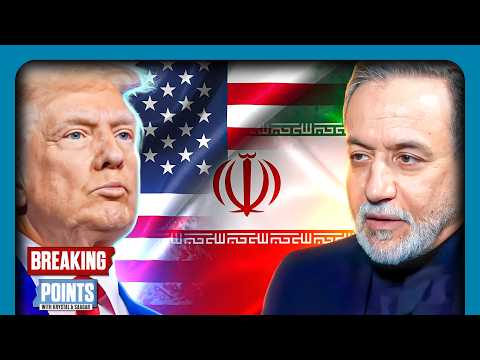
Strait of Hormuz Disruption: Economic Impact & Global Threat

Key Takeaways
- •20-30% of global oil, fertilizer, and helium passes through the Strait of Hormuz — Iran controls whether that keeps moving
- •A disruption to Persian Gulf fertilizer exports could trigger global famine within months, according to the expert
- •Iran's military is split into 31 self-sufficient divisions with hundreds of underground facilities, making it far harder to neutralize than Western coverage suggests
A 21-Mile Passage the Whole World Depends On
The Strait of Hormuz sits between Iran and Oman. At its narrowest point, it's roughly 21 miles wide. That's it. That's the gap through which a staggering share of global energy and agricultural supply must pass. According to the expert featured on Financial Crash Expert: In 3 months We'll Enter A Famine! If Iran Doesn't Surrender It's The End! on The Diary of a CEO, somewhere between 20 and 30 percent of the world's oil moves through this corridor — which most people already knew, or at least suspected. What they probably didn't know is that the same is true for fertilizer and helium. Both originate heavily from Persian Gulf nations, and both have to squeeze through the same narrow maritime passage.
Iran sits on the northern shore of that strait. It doesn't need to sink ships to cause chaos — it just needs to make passage credibly dangerous, and the insurance markets, shipping companies, and commodity traders will do the rest.
Fertilizer, Famine, and the Semiconductor Problem
When Food Supply Runs Through a Choke Point
The fertilizer dependency is the one that should be keeping agricultural economists up at night. The expert argues that 20-30% of the world's fertilizer supply originates from the Persian Gulf region and transits the Strait of Hormuz. Fertilizer isn't a luxury input — it's what allows modern agriculture to feed the current global population at current yields. Remove a quarter of global supply from the market abruptly, and you're not looking at higher grocery bills. You're looking at crop failures in countries that are already food-insecure, cascading into famine conditions within months. As we explored in our breakdown of Iran's effective control over Strait of Hormuz shipping, the leverage Iran holds here is structural, not just military.
The helium angle is less intuitive but equally serious. Helium isn't just for balloons — it's a critical coolant in semiconductor manufacturing. Chip fabrication facilities require it in large quantities, and there is no practical substitute at industrial scale. A sustained disruption to Persian Gulf helium exports would ripple directly into the global tech supply chain, hitting everything from consumer electronics to defense systems. The expert's point is blunt: the world built its food and technology infrastructure around the assumption that this strait stays open. That assumption has never been seriously stress-tested.
It's a strange kind of fragility — the kind that only becomes visible when it's already too late to fix it quickly.
Iran's Actual Military Position
Underground, Decentralized, and Ready
Western coverage of a potential Iran-Israel conflict tends to lean heavily on Israel's technological edge — the Iron Dome, intelligence capabilities, US backing. The expert pushes back on this framing with some specificity. Iran's military, he argues, is structured across 31 divisions, each designed to be self-sufficient. There are hundreds of underground facilities. The rocketry is described as advanced enough to challenge Iron Dome's interception capacity. And the terrain — Iran is a large, mountainous country with a population of around 90 million — makes a conventional ground campaign a logistical nightmare of the first order.
The expert's framing is that any attempt to militarily defeat Iran in a conventional sense would require destruction on a scale that no Western government has publicly acknowledged as the actual cost of the operation. He describes it as needing to bomb the country back to a pre-modern state — and even then, the decentralized command structure means there may not be a single leadership node to negotiate with afterward. For more on how the military buildup is being assessed, our piece on the US military deployment toward Iran in 2025 covers the strategic positioning in detail.
The gap between what this conflict would actually require and what's being discussed publicly is, to put it mildly, significant.
Five Scenarios, Three of Which Are Catastrophic
The expert lays out five possible trajectories for how the current conflict resolves. The most alarming scenario is nuclear — Iran's destruction via nuclear strike, with the global fallout that implies. Scenario two involves Iran retaliating against Gulf power infrastructure: knocking out electricity across the region, rendering cities like Dubai functionally uninhabitable, and triggering economic damage that the expert illustrates with the cost of even brief airport shutdowns in the region. Scenario three is the "Samson Doctrine" — the idea that Israel, facing existential defeat in a conventional conflict, deploys its nuclear arsenal rather than accept loss.
A fourth scenario, which the expert frames with something close to hope, involves Iran somehow neutralizing Israel's nuclear capabilities through conventional means — removing the nuclear option from the board entirely and forcing the conflict to remain conventional. The argument is that a conventional war, however destructive, is preferable to a nuclear exchange. The fifth scenario isn't detailed with the same weight, but the structure of the analysis makes clear that the expert sees the non-catastrophic outcomes as the minority possibilities. The 2024 escalation involving Iranian missile strikes on Israel already showed how quickly these scenarios can move from theoretical to operational.
Five scenarios, and the expert's tone suggests he's genuinely uncertain which one wins — which is not a reassuring place to land.
The Oil Motive Underneath the Conflict
The expert makes a broader geopolitical argument that ties the Iran situation into a longer pattern: countries with the largest oil reserves have a habit of becoming targets of US foreign policy. Venezuela. Iraq. Iran. The expert's read is that economic control over oil — not the stated rationales — drives many of these interventions. He points to rhetoric around Venezuelan oil as an illustration of how openly this logic can operate when political cover is thin. The implication for the Iran situation is that the conflict's stated objectives and its actual objectives may not be the same thing, and that miscalculations about Iran's resilience are more likely when the people making decisions are primarily thinking about commodity prices rather than military realities. The declining effectiveness of US sanctions is part of the same pattern — pressure tools that assume economic pain translates to political capitulation, applied to a country that has spent decades building around exactly that assumption.
Whether or not you buy the full argument, the structural point holds: the Strait of Hormuz is where economic motive and military risk converge, and that's a genuinely dangerous combination.
The fertilizer and helium dependency argument is the part of this conversation that deserves more attention than it's getting. Oil disruption from the Strait of Hormuz is a well-worn concern — markets price it in, strategic reserves exist, alternatives get discussed. But fertilizer? There is no strategic reserve for nitrogen-based agricultural inputs. There is no 90-day buffer. If 20-30% of global fertilizer supply disappears from the market for even one growing season, the countries that absorb that shock first are the ones already running food deficits. The expert is right that this is underreported, and the reason it's underreported is that it doesn't fit neatly into the energy security frame that Western media already has infrastructure to cover.
The five-scenario framework is useful but the expert's credibility on military specifics is harder to verify from the outside. The claim that Iran could neutralize Israel's nuclear arsenal through conventional strikes is doing a lot of work in that fourth scenario — it's presented as a hopeful possibility, but the operational details of how that actually happens are left vague. That vagueness matters when the scenario is being offered as the least-bad outcome in a genuinely terrifying list.
Frequently Asked Questions
What would be the economic impact of a Strait of Hormuz disruption on global food and energy prices?
How much of the world's fertilizer supply passes through the Strait of Hormuz?
Why does the Strait of Hormuz matter for semiconductor production?
Could Iran actually block the Strait of Hormuz, or is that just a threat?
Is Iran's military actually strong enough to withstand a Western or Israeli strike?
Based on viewer questions and search trends. These answers reflect our editorial analysis. We may be wrong.
Source: Based on a video by The Diary of a CEO — Watch original video
This article was created by NoTime2Watch's editorial team using AI-assisted research. All content includes substantial original analysis and is reviewed for accuracy before publication.