Dubai Economy Vulnerability: Geopolitical Attacks & Stability
Key Takeaways
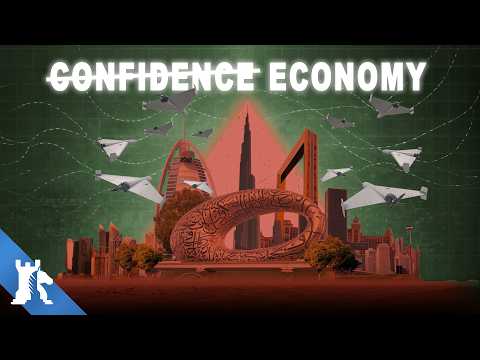
- •Dubai's economy runs on stability and connectivity, not oil — making it uniquely vulnerable to anything that disrupts the perception of seamless operations.
- •Recent Iranian attacks have already caused measurable damage: falling real estate values, airport disruptions, and reduced shipping activity.
- •Dubai's expatriate-majority population has no deep cultural ties to the city — if the cost-benefit calculation shifts, they leave, and the city hollows out fast.
The One Promise Dubai Can't Afford to Break
Dubai's pitch to the world has never been subtle. Come here, and nothing will go wrong. No political chaos, no unpredictable regulations, no sudden instability. Just clean airports, fast transactions, and the kind of boring reliability that wealthy people and global corporations will pay a premium for. In a region defined by volatility — wars, sanctions, collapsing governments — Dubai positioned itself as the exception. That positioning worked spectacularly. Millionaires relocated here. Global banks set up regional headquarters. Shipping routes ran through its ports. The whole thing was less a city and more a very expensive insurance policy against Middle Eastern uncertainty. The problem with building your brand on certainty is that you only have to be wrong once.
How Dubai Got Rich Without a Drop of Oil
Most people assume Dubai's wealth comes from oil. It doesn't — not anymore, and not for a long time. According to Caspian Report's analysis in Is Dubai finished?, the city's economic engine is built on movement: moving people, moving capital, moving goods. Emirates airline feeds passengers into a retail and hospitality ecosystem. Jebel Ali port handles cargo that flows into a trading and logistics network. The Dubai International Financial Centre provides a regulatory environment where global money feels comfortable sitting. Each of these sectors reinforces the others. A thriving airport means more business travellers means more demand for office space means more reason for financial firms to stay. Pull one thread and the whole weave loosens. The genius of the model is also its fragility — it only works when everything keeps moving. Related: Iran Strait of Hormuz oil control: Global Economy Impact
What the Missiles Actually Hit
The attacks themselves — Iranian missile and drone strikes targeting UAE infrastructure — didn't flatten Dubai. That was never the point. According to the video, strikes landed near hotels and at the airport, enough to introduce something far more damaging than physical destruction: doubt. Real estate values dropped. Airport operations were disrupted. Shipping activity slowed. Iran's objective, as Caspian Report frames it, wasn't military conquest — it was raising the cost of doing business in the UAE, making the country feel the economic weight of its regional alliances. It's a precise strategy, and it's working precisely because Dubai's entire value proposition depends on the absence of this kind of uncertainty. You don't need to burn the city down. You just need investors to start wondering whether they should hedge their bets elsewhere. That's a much cheaper weapon, and a much harder one to defend against.
The Ripple Through Real Estate and Aviation
Real estate in Dubai has always carried a speculative premium — buyers weren't just purchasing property, they were purchasing the assumption that Dubai would keep appreciating because Dubai would keep being Dubai. Once that assumption wobbles, the premium evaporates faster than the underlying asset value. Aviation is similarly exposed. Emirates is not just an airline; it's the circulatory system of Dubai's economy. Disruptions to airport operations don't just inconvenience travellers — they signal to the global business community that the hub is no longer unconditionally reliable. A few incidents can reprice an entire city's risk profile. That's the mechanism Iran is exploiting, and it requires no army to execute. Related: Houthis Red Sea attacks Israel: Yemen Enters Conflict
The Expat Problem Nobody Talks About Enough
Here's what makes Dubai structurally different from almost every other major city on earth: the vast majority of its residents didn't grow up there, don't hold citizenship, and have no particular reason to stay if conditions deteriorate. Caspian Report makes this point clearly — Dubai's population is predominantly expatriate workers and professionals who are there because the numbers make sense. No deep cultural roots. No multi-generational attachment to the place. Just a cost-benefit calculation that currently favours staying. The moment that calculation shifts — higher risk, lower returns, better alternatives elsewhere — those people leave. Not gradually. Fast. Traditional cities can absorb shocks because their populations are sticky. London survives recessions because Londoners don't just move to Frankfurt when things get difficult. Dubai doesn't have that buffer. Its residents are, by design, globally mobile. That's a feature in good times and a catastrophic vulnerability in bad ones.
When Loyalty Is a Spreadsheet
This isn't a criticism of the people who live there — it's a structural observation about what Dubai built. The city actively recruited globally mobile talent and capital by offering low taxes, high salaries, and frictionless living. It worked. But the same frictionlessness that made it easy to arrive makes it easy to leave. A finance professional who relocated from London to Dubai for a tax advantage will relocate from Dubai to Singapore if the risk-adjusted return tips that way. There's no sentimental attachment to override the arithmetic. Dubai's government knows this, which is why the response to recent instability has included incentive packages and retention schemes — but you can't manufacture loyalty that was never part of the original deal. Related: Strait of Hormuz Disruption: Economic Impact & Global Threat
Iran's Playbook: Economic Warfare Without a Declaration of War
Iran isn't trying to occupy Dubai. The strategy, as Caspian Report explains in Is Dubai finished?, is more surgical: make the UAE feel the economic cost of its regional positioning, specifically its alignment with actors Iran considers adversarial. By targeting economic infrastructure — ports, airports, the symbolic landmarks that appear in every Dubai promotional video — Iran introduces a persistent low-level uncertainty that compounds over time. Each incident adds another data point to the risk models of every investor, insurer, and corporate treasury department that has exposure to the UAE. This connects to a broader pattern of Iranian pressure across the region — the same logic that drives disruption across other strategic chokepoints and trade corridors where Tehran seeks leverage without direct military confrontation.
Our Analysis: The video is strongest when it treats Dubai as a system rather than a city — because that's what it actually is. The insight that matters most isn't about the attacks themselves, it's about the mechanism: Dubai's value is entirely derived from a perception, and perceptions don't recover on the same timeline as physical infrastructure. You can repair a runway in weeks. You cannot repair the assumption of invulnerability once it's been publicly disproven. What Caspian Report doesn't fully press on is how deliberately Iran has studied this. This isn't improvised pressure — it's a calibrated campaign that exploits exactly the gap between Dubai's marketed image and its actual geopolitical exposure.
The expatriate population point is underplayed in the video and deserves more weight. Dubai's government can offer tax incentives and golden visas, but it cannot manufacture the kind of civic inertia that keeps populations anchored to cities during difficult periods. The residents most capable of leaving — the high-net-worth individuals and senior executives Dubai most wants to retain — are precisely the ones with the most options and the least reason to stay out of loyalty.
There's a deeper irony here that neither the video nor most commentary fully confronts: Dubai's success was always partially a story about selective amnesia. Global capital chose to treat it as a neutral zone, a convenient fiction that everyone agreed to maintain because it was mutually profitable. What Iran's campaign has done is make that fiction harder to sustain. Once the question "is this place actually safe?" enters the public discourse — in boardrooms, in insurance actuarial models, in the private conversations of relocating executives — it doesn't quietly disappear. It becomes a standing agenda item. And for a city whose entire pitch depends on that question never being asked in the first place, that may be the most lasting damage of all.
Frequently Asked Questions
How do geopolitical attacks threaten Dubai's non-oil economy specifically?
Why is Dubai's expatriate population a unique economic vulnerability that other major cities don't face?
Is Dubai's real estate market actually declining because of Iran's attacks on UAE infrastructure?
Can Dubai's hub economy survive sustained Middle East regional instability?
Does Emirates airline being disrupted actually hurt Dubai's whole economy, or just the aviation sector?
Based on viewer questions and search trends. These answers reflect our editorial analysis. We may be wrong.
Source: Based on a video by Caspian Report — Watch original video
This article was created by NoTime2Watch's editorial team using AI-assisted research. All content includes substantial original analysis and is reviewed for accuracy before publication.