Christian Persecution Nigeria Easter Attacks: Unheeded Warning
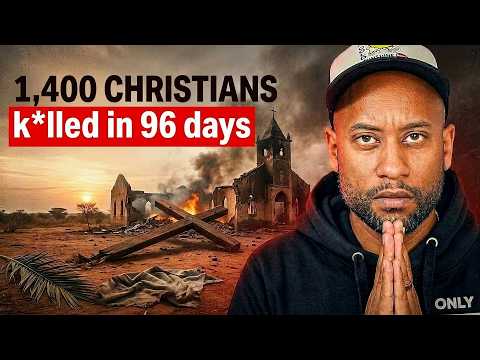
Key Takeaways
- •A missionary gave the Nigerian government advance warning of planned Easter attacks on Christians in Southern Kaduna — the government took no action.
- •At least 63 Christians were killed across Palm Sunday and Easter Sunday attacks, with additional worshippers kidnapped during church services.
- •Survivors say Nigerian military forces blocked Christians from pursuing their attackers, then the army falsely claimed to have rescued the kidnapped victims.
The Warning That Went Nowhere
Weeks before Easter, a missionary with knowledge of the situation in Southern Kaduna contacted the Nigerian government with a specific warning: attacks on Christian communities were coming. This wasn't "vague intelligence or a general threat assessment" — it was a direct, advance alert about imminent violence targeting a specific religious group in a specific region. The government did nothing with it. On Palm Sunday, 30 Christians were killed. Seven days later, the attacks continued on Easter Sunday — the holiest day in the Christian calendar — as if the warning had never been sent at all. The fact that the timeline lines up this precisely makes 'negligence' a generous interpretation.
Two Holy Days, Dozens Dead
The attacks weren't random. They hit during church services — Palm Sunday and Easter Sunday — when congregations would be at their largest and most vulnerable. According to And the Military Let It Happen… by Whaddo You Meme?, at least 33 people were killed on Easter Sunday alone, with others kidnapped directly from worship gatherings. The Palm Sunday massacre a week earlier had already claimed 30 lives. These weren't opportunistic raids. The targeting of religious services on the two most significant days of the Christian liturgical calendar points to coordinated, religiously motivated violence — the kind that requires planning, not impulse. The communities affected weren't caught off guard because they were careless; they were caught off guard because the people who were supposed to protect them stood aside.
The Military's Role on the Ground
Here's where it gets harder to explain away as simple incompetence. Survivors of the Easter attacks reported that when local youth attempted to pursue the attackers — to chase them down before they could disappear — Nigerian military forces physically blocked them. Not redirected them. Blocked them. The assailants escaped. Then, in the aftermath, the Nigerian army issued a statement claiming it had rescued the kidnapped worshippers. The communities where those worshippers lived said that was false. Two things can't both be true: either the army rescued them or it didn't. The affected communities say it didn't. This pattern — advance warning ignored, military obstruction during the attack, false claims of rescue after — isn't a series of unrelated failures. It's a sequence. And sequences have explanations.
Our Analysis: The detail that keeps pulling focus isn't the attacks themselves — it's the military blocking the pursuit. Governments fail to act on warnings all the time, for reasons ranging from bureaucratic inertia to deliberate indifference. But soldiers physically stopping civilians from chasing attackers is an active choice made in the moment by people on the ground. That's not a policy failure. That's individuals deciding, in real time, whose side they're on.
The army's false rescue claim compounds it. Issuing a statement you know to be false, about people whose families are right there and know the truth, suggests an institution confident it won't face meaningful accountability. That confidence is usually earned. The question the video raises but doesn't fully answer is who, specifically, gave those orders — and whether anyone above them knows, or cares.
What's also worth sitting with is the international silence. When attacks of this scale hit during the two most symbolically significant days of the Christian year — coordinated, forewarned, and apparently facilitated — the response from global institutions and Western governments has been, at best, muted. That silence has its own meaning. Persecution that is geographically inconvenient or politically complicated tends to get categorized as regional instability rather than what it is: targeted religious violence against a specific community. The framing matters because it determines whether the international community treats this as something to monitor or something to stop. Southern Kaduna has been burning for years. The pattern Whaddo You Meme? documents here isn't new — it's a continuation. And continuations only happen when the costs of continuing remain low.
Frequently Asked Questions
What evidence suggests Nigerian military complicity in the Christian persecution Easter attacks?
Why didn't the Nigerian government act on warnings before the Easter Sunday attacks?
Did the Nigerian army actually rescue kidnapped worshippers after the Easter attacks?
Is the targeting of churches on Palm Sunday and Easter Sunday in Nigeria considered religiously motivated violence?
How does the Nigerian government typically respond to attacks on Christian communities?
Based on viewer questions and search trends. These answers reflect our editorial analysis. We may be wrong.
Source: Based on a video by Whaddo You Meme? — Watch original video
This article was created by NoTime2Watch's editorial team using AI-assisted research. All content includes substantial original analysis and is reviewed for accuracy before publication.