Iran Asymmetric Warfare Strategy: Tehran's Calculated Agenda
Key Takeaways
- •Iran is fighting a war it knows it cannot win conventionally — so it's not trying to.
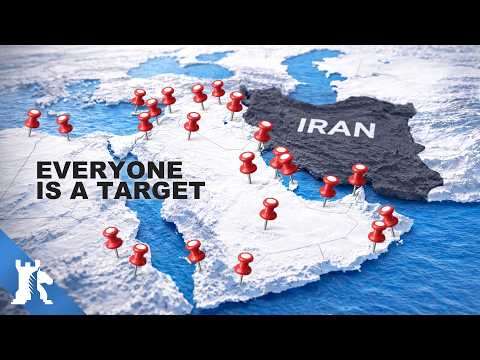
- •As the Caspian Report breaks down in 'Why Iran is attacking everyone,' Tehran is executing a calculated asymmetric warfare strategy built around three levers: killing American soldiers, choking off global oil, and making life uncomfortable enough for Gulf Arab states that they beg Washington to back down.
- •The conflict has already spread across Jordan, Iraq, Kuwait, Qatar, Bahrain, Saudi Arabia, Syria, and the UAE.
What Is Iran's Asymmetric Warfare Strategy?
Iran cannot beat the US or Israel in a straight fight. It knows this. So Iran's asymmetric warfare strategy isn't about winning militarily — it's about making the political cost of staying in the fight too high for Washington to stomach.
In Why Iran is attacking everyone, Caspian Report breaks down how Tehran is pursuing three distinct pressure tracks simultaneously, each targeting a different vulnerability in the US position.
Inflicting American Casualties as Political Pressure
Iran's clearest playbook move is getting Americans killed — not to defeat the US Army, but to turn American public opinion against the war.
The historical parallel Tehran is working from is the 1983 Beirut barracks bombing, where 241 US servicemembers died and the Reagan administration quietly pulled out of Lebanon shortly after. Iran is betting that body bags still move US politics the same way they did forty years ago.
Disrupting Global Oil Supply Through the Strait of Hormuz
Roughly 20% of the world's oil passes through the Strait of Hormuz. Iran sits on one side of it. Closing it — or even credibly threatening to — would spike energy prices globally and land the economic fallout squarely in Trump's lap ahead of any political cycle that matters.
The Strait of Hormuz option isn't just pressure on the US; it's pressure from every oil-importing nation on earth directed at Washington. That's a lot of angry phone calls Tehran doesn't have to make itself, as we explored in our piece on the Our Analysis: Caspian Report nails the asymmetric warfare framing — Iran's playbook here isn't about winning, it's about making the cost of winning too high for Washington domestically. What gets underplayed is how little leverage Iran actually has left. The Strait of Hormuz card has been threatened so many times it's lost half its bite, and Gulf Arab states are more aligned with the US-Israel axis than Tehran wants to admit. There's also a deeper structural problem for Iran that the video touches on but doesn't fully excavate: the proxy network is showing signs of fatigue. Hezbollah has taken significant hits to both its leadership and its arsenal. Hamas is degraded. The Houthis are absorbing strikes at a pace that would have been politically untenable for any conventional military. Iran has been extraordinarily good at building these networks over decades — but reconstituting them under active pressure is a different skill set entirely, and it's not clear Tehran has the logistics or the cash to do it fast enough. The domestic angle also deserves more weight. Iran's leadership is balancing external escalation against internal legitimacy concerns. Economic sanctions have hollowed out the middle class, and public appetite for foreign adventurism — never unlimited — is under real strain. The regime needs its proxy strategy to produce visible wins, or at minimum avoid visible losses. Right now it's getting neither. The broader trend: we're watching the slow collapse of deterrence-by-ambiguity in the Middle East. For decades, Iran's power rested on the threat of what it might do. The more it actually does things, the more that mystique erodes — and the more its adversaries learn exactly where the red lines are and aren't. Expect Iran to double down on proxies — it's the only card that still has real value — but don't expect that card to play as cleanly as it once did. Based on viewer questions and search trends. These answers reflect our editorial analysis. We may be wrong. Source: Based on a video by Caspian Report — Watch original video This article was created by NoTime2Watch's editorial team using AI-assisted research. All content includes substantial original analysis and is reviewed for accuracy before publication.Frequently Asked Questions
What is Iran's asymmetric warfare strategy against the US, and why can't Washington just ignore it?
Has the Beirut barracks bombing comparison actually proven that casualties change US foreign policy?
Can Iran actually close the Strait of Hormuz, or is it mostly a threat?
Why is Iran targeting Arab Gulf states if its main fight is with the US and Israel?
How does Iran's regional escalation strategy avoid triggering an all-out US military response?
Related Articles
You Might Also Like