Iran US Military Conflict Escalation: Bombing Backfires
Key Takeaways
- •21 years of bombing simulations showed the same result every time: Iran's enriched nuclear material survives, making military strikes a delay tactic, not a solution.
- •Israel has directly undermined US diplomatic efforts by assassinating Iranian negotiators — including Ali Larijani — during active peace discussions.
- •Iran's proposed 10-point deal demands sanctions removal, uranium enrichment rights, war reparations, and recognition as a Persian Gulf power — the terms of a country that thinks it's winning.
The Bombing Model That Kept Returning the Same Answer
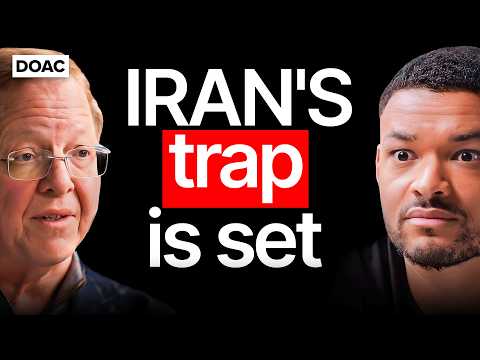
The expert spent 26 years at the University of Chicago studying why powerful nations fail to achieve their objectives through air power — work that began with trying to understand the US failure in Vietnam and resulted in his book Bombing to Win. When he applied that same analytical framework to Iran, he ran the hypothetical war scenario repeatedly over 21 years. The result never changed. Bombing campaigns could destroy industrial infrastructure, flatten above-ground facilities, and cause enormous damage — but the enriched nuclear material itself would remain intact, buried deep enough to survive and be retrieved later. In a recent episode of The Iran War Expert: The Most Dangerous Stage Begins Now on The Diary of a CEO, he makes the case that this isn't a gap in execution — it's a structural limitation of what air power can actually accomplish. Military strikes against Iran's nuclear program buy time. They don't end it.
Iran Buried the Problem — Literally
Iran's military planners drew a clear lesson from watching how the US fights: it can dominate the skies, but it cannot reach what's underground. So Iran moved its most critical assets — drone stockpiles, missile arsenals, enriched material — deep beneath the surface. Above-ground facilities can be bombed. The buried infrastructure cannot. This decentralization also means that even under sustained bombardment, Iran can continue drone attacks on shipping in the Strait of Hormuz, because the operational capability isn't sitting in one place waiting to be hit. The expert also pushes back on the idea that Iran's command structure becomes chaotic under pressure — pre-delegated orders mean strategic direction continues even when communications are disrupted. The US has been bombing a country that already war-gamed this scenario and built around it.
The Spoiler in the Room
Every time the US has moved toward a diplomatic off-ramp with Iran, Israel has intervened. The expert cites specific instances: Israeli forces targeted Iranian negotiators during the 12-day war, and Ali Larijani — who was actively involved in a peace proposal — was assassinated. These weren't coincidental. The pattern is deliberate enough that even Trump, according to the expert, complained about Israeli "lone wolf actions" undercutting broader US diplomatic goals. As we explored in our piece on Trump's relationship with Israeli policy pressure, the influence dynamics here are layered and not always publicly acknowledged. The diplomatic cost of these interventions is real: every killed negotiator is a closed channel, and Iran's willingness to trust any US-backed process erodes further each time it happens.
What Trump's Words Are Actually Doing Inside Iran
Trump's public statements — including explicit threats to end an entire civilization — are not being received in Iran as bluster. The expert frames them as genocidal in their implication, and notes that the US nuclear arsenal sitting behind those words makes them impossible to dismiss. The effect on Iranian public opinion is the opposite of what might be intended: rather than demoralising the population or fracturing support for the regime, existential threats tend to consolidate nationalism. More specifically, the expert argues that pro-democracy movements inside Iran — groups that might otherwise oppose the government — are now being pushed toward supporting Iran's nuclear weapons program as a matter of self-preservation. Threatening to erase a civilization is a reliable way to make that civilization's internal divisions disappear temporarily.
Iran's 10-Point Deal Is Not a Concession Document
Iran has put forward a 10-point proposal to the US, and reading through its terms makes clear this is not the language of a country asking for mercy. The demands include a permanent ceasefire, an end to attacks on Iranian allies, reopening the Strait of Hormuz under Iranian toll collection, lifting all US sanctions, releasing frozen assets, formal recognition of Iran's right to enrich uranium, war reparations, and termination of UN resolutions against the regime. Collectively, these points amount to a demand for recognition as the dominant power in the Persian Gulf. As the Strait of Hormuz closure has already demonstrated, Iran has real leverage over global energy flows — and it knows it. The expert's position is that nations don't surrender power once they have it, and Iran is not about to start.
The Fork in the Road the US Hasn't Publicly Acknowledged
The expert maps the conflict through three escalation stages: initial US bombing that strengthened rather than weakened the Iranian regime; Iran's horizontal escalation through Strait of Hormuz control; and the looming question of ground operations. At this point, he argues, the US faces a binary choice it hasn't openly admitted to: commit to a full ground invasion — likely entering through coastal regions near the Strait of Hormuz with the stated objective of seizing southwestern oil fields — or accept Iran's emergence as a fourth center of global power alongside the US, China, and Russia. Gulf state allies including Saudi Arabia, Qatar, and Iraq are already hedging, seeking security arrangements elsewhere as US bases in the region prove vulnerable to Iranian attack. The US assumption that Iran was on the verge of collapse before this conflict began, the expert says, was the foundational miscalculation — and everything since has been built on top of it.
The most uncomfortable part of this analysis isn't the military detail — it's the implication that the US entered this conflict with a model of Iran that the expert had already disproved, repeatedly, over two decades. That's not a intelligence failure in the traditional sense. That's a policy community choosing a preferred conclusion and ignoring the research that contradicted it. The bombing-can't-eliminate-enriched-material finding wasn't obscure. It came from someone who taught the US Air Force. The decision to proceed anyway suggests the goal was never really denuclearisation.
The Israel dynamic is the piece that gets the least honest coverage. The bipartisan frustration over US-Israel policy has been building for years, but assassinating negotiators mid-diplomacy is a specific, operational interference — not just a political disagreement. If Trump genuinely complained about lone wolf actions, that's an admission that US and Israeli objectives in this conflict are not fully aligned, which raises an obvious question about who is actually setting the terms of engagement.
Frequently Asked Questions
Who has a stronger military, Iran or Israel?
How strong is Iran's military compared to the USA?
Why has decades of US military pressure failed to stop Iran's nuclear program?
Has Israel really sabotaged US-Iran diplomacy by targeting Iranian negotiators?
What is Iran's 10-point peace deal and is it a serious offer?
Based on viewer questions and search trends. These answers reflect our editorial analysis. We may be wrong.
Source: Based on a video by The Diary of a CEO — Watch original video
This article was created by NoTime2Watch's editorial team using AI-assisted research. All content includes substantial original analysis and is reviewed for accuracy before publication.
Related Articles



You Might Also Like
Mar 30
World News | IDF Chief: Israeli Military COLLAPSING After Endless War
Mar 28
World News | US-Iran War: What Washington Isn't Telling You
Apr 17
World News | US Retreat: The global power vacuum geopolitical risks you need to know

Apr 10
World News | Dubai Economy Vulnerability: Geopolitical Attacks & Stability