Netanyahu Pushed Trump Iran War Plan in Secret Meeting
Key Takeaways
- •Netanyahu presented a four-point Iran war plan to Trump in a classified Situation Room meeting in February 2026, including regime decapitation and installing a secular government.
- •CIA Director Ratcliffe and the Joint Chiefs both expressed skepticism — Ratcliffe said broader regime change was highly improbable despite Netanyahu's claims.
- •Marco Rubio reportedly called the Israeli assessment 'bullshit,' yet later publicly justified the war as a response to an imminent threat of Israeli unilateral action.
Netanyahu's Four-Point Plan to Overthrow Iran's Regime
The White House Situation Room meeting
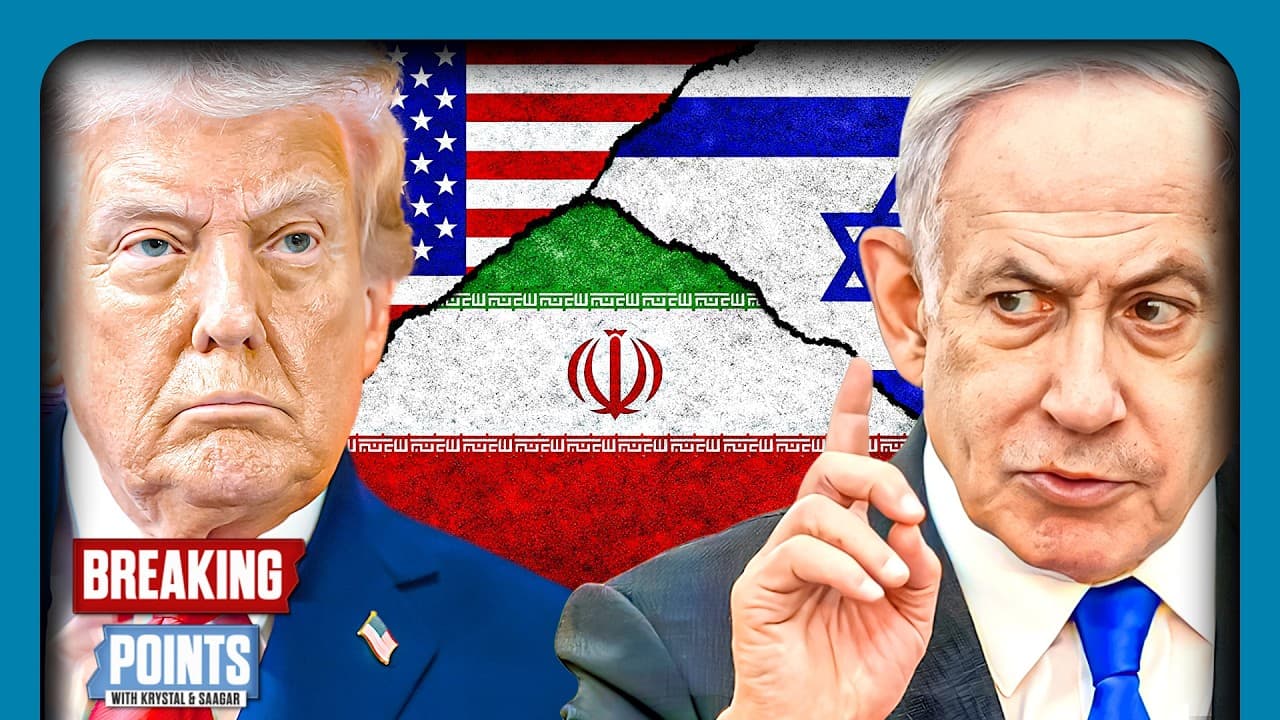
In February 2026, Benjamin Netanyahu sat in the White House Situation Room and made his case directly to Donald Trump. According to a New York Times report by Jonathan Swan and Maggie Haberman — two reporters with deep sourcing inside the Trump administration — this was not a casual diplomatic conversation. Netanyahu came with a plan. A specific, four-point plan.
The objectives: decapitate the Iranian regime, degrade its military capabilities, overthrow the government, and replace it with a secular one. That last part is doing a lot of heavy lifting. Regime change is one thing. Replacing a theocratic government with a secular one, in a country you're simultaneously bombing, is a different category of ambition entirely. Related: Tucker Carlson Trump Easter message controversy
Regime decapitation and military degradation strategy
Netanyahu's pitch reportedly lasted around 90 minutes. The plan wasn't just 'strike some nuclear sites' — it was a full-spectrum vision for remaking Iran's political structure. Kill the Supreme Leader. Destroy the military. Install something new. The Israeli Prime Minister presented this as achievable. His audience, it turned out, largely disagreed. That gap between what Netanyahu was selling and what the US intelligence community thought was actually possible is the story here.
Trump's Top Advisors Rejected Netanyahu's Iran Assessment
CIA Director Ratcliffe's skepticism on regime change
CIA Director John Ratcliffe drew a clear line during the Situation Room discussions. Targeting the Supreme Leader? Possible. Achieving the broader regime change Netanyahu described? Highly improbable. That's a significant distinction — the difference between a targeted strike and a geopolitical transformation. Ratcliffe wasn't alone in that assessment, and his position matters because he's not exactly a dove by reputation. Related: Dual-Use Infrastructure, War Crimes, & International Law
Joint Chiefs of Staff concerns about feasibility
The Chairman of the Joint Chiefs also pushed back, questioning both the accuracy of the Israeli intelligence and whether Netanyahu's projected outcomes were remotely realistic. The pattern emerging from the Situation Room, as Breaking Points covered in their video 'BULLSH*T': Trump Pre-WARNED On Israel LIES Before Iran War, was consistent: the people whose job it is to actually execute military operations thought the plan was built on assumptions that didn't hold. When your military and intelligence leadership are aligned in skepticism and you proceed anyway, that's a choice worth examining.
Our Analysis: The Rubio detail is the one that should get more attention than it's receiving. He privately called the Israeli assessment 'bullshit,' then publicly framed the war as a response to imminent threat. Those two positions aren't reconcilable. Either the assessment was credible enough to justify military action, or it wasn't — and Rubio's own word suggests he thought it wasn't. What that means for the official war justification is a question that deserves a direct answer, not a pivot to talking points about Iranian aggression.
Gottheimer's refusal to acknowledge Netanyahu's role is a different kind of problem. The reporting is specific, the sourcing is credible, and the details are granular enough that denial requires active effort. The reluctance to say 'a foreign leader lobbied the US into a war' — when the evidence points that direction — isn't caution. It's a political calculation that treats the public as people who can't handle a straightforward account of how the decision was made.
What's underappreciated in the broader coverage is what this dynamic reveals about the structural relationship between Washington and Tel Aviv. It isn't unusual for allied governments to advocate for their strategic interests in private meetings — that's diplomacy. What is unusual, and what deserves scrutiny, is when a foreign government's optimistic intelligence assessment overrides the unanimous skepticism of a host country's own military and intelligence apparatus. The institutional guardrails — Ratcliffe's pushback, the Joint Chiefs' reservations, Rubio's private candor — existed precisely for moments like this. The fact that they didn't hold is a governance story as much as a foreign policy one. Who is actually making these decisions, on what basis, and what recourse exists when the professionals in the room are overruled? Those aren't rhetorical questions. They're the ones the official justifications have so far avoided answering.
Frequently Asked Questions
Why did Trump start the war with Iran?
Why is Israel at war with Iran?
Who is more powerful, Iran or Israel?
What exactly did Netanyahu propose to Trump in the Situation Room about Iran?
Did Trump's advisors try to stop the Iran war?
Based on viewer questions and search trends. These answers reflect our editorial analysis. We may be wrong.
Source: Based on a video by Breaking Points — Watch original video
This article was created by NoTime2Watch's editorial team using AI-assisted research. All content includes substantial original analysis and is reviewed for accuracy before publication.