Strait of Hormuz shipping Iran control: A New Toll Booth?
Key Takeaways
- •Iran has created a paid transit system through the Strait of Hormuz — ships must dock at an Iranian port, pay up to $2 million, and hug the Iranian coastline to pass safely.
- •The IRGC is generating more income from transit fees and oil exports now than before the conflict, strengthening the regime's political and military position.
- •The US military has not disrupted Iran's commercial flows, and the analysts who would normally escalate these concerns have reportedly been removed from their posts.
The Protection Racket at the World's Most Important Chokepoint
International shipping insurance for the Persian Gulf has been cancelled. That's not a minor administrative detail — it means every captain who sails into that water is personally on the hook if something goes wrong. Hundreds of vessels are reportedly sitting outside the Gulf waiting it out. The ones that do go through? They're doing it with Iran's explicit permission.
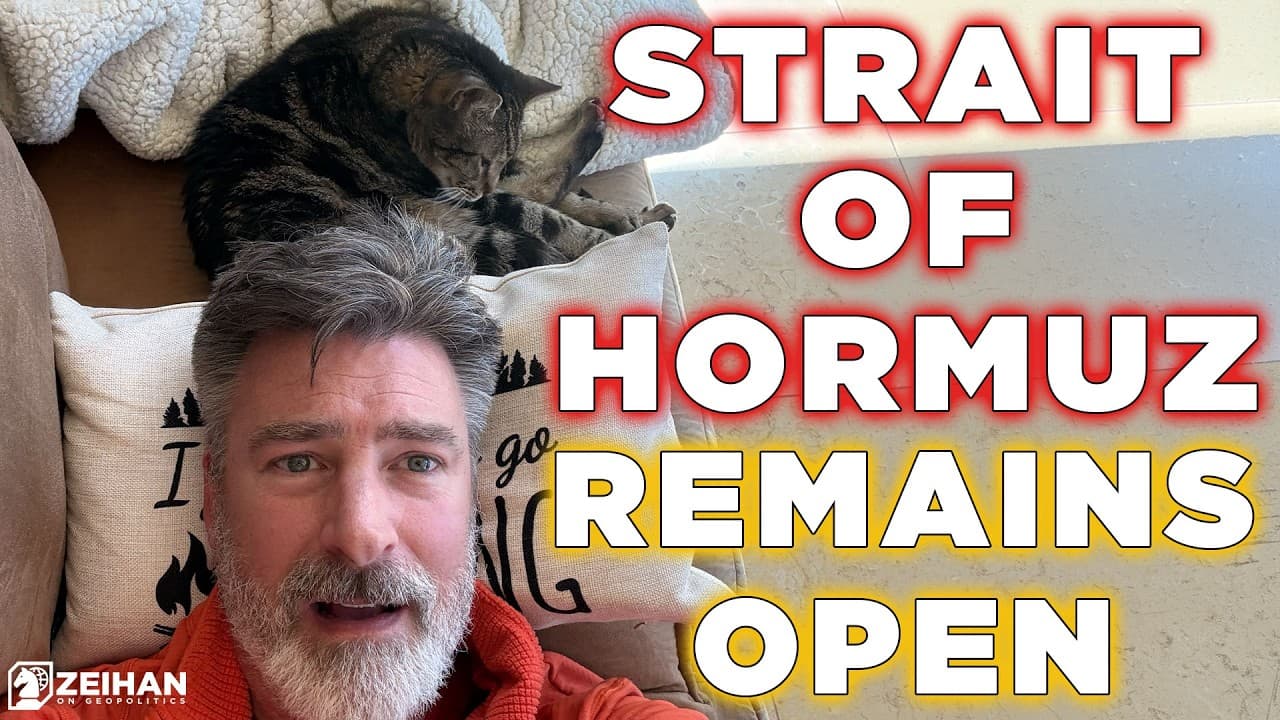
Iran hasn't just blocked the Strait of Hormuz. It's monetised it. Ships must divert to an Iranian port, pay substantial fees — according to The Strait of Hormuz Remains Open...For Iran || Peter Zeihan, up to $2 million per transit — and then navigate along the Iranian coastline rather than the standard international channel. This applies in both directions. Incoming and outgoing. Iran has effectively made itself the landlord of one of the most critical shipping lanes on the planet, and the rent is non-negotiable.
The audacity of running a protection racket this openly, at this scale, while a conflict is actively underway, is something most analysts would have flagged as a red line years ago.
The US Military Is Present and Doing Nothing About It
Here's where it gets strange. The United States has a long, well-documented strategic fixation on the Strait of Hormuz. Keeping it open has been a cornerstone of American naval doctrine for decades. And yet, according to Peter Zeihan, the US military is not interrupting Iran's commercial flows — not the transit fee collection, not the oil exports, not the Chinese cargo ships pulling into Iranian ports.
Those Chinese vessels aren't delivering furniture. They're reportedly carrying drone and missile components, allowing Iran to sustain its current pace of military operations indefinitely. The US has the naval presence in the region to make this difficult. It is choosing, or failing, not to. As we explored in the debate around US military deployment in Iran in 2025, presence and effectiveness are not the same thing.
The IRGC Is Winning Financially
The Revolutionary Guard Corps entered this conflict as a sanctioned, financially pressured organisation. It is now, by Zeihan's account, generating more revenue than before the war started. Transit fees plus increased oil exports equals a better balance sheet for the people running Iran's military apparatus. That money doesn't sit idle — it funds political cohesion, pays the people who keep the regime stable, and buys more components from China.
This is the compounding problem. Every week the system runs uninterrupted, the IRGC gets more entrenched, not less. The declining effectiveness of US sanctions has been a slow-moving story for years, but this is what it looks like when that trend hits a live conflict.
The Intelligence Gap Nobody Wants to Talk About
Zeihan raises something that doesn't get enough attention: the analysts who would normally be tracking this, flagging it, and pushing it up the chain have reportedly been dismissed. These aren't peripheral roles. They're the people whose entire job is to notice when a sanctioned paramilitary organisation starts running a $2 million-per-ship toll system in a strategic waterway and ask why nobody is stopping it.
Without that layer of analysis, the information either doesn't reach decision-makers or arrives without the context needed to act on it. The pattern of US intelligence failures on Iran policy has a long history, but removing the analysts mid-conflict is a different category of problem entirely. You don't notice what nobody is looking for.
Our Analysis: The most uncomfortable part of this isn't Iran's ingenuity — it's the timeline. Iran didn't build this transit fee system overnight. Ships had to be redirected, fees had to be set, a compliance mechanism had to be established. That takes coordination and time, which means the US had a window to observe it forming and didn't act. Whether that's a policy choice, an intelligence failure, or a bureaucratic vacuum left by dismissed analysts is the question Zeihan raises but can't fully answer from the outside.
The China angle deserves more scrutiny than it gets here. Chinese cargo ships docking at Iranian ports during an active conflict, carrying components that end up in drones targeting US-aligned forces, is not a grey area. It's a direct supply chain for a shooting war. The fact that it's happening without consequence tells you something about where US leverage over China actually sits right now — and it's not where the official posture suggests.
Frequently Asked Questions
How is Iran controlling Strait of Hormuz shipping right now?
Why has shipping insurance for the Persian Gulf been cancelled?
Is the IRGC actually making more money from the Strait of Hormuz than before the conflict?
Why isn't the US military stopping Iran from charging ships to pass through the Strait of Hormuz?
What are Chinese cargo ships delivering to Iran through the Strait of Hormuz?
Based on viewer questions and search trends. These answers reflect our editorial analysis. We may be wrong.
Source: Based on a video by Peter Zeihan — Watch original video
This article was created by NoTime2Watch's editorial team using AI-assisted research. All content includes substantial original analysis and is reviewed for accuracy before publication.