US Sanctions Effectiveness Decline: A Geopolitical Blowback
Key Takeaways
- •The tools America built to punish its enemies are starting to punish America's ability to lead.
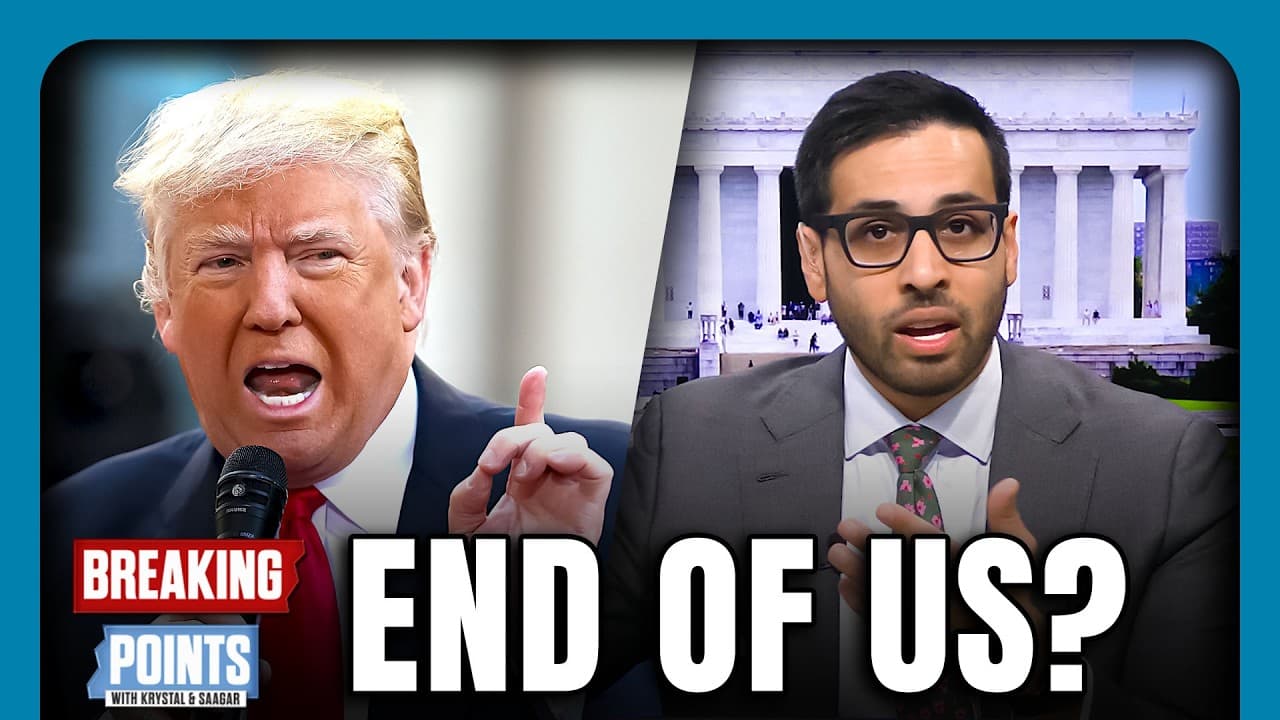
- •Breaking Points hosted historian Nicholas Mulder to discuss how decades of US sanctions — against Iran, Russia, China — have inadvertently taught the world how to route around American financial power.
- •Shadow fleets move sanctioned oil.
The Blowback Loop Nobody Planned For
Here is the uncomfortable logic at the centre of Nicholas Mulder's argument: every time the US imposes sanctions, it hands the targeted country a curriculum. A detailed, real-world lesson in how the global financial system works — and exactly where its pressure points are. Iran has been enrolled in that programme since 2009. Russia since 2014, and then comprehensively after 2022. China has been watching both and taking notes since the export controls started landing.
The result is not a world full of countries that have given in. It is a world full of countries that have quietly started building the exits. That was probably not the intended outcome.
Mulder made this case in Iran War IS END Of US Economic Warfare Dominance, a recent Breaking Points episode that is worth watching in full for anyone trying to understand where American financial statecraft is heading.
The Hormuz Card
Of all the leverage points discussed, Iran's potential grip on the Strait of Hormuz is the one that should make energy ministers nervous. According to Mulder's analysis, Iran appears to be developing a tiered passage system: friendly nations move through freely, neutral countries pay a toll, and hostile states are turned away. Blunt, but geometrically effective.
The Strait is not a detail. Roughly a fifth of global oil passes through it. If Iran can selectively grant or deny access, it stops being a sanctioned pariah and starts being a toll booth operator that half the world needs to negotiate with. The countries most dependent on that energy — particularly in Asia — suddenly have a reason to quietly peel away from Western-led coalitions. You can see why this changes the diplomatic math entirely, and it is the kind of move that rewrites the rules of economic coercion from the outside in.
Our Analysis: What Mulder is describing is something strategic planners have long feared but rarely said plainly: sanctions, applied broadly enough and for long enough, become a masterclass in financial system architecture for the very countries being targeted. The irony is almost too neat. The more comprehensively the US wields its financial toolkit, the more motivated and capable its adversaries become at reverse-engineering it.
The shadow fleet phenomenon is the clearest proof of concept. Russia's ability to move oil outside Western insurance, shipping, and payment infrastructure was not a given in February 2022. It was improvised under pressure, refined over months, and is now a functioning parallel logistics network. Iran helped. China provided demand. And the blueprint now exists for anyone else who needs it. That is a strategic gift that keeps giving, long after any individual sanctions regime ends.
The Yuan angle deserves more attention than it typically gets in Western coverage. Dollar dominance in trade settlement was never purely about economics — it was about information. When transactions clear through dollar-denominated systems, the US Treasury has visibility. When they don't, it doesn't. Every bilateral deal settled in Yuan, every cryptocurrency transaction routed outside SWIFT, is not just a financial workaround. It is a reduction in American intelligence coverage of global commerce. That has security implications that go well beyond the balance of payments.
What Mulder's framework also implies, but does not fully spell out, is a coalition fragmentation problem that Western policymakers are only beginning to grapple with. The assumption behind multilateral sanctions has always been that enough of the world can be brought along to make isolation meaningful. But if Iran genuinely holds Hormuz leverage over Asian energy importers — South Korea, Japan, India, even China — then the diplomatic math for assembling that coalition shifts dramatically. Countries do not publicly announce that they are defecting from a Western-led pressure campaign. They simply become less available, less cooperative, harder to pin down at the margins. The coalition frays from the edges without ever formally collapsing.
The deeper question this raises is whether sanctions were ever primarily about changing the behaviour of the targeted state, or whether they were always more about signalling resolve to domestic audiences and allied governments. If it is the latter, then the blowback costs are more tolerable — a political tool that is accepted to have limited coercive effect. If it is the former, then the last two decades represent a significant policy failure dressed up in the language of pressure and compliance. Either way, the conversation Mulder is starting on Breaking Points is one that the foreign policy establishment has been conspicuously slow to have in public.
Frequently Asked Questions
Why is US sanctions effectiveness declining after decades of use?
How do shadow fleets help countries evade US sanctions?
Can Iran actually control access through the Strait of Hormuz?
Is the Chinese Yuan actually replacing the US dollar in international trade?
Does using sanctions too often make them less effective over time?
Based on viewer questions and search trends. These answers reflect our editorial analysis. We may be wrong.
Source: Based on a video by Breaking Points — Watch original video
This article was created by NoTime2Watch's editorial team using AI-assisted research. All content includes substantial original analysis and is reviewed for accuracy before publication.