Trump White House underground military complex revealed
Key Takeaways
- •Trump publicly described his new ballroom as a 'shed' for an underground military complex being built beneath it, with features including bulletproof glass — a rare, unprompted disclosure that emerged from a legal proceeding.
- •The Presidential Emergency Operations Center (PEOC), the primary presidential bunker located under the White House, is reportedly based on 1960s-era design and is widely considered overdue for modernization.
- •White House Press Secretary Caroline Levitt confirmed military upgrades are being made to White House facilities but provided no details connecting those upgrades to Trump's ballroom construction.
Trump Said the Quiet Part Out Loud
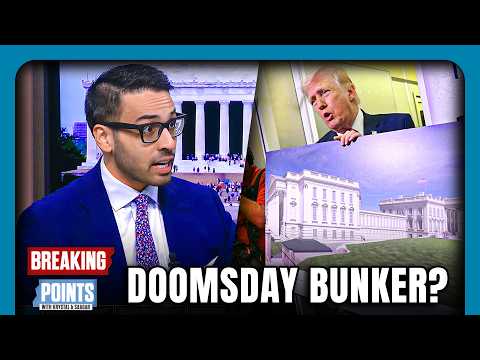
In most administrations, you don't find out about underground military construction from the president himself. Trump, during discussions connected to a lawsuit, stated plainly that a significant military complex is being built beneath a new ballroom he is planning near the White House. He went further, calling the ballroom a 'shed' for the underground structure — which is either a remarkably candid moment or the kind of thing someone says when they want everyone to know how serious the facility is. He also mentioned bulletproof glass and drew comparisons between the building's appearance and the White House itself. For a project that would normally be buried in contractor filings, this one got a very public introduction from the most prominent person involved. Breaking Points examined these claims in detail in their video DOOMSDAY BUNKER? Trump REVEALS Military Complex Under Ballroom.
The Bunker That Still Runs on Eisenhower-Era Engineering
The straightforward explanation for all of this is the Presidential Emergency Operations Center. The PEOC is the bunker beneath the White House designed to shelter the president during a national emergency, and it has been around, in its current form, since the 1960s. That means the infrastructure protecting the most powerful office in the world was designed before the internet, before modern communications, and before the current generation of threats that any serious national security planner would be accounting for. Constructing a new, larger facility beneath a nearby structure rather than attempting to retrofit the existing one underneath an active, occupied building is not a conspiratorial leap. It is fairly logical project management. The part that raises eyebrows is how little the government has said about it, given that Trump himself said quite a lot. Related: Supreme Court & 14th Amendment Birthright Citizenship Interpretation
What Caroline Levitt Actually Confirmed
When the question reached the White House press briefing room, Press Secretary Caroline Levitt confirmed that the military is undertaking facility upgrades at the White House complex. That confirmation is notable because it gives the construction some official weight, but it is also almost perfectly uninformative. No details about the ballroom. No specifics about what is being upgraded, where, or why. A confirmation that is technically true while explaining nothing is still a confirmation, and it does at least establish that something real is happening, which matters when the surrounding conversation has started pulling in some wilder directions.
The Timing Is the Part That Sticks
Building a fortified underground facility during a period of relative global calm would read as routine infrastructure work. Building one while the Iran situation is actively developing, while nuclear posturing from multiple actors is a recurring headline, and while as we covered in Trump's threats around the Strait of Hormuz are rattling oil markets — that is a different atmosphere entirely. It does not require believing in secret knowledge to notice that the timing of this project coincides with a moment when a lot of powerful people seem to be thinking seriously about worst-case scenarios. Wealthy private citizens around the world are building their own bunkers at an unusual pace. Governments upgrading their emergency infrastructure during this specific window is not surprising. It's just uncomfortable to look at directly.
The Gap Between the Official Story and the Scale
A PEOC upgrade is a reasonable explanation. The problem is that Trump did not describe a PEOC upgrade. He described a large military complex, emphasized its defensive features with some pride, and framed the ballroom above it as a facade. That description does not map neatly onto 'we modernized the communications equipment in the existing bunker.' It could still be a PEOC replacement — bigger, deeper, better equipped — but the language Trump used suggests something more substantial than a renovation. The broader question of what governments prioritize when they think no one is watching connects to patterns worth tracking, including the accelerating geopolitical shift away from the Pax Americana framework that is reshaping how nations think about security infrastructure entirely. A 1960s bunker being replaced by something built for the current threat environment is not alarming. What is mildly alarming is that the president described it casually, and then the government confirmed it vaguely, and the actual specifics remain completely opaque.
What Gets Built When No One Is Asking Questions
The core issue here is not whether Trump is building a bunker. He almost certainly is, and it is almost certainly at least partially a PEOC replacement. The issue is the absence of any structured public accounting for a major construction project at the most symbolically and practically significant address in the country. Government transparency has been under pressure across multiple fronts — from surveillance infrastructure to legal interpretations, as seen in debates around how facial recognition tools are deployed without public oversight — and this project fits that pattern. When the clearest description of a classified construction project comes from the person commissioning it, in an offhand comment during litigation, the transparency gap is not a conspiracy theory. It is just a fact about how this information reached the public.
Our Analysis: The alien invasion theory is a distraction. The PEOC upgrade is real, documented, and long overdue. The more grounded concern is that Trump framed a presidential security installation as his personal construction project, which tells you something about how this administration handles the line between public infrastructure and private branding.
Caroline Levitt confirming military upgrades while dodging the ballroom question is the actual story here. If this were routine, someone would have said so plainly. Watch whether Congress gets a budget briefing on it. If they don't, that silence matters more than any bunker theory.
There is also a subtler issue worth naming: the way this information entered the public record sets a strange precedent. Presidential emergency infrastructure has historically been treated as need-to-know by design — not because the public can't handle it, but because operational security around the president's survival capabilities is genuinely sensitive. When that information leaks through litigation rather than oversight, it means the disclosure is accidental, not accountable. Congress has tools to demand briefings on classified construction projects of this scale. Whether they use them is the next thing to watch. The bunker itself is probably fine. The process that let us find out about it this way is the part that should be making people uncomfortable.
Frequently Asked Questions
What is Trump's White House underground military complex actually being built for?
Is the Presidential Emergency Operations Center actually that outdated?
What did Caroline Levitt actually confirm about the White House military facility construction?
Why is the timing of this bunker construction significant?
Did Trump accidentally reveal classified information about the White House bunker?
Based on viewer questions and search trends. These answers reflect our editorial analysis. We may be wrong.
Source: Based on a video by Breaking Points — Watch original video
This article was created by NoTime2Watch's editorial team using AI-assisted research. All content includes substantial original analysis and is reviewed for accuracy before publication.