Supreme Court & 14th Amendment Birthright Citizenship Interpretation
Key Takeaways
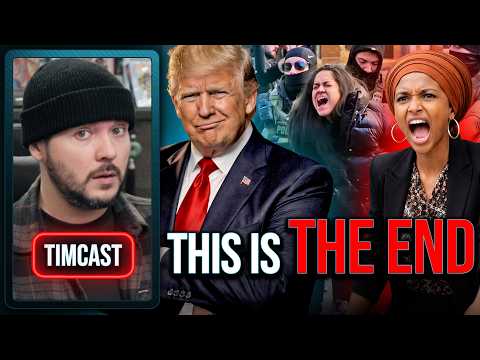
- •The Supreme Court is weighing a challenge to birthright citizenship tied to Trump's executive order, and Tim Pool's video 'ITS FINALLY DONE' makes the case that the 14th Amendment was never meant to cover children of foreign visitors in the first place.
- •Pool argues that Senator Jacob M.
- •Howard, one of the amendment's principal authors, explicitly excluded foreigners and aliens from the citizenship clause when he introduced it in 1866.
What the 14th Amendment Was Actually Written to Do
The 14th Amendment was ratified in 1868, three years after the end of the Civil War, with a very specific problem to solve. Millions of formerly enslaved people were legally stateless inside the country they had built. The citizenship clause fixed that. Tim Pool's argument, laid out at length in ITS FINALLY DONE, is that this was always a targeted correction, not a universal rule written for a world where someone could book a flight from Shanghai, give birth in Los Angeles, and fly home with a U.S. passport in hand. The framers weren't writing immigration policy. They were closing a wound. Reading the text as if they were is, Pool argues, a category error dressed up as constitutional law.
Howard's Words, on the Record
The strongest piece of evidence Pool puts forward isn't an interpretation. It's a quote. Senator Jacob M. Howard, one of the 14th Amendment's principal architects, told the Senate directly that the citizenship clause would not extend to foreigners or aliens, and specifically excluded individuals belonging to the families of ambassadors or foreign ministers. Pool's reading goes further than the diplomatic carve-out: if the author of the clause felt it necessary to state who wasn't covered, the assumption of blanket coverage for all foreign nationals starts to look a lot shakier. Legal scholars will argue about how far that exclusion extends. But the fact that Howard said it at all is the kind of primary source that doesn't disappear just because it's inconvenient.
Birth Tourism and the Gap Between 1868 and Now
Pool spends real time on what he calls the practical exploitation of the current system. Chinese birth tourism operations, including cases where organizers were jailed for running paid schemes helping wealthy foreign nationals give birth on U.S. soil, are his main exhibit. The 14th Amendment's framers were reconstructing a post-war nation where international travel meant months on a ship. The idea that the citizenship clause was written to accommodate a global industry of maternity hotels is, to put it gently, a stretch. This connects to a broader pattern worth watching, as we explored in our piece on Our Analysis: Pool gets the historical record mostly right. Howard's floor statements are real, documented, and genuinely inconvenient for the blanket birthright interpretation. That's not a fringe reading, it's a paper trail. Where it falls apart is the leap from citizenship to abortion via the 'persons born' clause. That's not originalism, that's reverse-engineering a conclusion. Mixing those two arguments in one breath gives critics easy ammunition to dismiss the stronger citizenship case alongside the weaker one. If the Supreme Court rules narrowly on the 1940 statute rather than the 14th Amendment, the constitutional question stays open longer than anyone is prepared for. There's a deeper structural issue here that the video doesn't fully sit with: the difference between what a law was written to do and what it does in practice has always been the central tension in constitutional interpretation. Originalism as a method is only as clean as the historical record it draws on, and floor statements from 1866 — however useful — exist alongside competing statements, committee debates, and ratification-era commentary that cuts in multiple directions. Howard's words matter. They don't settle the question by themselves. What's also worth noting is the political timing. This case is arriving at a Court that has already demonstrated willingness to revisit settled constitutional assumptions. The birthright citizenship challenge isn't happening in a vacuum — it's happening in a post-Dobbs environment where the definition of what counts as settled law has shifted considerably. That context shapes how lower courts and legal commentators are reading the stakes, even when they don't say so out loud. Finally, the birth tourism framing, while rhetorically effective, does some work that deserves scrutiny. The overwhelming majority of children born in the U.S. to foreign nationals aren't products of organized maternity hotel operations — they're children of visa holders, long-term residents, and mixed-status families. How any ruling would apply across that entire spectrum is a question the current framing tends to sidestep. The edge case is real. It's just not the whole picture. Based on viewer questions and search trends. These answers reflect our editorial analysis. We may be wrong. Source: Based on a video by Tim Pool — Watch original video This article was created by NoTime2Watch's editorial team using AI-assisted research. All content includes substantial original analysis and is reviewed for accuracy before publication.Frequently Asked Questions
What does the 14th Amendment actually say about birthright citizenship?
What are the strongest arguments against birthright citizenship?
How could the Supreme Court rule on birthright citizenship without touching the 14th Amendment?
Is birth tourism actually a widespread problem in the United States?
What is the difference between originalism and textualism in the 14th Amendment birthright citizenship debate?
Related Articles