Trump Iran Strait of Hormuz Threats Rattles Oil Markets
Key Takeaways
- •Iran launched missile strikes on multiple US regional allies including Saudi Arabia, Kuwait, Bahrain, the UAE, and Israel, with missiles demonstrating a range significantly beyond Iran's previously claimed capabilities.
- •Trump publicly announced productive diplomatic conversations with Iran, but Iran's foreign ministry quickly denied any meaningful progress, calling the statements politically motivated to drive down oil prices.
- •Iranian officials explicitly threatened to mine the entire Gulf if the US launched a ground operation, a threat that would effectively shut down one of the world's most critical oil transit corridors.
Trump's Threats Against Iran's Energy Infrastructure
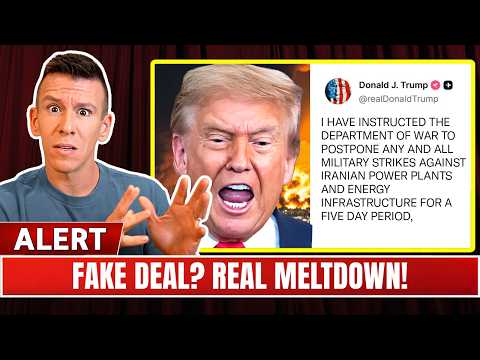
Trump's position on Iran over the period Philip DeFranco covers is not a strategy so much as a series of aggressive statements with occasional reversals that seem designed to keep everyone, including allies, permanently off-balance. He threatened to obliterate Iranian energy infrastructure. He complained publicly that NATO wasn't pulling its weight in the Strait of Hormuz. Then, in what looked like a pressure-release valve move, he temporarily lifted sanctions on Iranian and Russian oil. Then the threats resumed. The US Department of State and the broader international community were left trying to interpret actions that contradicted each other within days. At some point you have to ask whether the unpredictability is the policy, or just what happens when there isn't one. DeFranco's full breakdown is available here: Trump's Iran Meltdown Was Worse Than You Think & The TSA Crisis Now Has An ICE Problem.
What Iran Actually Did in Response
While Trump's rhetoric fluctuated, Iran's response was more consistent: it escalated. Iranian forces carried out strikes against US regional allies including Saudi Arabia, Kuwait, Bahrain, and the UAE. Israel was also targeted. These weren't symbolic gestures. The attacks demonstrated operational reach and a willingness to hit partners of the United States across a wide geographic area. The Iranian Revolutionary Guard was not signaling restraint. It was signaling capability, and the message landed.
The Missile Range Problem Nobody Wanted to Talk About
One of the more unsettling details in DeFranco's breakdown is what the strikes revealed about Iranian missile range. The missiles traveled significantly farther than Iran had publicly claimed its arsenal could reach, which means either Iranian officials had been lying about their capabilities for years, or they recently acquired or developed something new. Strikes near Israeli nuclear facilities put the reliability of the Arrow 3 air defense system under direct scrutiny. The system did not perform the way a system you're betting your nuclear infrastructure on probably should, and that is a sentence that should make a lot of people in the region deeply uncomfortable.
Cluster Munitions and the Weapons Debate
The strikes also reignited the cluster munitions debate. Cluster munitions work by dispersing smaller submunitions across a wide area upon impact, and their use in or near populated zones is considered illegal under international law by the countries that have signed relevant conventions. Iran's alleged use of them in these strikes drew immediate condemnation. Separately, Israel faced its own allegations regarding the use of white phosphorus in Lebanon. Both sides, in other words, were being accused of using weapons that the international community has specifically moved to restrict, which tends to make the diplomacy harder before anyone has even sat down at a table.
The Negotiation That Wasn't
Trump announced publicly that the US and Iran were having productive conversations, and that announcement bought a five-day pause in military action. Iran's foreign ministry then went on record saying that no such meaningful progress had occurred, and suggested Trump's remarks were designed primarily to push oil prices down rather than reflect any actual diplomatic reality. Iranian officials followed that denial with a new threat: mine the entire Gulf if a ground operation is launched. The sequence, announcement of progress, denial of progress, new threat, is not the arc of a negotiation that is going well, and the five-day pause now looks less like a breakthrough and more like a timeout both sides used to reload.
Why Global Energy Markets Are Genuinely Nervous
The Strait of Hormuz is not an abstraction. It is the narrow waterway through which a substantial portion of the world's oil supply moves, and both Trump's threats against Iranian energy infrastructure and Iran's counter-threat to mine the Gulf are aimed directly at it. Trump's own public complaints about NATO inaction in the region sit awkwardly next to his simultaneous claims of American energy self-sufficiency, because you don't loudly demand allied help in a corridor you claim not to need. The contradiction is either a negotiating tactic or a sign that the administration hasn't fully reconciled its messaging with its actual strategic exposure. Either way, global markets are pricing in the uncertainty, and the people most exposed to that uncertainty are not the ones making the threats.
Our Analysis: Trump's Iran posturing is the story everyone is treating as noise, and that's the mistake. Threatening the Strait of Hormuz isn't a negotiating tactic when global oil markets are already fragile. It's a match near a gas leak.
The TSA-ICE overlap is where this gets uglier fast. A workforce already bleeding out from a shutdown is now being pulled into immigration enforcement optics. Those are two separate jobs, and conflating them breaks both.
Watch the AI deepfake issue in political ads. It's the quiet one here, but it will be the loudest story by election season.
Frequently Asked Questions
What exactly is Trump threatening to do to Iran's oil infrastructure, and how would it affect global energy prices?
How far can Iran's missiles actually reach, and did the recent strikes reveal new capabilities?
Why did Iran deny that US-Iran ceasefire negotiations were making progress after Trump said they were?
Is Iran's use of cluster munitions in these strikes actually illegal, and does that change anything diplomatically?
How reliable is Israel's Arrow 3 air defense system after the strikes near its nuclear facilities?
Based on viewer questions and search trends. These answers reflect our editorial analysis. We may be wrong.
Source: Based on a video by Philip DeFranco — Watch original video
This article was created by NoTime2Watch's editorial team using AI-assisted research. All content includes substantial original analysis and is reviewed for accuracy before publication.