Ivanka Trump White House Accomplishments: A Detailed Look
Key Takeaways
- •Ivanka Trump doubled the child tax credit during the Trump administration, a move she says benefited millions of American families.
- •She secured paid family leave for federal government employees — a first — and led White House efforts on human trafficking prevention.
- •She learned her father was running for president just two weeks before his official 2015 announcement, and closed an $800 million business to join his administration.
Ivanka Trump's Major White House Accomplishments
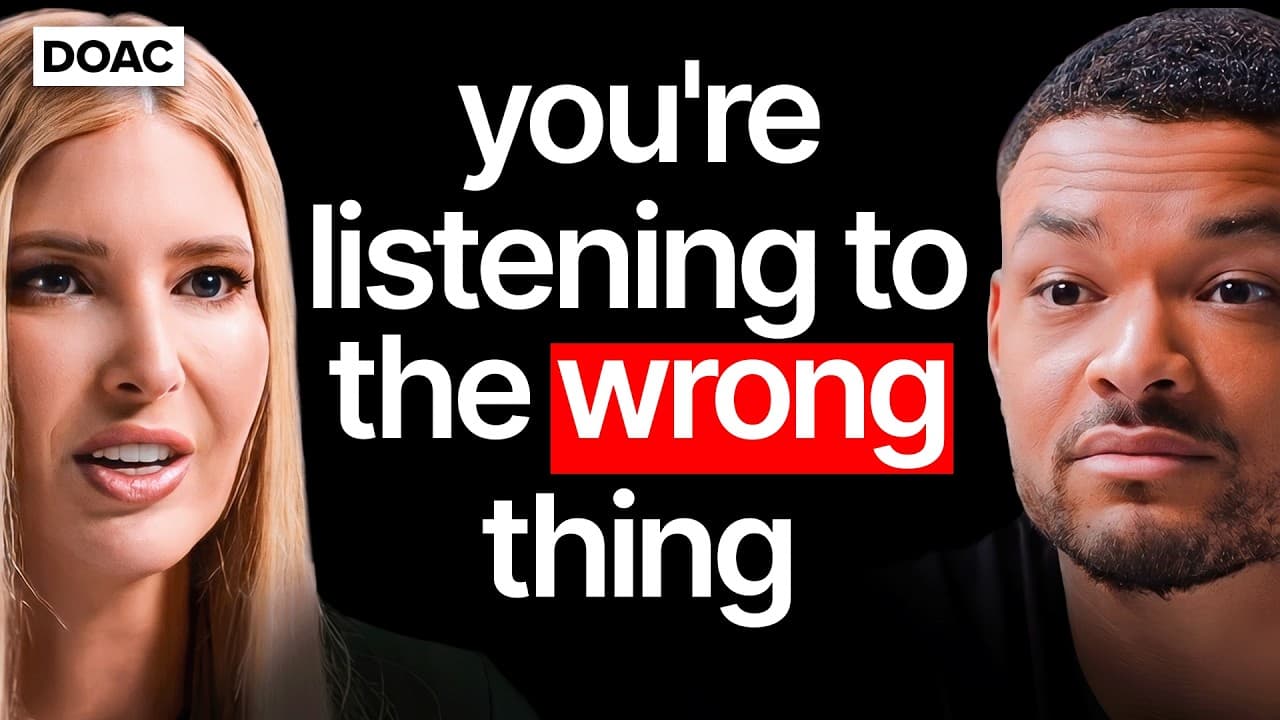
When Ivanka Trump talks about her four years in the White House, she doesn't lead with the chaos. She leads with the work. In a recent interview titled Ivanka Trump: My Dad Told Me Two Weeks Before He Ran For President! on The Diary of a CEO, she walked through what she considers her most concrete contributions during the Trump administration from 2017 to 2021 — and the list is more specific than most people probably expect.
Expanding the Child Tax Credit
The headline achievement, by her own account, is the doubling of the child tax credit. She pushed for this as part of the 2017 tax reform package, and the expanded credit applied to tens of millions of American families. The policy had bipartisan support in principle — the argument that families with children should keep more of their income isn't a hard sell — but getting it into the final legislation required sustained internal lobbying. She describes it as one of the moments she felt the weight of the role most clearly. It's one thing to advocate for a policy in a boardroom; it's another to watch it move through Congress and land in people's tax returns. Related: How to Start an Egg Roll Business: $1.8M Success Story
Securing Paid Family Leave for Federal Workers
Less discussed but arguably more structurally significant: she secured paid family leave for federal government employees. This was a long-standing gap in federal employment policy — the U.S. government, as an employer, did not offer paid parental leave to its own workforce. Getting that changed required navigating a bureaucratic and legislative process that had stalled for years. She frames this as a foundation — the argument being that if the federal government won't offer paid family leave to its own employees, it has no credibility pushing the private sector to do the same. Whether that logic ever translated into broader private-sector change is a separate question, but the federal policy shift itself was real.
Combating Human Trafficking
She also led White House-level efforts on human trafficking prevention, which she describes as one of the more unexpectedly consuming parts of her role. This included coordinating across federal agencies and working on both domestic and international dimensions of the issue. She expresses particular pride in this work, framing it as the kind of cause that transcends political affiliation — though the actual legislative and enforcement outcomes she cites are described in general terms rather than with specific metrics. The emotional weight she attaches to it comes through clearly, even if the measurable impact is harder to pin down from the interview alone. Related: Joe Rogan: AI Censorship & Thought Control Algorithms
Her Role in the Trump Administration
Ivanka's position in the White House was unusual by any standard. She held the title of Advisor to the President — her father — which meant her portfolio was self-defined to a degree that few White House roles ever are. She focused on workforce development, vocational education, and women's economic empowerment alongside the policy areas above. She describes the experience as radically expanding her understanding of the country, particularly its working-class communities, in ways her previous life in New York real estate and fashion simply hadn't. She closed a business generating significant revenue — described in the interview as an $800 million operation — to take an unpaid government role. That's either a genuine act of service or the most expensive career pivot in recent memory, depending on how you read it.
Impact and Legacy of Her Policy Work
She's direct about the fact that she chose not to return to politics for her father's subsequent campaign, citing her children and family as the reason. The decision to step away, she says, was made with the same intentionality she applied to stepping in. She doesn't frame her White House tenure as a sacrifice exactly — more as a chapter that had a defined beginning and end, and that she's proud of on its own terms. Related: Joe Rogan, Arsenio Hall: comedy club creative freedom phone-free shows
Women's Economic Empowerment Initiatives
Beyond the domestic policy wins, she was involved in international women's economic empowerment work, including the Women's Global Development and Prosperity Initiative, which aimed to reach 50 million women in developing economies by 2025 through improved access to workforce opportunities, capital, and legal protections. She mentions this as part of a broader conviction that economic participation is the most durable form of empowerment — a view she held before the White House and carried into it. The ambition of the initiative was significant; whether the targets were met is a question the interview doesn't fully answer. Much like the human trafficking work, the framing is more about intent and effort than audited outcomes — which, to be fair, is how most politicians talk about their records, regardless of party.
The interview is essentially Ivanka Trump making the case that her White House years were substantive, not ceremonial. And on the specific policies she names — the child tax credit expansion, federal paid family leave, human trafficking efforts — she's not wrong to claim them. These were real policy outcomes. The problem is the interview never pushes on scale or follow-through. Doubling the child tax credit is a genuine win; whether the broader paid leave agenda moved anywhere after the federal employee policy is a different story, and that gap goes unexamined.
What's quietly interesting is how she talks about leaving. She didn't run for anything. She didn't write a book positioning herself for a comeback. She describes stepping away from politics the same way she describes stepping in — as a deliberate choice made on her own terms. Whether that's true or a well-constructed narrative, it's a notably different posture than almost everyone else who's ever worked in that building.
Frequently Asked Questions
What were Ivanka Trump's White House accomplishments during the Trump administration?
How did Ivanka Trump's child tax credit expansion actually work, and who benefited?
Did Ivanka Trump actually secure paid family leave for federal workers?
Why did Ivanka Trump leave her business to work in the White House?
What was Ivanka Trump's role in combating human trafficking, and what did it achieve?
Based on viewer questions and search trends. These answers reflect our editorial analysis. We may be wrong.
Source: Based on a video by The Diary of a CEO — Watch original video
This article was created by NoTime2Watch's editorial team using AI-assisted research. All content includes substantial original analysis and is reviewed for accuracy before publication.
Related Articles



You Might Also Like
Apr 1
Politics | Trump White House underground military complex revealed
May 1
Politics | Candace Owens Trump attack Time magazine: Her Shocking Response

May 1
Finance | OpenAI TBPN Acquisition Strategy: The Logic Gap That Fooled Everyone

May 1
Productivity | Why 'Follow Your Passion' Fails: Follow Your Bliss Instead of Passion