Trump Iran Ceasefire Negotiations Collapse: What Went Wrong?
Key Takeaways
- •Trump's approval rating sits at 37%, with 50% strongly disapproving — driven largely by his handling of the economy and the Iran conflict.
- •The US-Iran ceasefire is expiring with no deal in sight; Trump publicly suggested he expects bombing to resume, while simultaneously extending the pause by a day.
- •Jared Kushner's UAE investment ties are raising serious conflict-of-interest questions as Trump's administration explores a currency swap deal with Abu Dhabi.
The Ceasefire That Was Never Really a Ceasefire
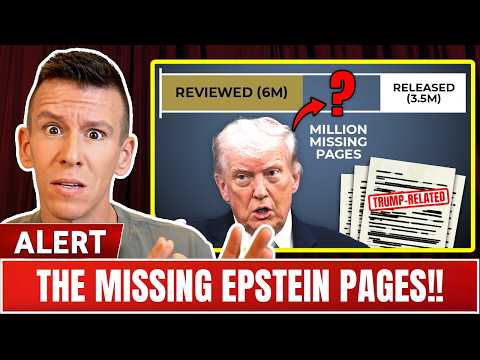
The US-Iran ceasefire was always fragile. In his video US-Iran Ceasefire, Trump's Policies, and What Comes Next, Philip DeFranco details how conflicting reports from both governments and internal disagreements on each side have made any coherent negotiating position nearly impossible to hold. The pause was stretched by just twenty-four hours before Trump went on record suggesting he anticipates a return to strikes — a contradiction that signals less a negotiating strategy than a president still working out what he wants. That's not diplomacy. That's a man narrating a situation he hasn't decided how to handle yet.
Negotiating on Social Media While Troops Mass in the Region
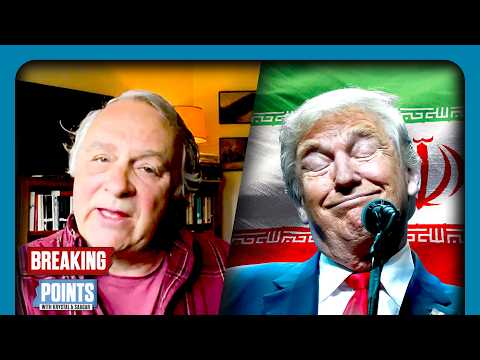
Trump's preferred negotiating venue appears to be his own social media feed, which is a problem when the other side is trying to read signals from a government. His statements have been contradictory enough that neither Iranian officials nor US allies can reliably interpret what the American position actually is. Meanwhile, the US military presence in the Middle East has continued to grow throughout the ceasefire period. Experts cited in the video believe a ground invasion of Iran is increasingly likely — not because anyone announced it, but because the infrastructure for one is being quietly assembled regardless of what's being said publicly. As we explored in US Iran Nuclear Deal Negotiations 2025: What's the Catch?, the gap between Trump's public posture and the actual mechanics of these talks has been a consistent problem from the start.
The Kushner Problem
While the ceasefire teeters, Trump's administration is exploring a currency swap arrangement with the UAE — a country that is, by any measure, not short on money. The scrutiny here isn't really about the UAE's finances. It's about Jared Kushner, whose investment firm has received substantial backing from UAE sovereign wealth funds, and whose father-in-law is now in a position to direct American financial policy toward the same government. Trump also invoked Cold War-era national defense statutes to accelerate oil, coal, and natural gas production, framing fossil fuel expansion as a wartime necessity. The overlap between the people making these decisions and the people financially benefiting from them is not subtle.
Murphy's Sarcasm and the Backlash Economy
Democratic Senator Chris Murphy posted a sarcastic comment criticizing Trump's decision to blockade Iranian vessels — framing it in a way that some accounts and a White House spokesperson chose to read as support for a terrorist regime. Murphy clarified that it was sarcasm, directed at what he called a disastrously mismanaged conflict. The pile-on was predictable, and the clarification was ignored by most of the people doing the piling. The more interesting detail is that a White House spokesperson treated a senator's obvious sarcasm as a genuine foreign policy statement — which tells you something about how this administration prefers to engage with criticism. For more on how military framing gets weaponized in political discourse, the Pentagon Official's Pulp Fiction Prayer piece is worth your time.
What 37% Actually Means
Trump's overall approval rating is at 37%, with 50% of the population expressing strong disapproval. The economy and the Iran conflict are the two biggest drivers of that number. A president pursuing an increasingly aggressive military posture in the Middle East, while simultaneously using the conflict to justify domestic energy policy and financial arrangements that benefit his family's business partners, is doing so with the weakest public mandate of his current term. That's the context in which all of these decisions are being made — and it's the context that makes the military buildup feel less like strategy and more like a president trying to manufacture a win before the numbers get worse. The trajectory of these Iran nuclear deal negotiations in 2025 has taken a sharp turn that few analysts saw coming this fast.
Our Analysis: The financial conflict angle is the part of this story that keeps getting treated as a sidebar when it's actually the spine. A currency swap with the UAE, fossil fuel expansion framed as national defense, and Jared Kushner's investment portfolio sitting in the background — none of that is incidental. These aren't separate stories that happen to overlap with an Iran ceasefire. They're the reason you should be skeptical of every stated rationale for how this conflict is being managed.
Trump's 37% approval number is also doing more work than the coverage suggests. Presidents with that kind of floor don't suddenly pivot to cautious, measured diplomacy. They escalate. The military buildup continuing through a ceasefire isn't a contradiction — it's the tell. The public statements are noise. The troops moving into position are the actual policy.
What's being underreported is the institutional damage this kind of improvisational foreign policy inflicts on the machinery of diplomacy itself. When allies can't read American intentions because the president is contradicting his own government in real time on social media, the credibility gap doesn't close when the immediate crisis does. It compounds. The next administration — whoever leads it — will inherit a negotiating posture that has been systematically undermined not by adversaries, but by the president doing the negotiating. That's the longer story here, and it's one that 37% approval ratings can't fully capture.
Frequently Asked Questions
Why are Trump Iran ceasefire negotiations collapsing despite the announced pause?
How do Jared Kushner's UAE financial ties create a conflict of interest in US Iran policy?
Is a US ground invasion of Iran actually being prepared despite the ceasefire?
What did Chris Murphy actually say about Iran, and why did it backfire?
Does Trump's 37% approval rating actually constrain his Iran policy options?
Based on viewer questions and search trends. These answers reflect our editorial analysis. We may be wrong.
Source: Based on a video by Philip DeFranco — Watch original video
This article was created by NoTime2Watch's editorial team using AI-assisted research. All content includes substantial original analysis and is reviewed for accuracy before publication.