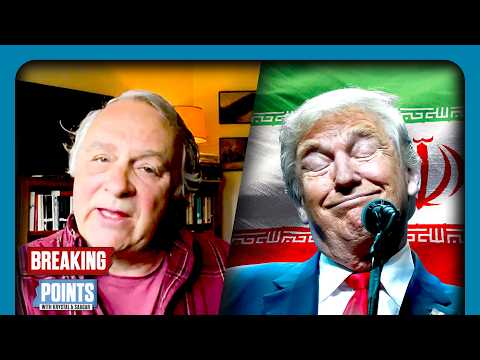
Trump Israel Policy Pressure: Adelson Donation Allegations

Key Takeaways
- •Miriam Adelson allegedly donated $100 million to Trump contingent on US support for West Bank annexation — Trump reportedly told associates he'd take the money but not follow through
- •Owens cites the Clinton-era Jonathan Pollard case as historical precedent for Israeli leverage over sitting US presidents
- •Trump's lack of interest in investigating the Butler assassination attempt is presented as a potential indicator of external political pressure
The $100 Million Adelson Donation and West Bank Annexation Deal
According to Candace Owens, the largest single donation in Trump's recent political orbit came with strings attached. Miriam Adelson, the billionaire Republican megadonor, allegedly contributed $100 million to Trump on the condition that he would support Israel's annexation of the West Bank. Owens claims Trump reportedly intended to accept the money but not fulfill the promise to allow Israel to annex the West Bank — essentially a direct quid pro quo he had no intention of honoring.
If accurate, that's not just a broken promise to a donor. It's a window into how foreign policy commitments get made and unmade at the highest level, with the American public nowhere in the room. As we've seen in the broader US-Israel aid policy debate, frustration over the transactional nature of this relationship has been building across the political spectrum for years.
What Miriam Adelson's Contribution Allegedly Required
Owens frames the alleged arrangement as a straightforward quid pro quo: US political cover for territorial expansion in exchange for nine-figure campaign funding. She doesn't present documentary evidence — this is sourced to what Trump reportedly told others — but the specificity of the claim, naming the amount, the condition, and Trump's alleged private response, is what gives it weight as an allegation worth scrutinizing rather than dismissing outright.
Historical Precedent: Israeli Pressure Against US Presidents
Owens doesn't treat the Adelson allegation as an isolated incident. She reaches back to the Clinton administration to argue that using leverage against US presidents is an established pattern, not a one-off accusation.
The Jonathan Pollard Case and Clinton Administration
The case she cites involves Jonathan Pollard, the American intelligence analyst convicted of spying for Israel. In An Open Letter To President Donald Trump (My Response) | Candace Ep 322, Owens argues that Israel has a documented track record of applying pressure to American leadership, pointing to claims that recordings involving Bill Clinton were used to compel his administration into releasing Pollard. The Pollard case itself is historically documented; the specific coercive mechanism Owens describes is her characterization of events, presented to establish that this kind of pressure has deep roots. Whether or not every detail holds up, the broader point — that Israel has historically applied extraordinary pressure on US administrations to get what it wants — is not a fringe claim.
How Pro-Israel Pressure May Be Influencing Trump's Decisions
Owens argues that Trump is currently surrounded by what she calls 'Israel Firsters' — advisors and donors whose primary loyalty runs to Israeli government interests rather than American ones. She connects this to what she sees as a visible drift away from the America First foreign policy framework that defined his first campaign.
Deviation from America First Policy
The tension Owens identifies is real, regardless of how you weigh her specific allegations. Trump ran in 2016 and again in 2024 on a platform of avoiding foreign entanglements and prioritizing domestic interests. His posture toward Israel — and the question of whether the US is being drawn toward conflict with Iran on Israel's behalf — sits uncomfortably against that promise. Iran's recent moves in the Strait of Hormuz make this tension considerably more than theoretical. Owens describes the Israeli government's primary strategic interest as preventing any peace deal that would constrain their territorial ambitions, and frames Trump's current behavior as consistent with serving that interest rather than America's.
The Butler Assassination Attempt and Unanswered Questions
One of the more pointed observations in Candace Owens' episode concerns what hasn't happened: a serious investigation into the assassination attempt in Butler, Pennsylvania. Owens questions why Trump, a man who built a political brand on aggressive counter-punching and demanding accountability, has shown almost no public interest in finding out who was behind a near-fatal attack on his own life.
Her suggestion is that the silence is itself informative — that Trump's reluctance to push for answers may be connected to the Adelson deal or other pressures he's operating under. She stops short of naming a specific actor responsible for the attempt, but the implication is that the same web of external influence that shapes his foreign policy may also explain why certain questions are going unasked. That's a serious charge, and it's one that remains entirely unsubstantiated — but the underlying question of why the Butler investigation has generated so little political noise from Trump himself is one that his supporters have also been raising.
Trump's Shifting Stance on Iran and Israel's Strategic Interests
Owens ties the financial pressure, the historical precedent, and the foreign policy drift together into a single argument: that Trump is being steered toward confrontation with Iran not because it serves American interests, but because it serves Israeli ones. She characterizes the Likud government as having a strategic imperative to keep the region in conflict — a peace deal, in her framing, would constrain Israeli expansion and is therefore something the current Israeli government is actively working to prevent.
The Iran dimension matters here because it's where abstract allegations about donor influence become concrete policy consequences. If Trump's posture toward Tehran is being shaped by the kind of financial and political pressure Owens describes, the downstream effects — military escalation, energy market disruption, American casualties — fall on Americans, not on the donors writing the checks. That's the core of her argument, and it's the part that deserves the most scrutiny regardless of where you sit politically.
Owens is at her most credible when she's asking questions that nobody else in conservative media will ask — why isn't Trump demanding answers about Butler? That's a legitimate puzzle, and the silence around it is strange. She's at her least credible when she slides from 'here is a documented historical case of Israeli pressure' to implying Trump is entirely without agency, because the rhetorical leap does real damage to the factual scaffolding she spent the first half of the episode building.
The Adelson allegation is the one that will either age very well or very badly. A $100 million donation with an explicit territorial condition attached, and a president who reportedly intended to accept the money without fulfilling the promise — if that's documented anywhere, it's one of the more significant corruption stories of the current political era. Right now it's an assertion. The gap between those two things is doing a lot of work in this episode.
Frequently Asked Questions
Is Miriam Adelson a US citizen?
Why is the US protecting Israel so much?
What specific conditions were reportedly attached to Miriam Adelson's $100 million donation to Trump?
Has Israel ever used leverage or blackmail against a US president before?
Is Miriam Adelson a Zionist?
Based on viewer questions and search trends. These answers reflect our editorial analysis. We may be wrong.
Source: Based on a video by Candace Owens — Watch original video
This article was created by NoTime2Watch's editorial team using AI-assisted research. All content includes substantial original analysis and is reviewed for accuracy before publication.
Related Articles

You Might Also Like
Mar 28
World News | Turning Point USA Breakdown: Candace Owens vs. Blake's Rant
Mar 28
World News | Candace Owens: Charlie Kirk Assassination Timeline Conflicting
Apr 11
Life Stories | Ivanka Trump White House Accomplishments: A Detailed Look
Apr 2
World News | US intelligence failure Iran policy: Ex-CIA on Misconceptions