Turning Point USA Breakdown: Candace Owens vs. Blake's Rant
Key Takeaways
- •A man named Blake, mourning a murdered friend, went on Candace Owens' channel to defend the prosecution of accused killer Tyler Robinson — and ended up getting fact-checked mid-rant.
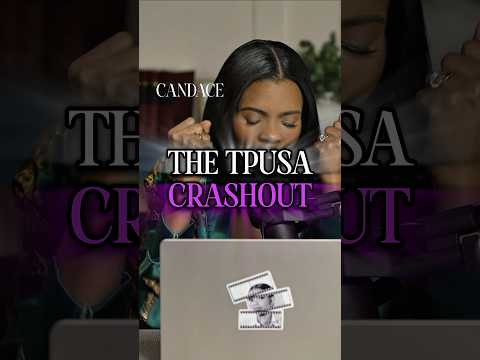
- •In her video 'Turning Point USA Is Crashing Out...', Owens pushes back on Blake's certainty of guilt before any trial has concluded, his dismissal of defense witnesses, and his habit of describing the prosecution's evidence as progressively more mountainous every time he mentions it.
- •Blake also says government officials are planning to testify for the defense, which he considers a personal betrayal.
Blake's Conspiracy Theory Grievance
Blake is frustrated, and he's not hiding it. Speaking on the Candace Owens channel, he argues that people pushing conspiracy theories around his friend's murder are actively getting in the way of justice — treating the case like a puzzle to unpack online rather than a crime with a named suspect heading to trial.
His broader complaint is that conspiracy thinking gets slapped onto every high-profile event now, and this time it's personal.
The May Evidence Drop
Blake is expecting a big moment in May, when he says the prosecution will publicly present evidence against Tyler Robinson — most of which, he notes, hasn't been disclosed yet.
He's confident it'll be overwhelming. He's used that word, and variations of it, more than once.
Government Officials on the Wrong Side
The part that clearly stings most: Blake says government figures are reportedly prepared to testify for the defense. He frames this as a betrayal — people with institutional authority lining up to help the man he believes is responsible for his friend's death.
Owens doesn't dispute his grief, but she does point out that witnesses testifying for a defense is, technically, how trials work.
Owens Questions the Certainty
Owens' main issue with Blake isn't his anger — it's his apparent conclusion that a trial is a formality. She pushes back on the idea that any defense testimony can just be written off, and takes a dry swing at the escalating evidence rhetoric.
She notes that the evidence has graduated from strong to overwhelming to, in her framing, 'an undeniable mountain' — and suggests that mountains of that type have a way of eroding once someone starts asking straightforward questions.
The full exchange is available in Turning Point USA Is Crashing Out... on the Candace Owens channel.
Our Analysis: Blake's frustration is understandable, but publicly declaring guilt before trial is exactly how you hand defense attorneys free ammunition. Owens is right to flag it — emotional certainty isn't evidence, and courts don't care about your feelings.
This fits a broader pattern of high-profile cases being litigated on social media before a jury sees anything, which reliably muddies outcomes for everyone.
Watch May closely — if the evidence is as strong as Blake claims, it'll speak for itself. If the mountain turns out to be a hill, this whole public campaign backfires badly.
There's a deeper problem worth naming here: grief is not a neutral lens. Blake is mourning someone he cared about, and that's real. But mourning a victim doesn't make someone a reliable narrator of a criminal case, and it especially doesn't make them a useful one. When emotionally invested parties go on record insisting a trial is already over before it starts, they don't strengthen the prosecution's position — they give the defense a gift-wrapped subplot about a case poisoned by outside pressure.
The government witness angle is worth watching for exactly this reason. Blake treats it as a scandal; it may simply be that people with relevant knowledge are legally obligated to tell the truth, wherever that truth lands. Courts are not loyalty tests. If Blake's certainty is well-founded, witness testimony — wherever it originates — should only reinforce it. The fact that defense witnesses feel like betrayal suggests he's not actually confident in the evidence doing the work on its own.
Owens, for her part, isn't defending Tyler Robinson. She's defending the concept of a trial. That's a distinction worth preserving, and one that tends to get lost the moment a case becomes a cause.
Source: Based on a video by Candace Owens — Watch original video
This article was created by NoTime2Watch's editorial team using AI-assisted research. All content includes substantial original analysis and is reviewed for accuracy before publication.