US Israel Aid Policy Debate: Bipartisan Frustration Grows

Key Takeaways
- •Israel reportedly bombed Lebanon during a Trump-announced two-week ceasefire, with Iran's president stating the strikes had already sabotaged upcoming nuclear talks.
- •Despite receiving substantial US military and financial aid, Israel continues to act against stated American foreign policy interests — and Washington appears unable or unwilling to stop it.
- •A majority of Democratic voters now hold negative views of Israel, yet the party's donor-driven establishment continues to back unconditional support and AIPAC influence in primaries.
Should the US Reconsider Unconditional Support for Israel?
The argument isn't new, but the messengers are getting stranger. Tucker Carlson — not exactly a fixture of progressive foreign policy circles — has reportedly aligned with the position that the US should end all financial and military aid to Israel and treat it like any other country: with expectations, limits, and consequences for crossing them. The Young Turks use this as a jumping-off point to argue that the US-Israel relationship has drifted so far from a normal alliance that it barely resembles one. The USS Liberty incident — in which Israel attacked a US Navy vessel in 1967 — gets cited as an early data point in a long pattern of Israel acting against American interests without meaningful repercussion. The fact that Tucker Carlson and progressive commentators are landing in the same zip code on this issue is either a sign of genuine cross-ideological consensus forming, or a sign that the Overton window has shifted enough that people feel safer saying it out loud.
The Ceasefire That Wasn't
Here's where it gets concrete. According to the video, Trump announced a two-week ceasefire. Israel then reportedly bombed Lebanon anyway, killing civilians. Iran's president responded by saying the strikes had already sabotaged the upcoming negotiations — before those negotiations had even started. Netanyahu publicly stated there was no ceasefire in Lebanon, directly contradicting the US position. So the US announced a ceasefire that one of its closest allies immediately and publicly rejected. That's not a diplomatic miscommunication. That's a client state telling its patron to mind its business, and the patron saying nothing back. As we explored in Netanyahu's secret push for a US-Iran war plan, this isn't the first time Netanyahu has moved to shape — or undercut — American foreign policy from the inside.
The Lobby Nobody Wants to Talk About
The video spends real time on why this dynamic persists, and the answer it keeps returning to is the pro-Israel lobby's unique political insulation. Other powerful lobbies — oil, pharma, defense — get criticized openly. The pro-Israel lobby operates differently: criticism of it routinely gets reframed as antisemitism, which shuts down debate before it starts. The video points to a recent congressional vote against banning AIPAC dark money in Democratic primaries as a live example. Politicians who might otherwise push back stay quiet because the reputational cost is asymmetric — you can survive being called a pharma shill, but being called antisemitic in American politics is a different kind of wound. AOC's voting record on Israel military aid illustrates just how carefully even progressive members navigate this terrain.
Democrats, Donors, and the Voter Gap
The disconnect the video identifies inside the Democratic Party is striking. A significant majority of Democratic voters now hold negative views of Israel, according to the discussion — yet the party establishment continues to align fully with AIPAC and unconditional military support. The explanation offered is blunt: money. Donor priorities and voter priorities have diverged, and in the current system, donors win. The video frames this as a broader accountability failure — one where representatives are insulated from voter sentiment by the financial architecture of campaigns. It's the same structural problem that shows up across issues, but Israel policy is where the gap between what Democratic voters want and what Democratic leadership does is currently most visible and most stark.
Iran Talks and the Credibility Problem
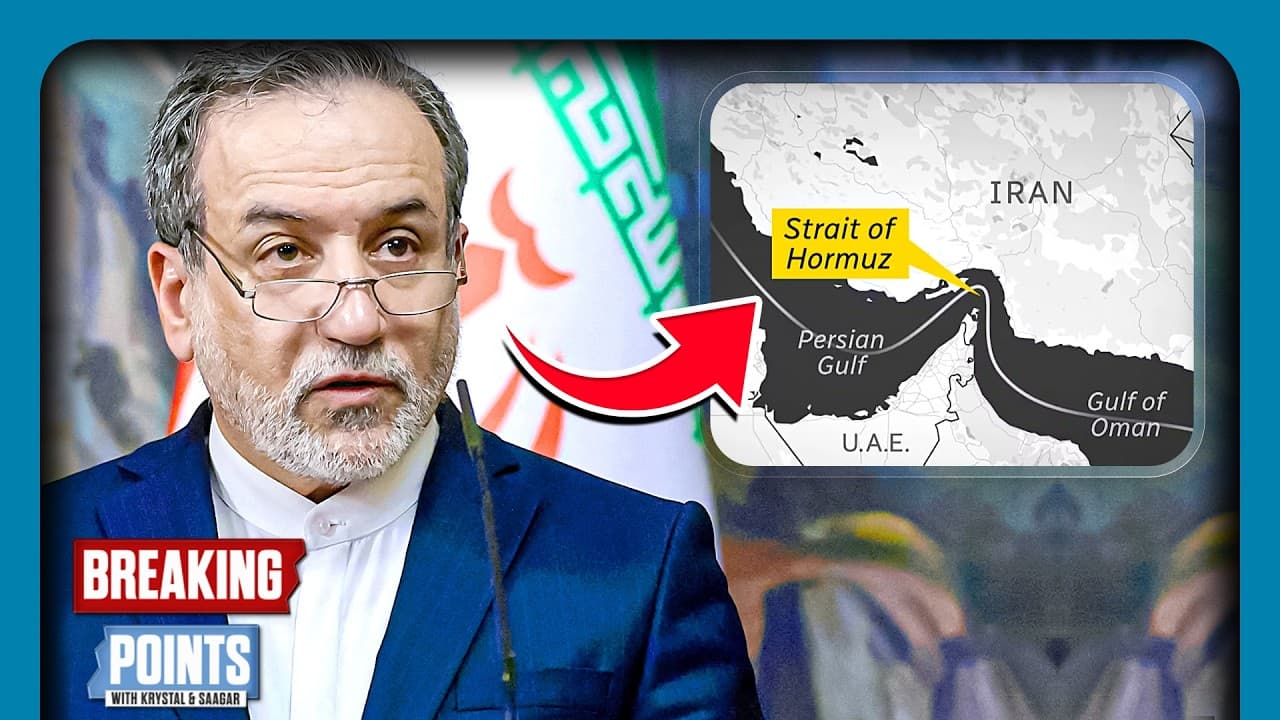
The upcoming US-Iran negotiations get a skeptical read. The argument is straightforward: if Israel can bomb Lebanon during a US-announced ceasefire and face no consequences, why would Iran trust that any agreement reached with American negotiators would actually hold? The video questions the effectiveness of figures like Jared Kushner and JD Vance as negotiators, though it doesn't elaborate on specific credentials. The deeper point is structural — the US cannot credibly guarantee outcomes that a third party (Israel) can unilaterally undermine. There's also a reported munitions angle: both US and Israeli stockpiles are said to be running low, which may have prompted the ceasefire announcement in the first place. If that's true, the ceasefire wasn't a diplomatic achievement. It was a logistics pause dressed up as one. In a recent video, The Young Turks (TYT) laid out exactly why they think the talks are unlikely to produce anything durable under current conditions — watch Tucker Is FED Up With Benjamin Netanyahu for the full breakdown.
The most useful thing this video does is put the USS Liberty incident back in the conversation. It's a documented historical event — Israel attacked a US Navy ship, killed American sailors, and the US government buried it — and it almost never appears in mainstream coverage of the alliance. Bringing it up isn't conspiracy territory; it's a factual data point that reframes the relationship's entire history. The fact that it still feels edgy to mention in 2025 is itself the argument the video is trying to make.
Where the video is weaker is on the Iran talks. Dismissing them as futile because Israel bombed Lebanon is emotionally satisfying but analytically thin — diplomacy has survived worse sabotage attempts. The more honest framing would be: the talks face a credibility problem, not an impossibility. Those are different things, and collapsing them into the same conclusion lets the video skip the harder question of what conditional US leverage would actually look like in practice.
Frequently Asked Questions
Why does the US always support Israel even when it acts against American interests?
How much military and financial aid has the US given Israel, and what does the US get in return?
Can the US-Iran peace talks actually succeed if Israel keeps undermining them?
What would actually change if the US treated Israel like a normal ally instead of an unconditional partner?
Why do Democratic politicians keep supporting Israel aid when most Democratic voters now oppose it?
Based on viewer questions and search trends. These answers reflect our editorial analysis. We may be wrong.
Source: Based on a video by The Young Turks (TYT) — Watch original video
This article was created by NoTime2Watch's editorial team using AI-assisted research. All content includes substantial original analysis and is reviewed for accuracy before publication.