Tucker Carlson Trump Easter message controversy
Key Takeaways
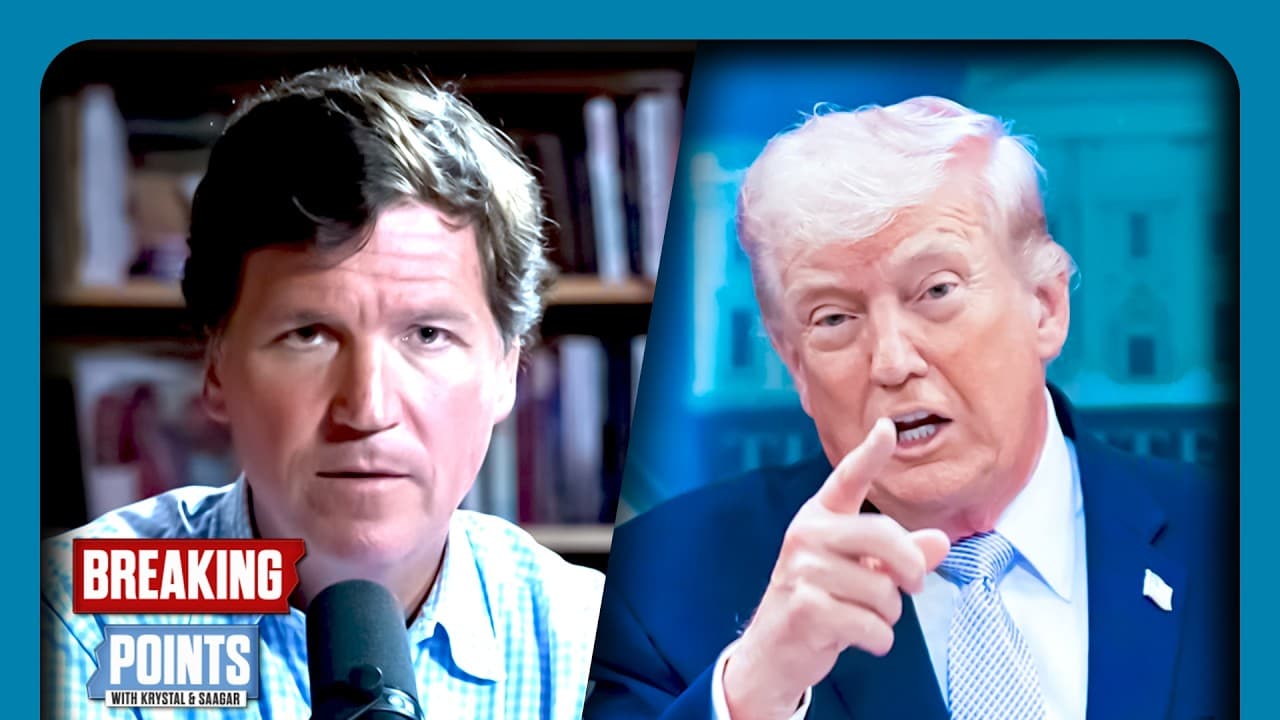
- •Tucker Carlson called Trump's Easter message an act of evil, interpreting the 'Praise be to Allah' phrasing as deliberate mockery of both Islam and Christianity.
- •Carlson argued Trump's refusal to place his hand on the Bible at his inauguration was a conscious rejection of faith — not mere indifference.
- •Trump dismissed Carlson as 'low IQ' and claimed Carlson avoids his calls, despite Carlson reportedly trying to maintain contact.
What Trump Actually Said — and Why Carlson Snapped
Trump's Easter message included an expletive and the phrase 'Praise be to Allah,' which Carlson interpreted not as a clumsy joke but as something more calculated. According to Carlson's reading, the message simultaneously mocked Islamic belief and desecrated a Christian holiday — a two-for-one that he described as an intentional act of evil rather than a lapse in judgment. Carlson's argument was that mocking religion attacks the foundational idea that something exists beyond human control — 'a concept worth defending regardless of your specific faith.' That Carlson — a man who spent years as one of Trump's most reliable amplifiers — is now using the word 'evil' in the same sentence as Trump's name is the kind of shift that doesn't quietly reverse itself.
The Bible That Wasn't Touched
Carlson's Case Against the Inauguration Moment
Carlson didn't stop at the Easter post. He went back to Trump's inauguration and the decision not to place his hand on the Bible, and he made a specific argument: if Trump simply didn't believe in the Bible, he'd have no reason to avoid it. The deliberate avoidance, Carlson argued, implies Trump knows exactly what the Bible represents and chose to reject it anyway — which he framed as worse than disbelief. It's a theological argument dressed up as a character assessment, and it's the kind of claim that lands differently coming from someone who has defended Trump through almost everything else. As covered in Tucker Carlson Says Trump Is Anti-Christ After 'Praise Allah' Threats by Breaking Points, Carlson's break with Trump reads less like a political pivot and more like a genuine moral reckoning — which is precisely what makes it so difficult for Trump's allies to dismiss or absorb.
Our Analysis: Carlson's move here is theologically precise in a way that makes it harder to dismiss than a standard policy break. He's not saying Trump made a bad trade deal or botched a press conference — he's saying Trump is aware of what sacred things are and chooses to defile them anyway. That's a specific moral accusation, and it's one that resonates with the evangelical base that has been Trump's most loyal constituency. If that argument spreads, it doesn't just damage Trump's image — it cuts at the coalition that's kept him politically viable through everything else.
Trump calling Carlson 'low IQ' is the tell. That's the insult he reaches for when someone has genuinely gotten under his skin — it's the same label he applied to people who later became serious political problems for him. Carlson has a large enough platform and enough credibility with religious conservatives that Trump's dismissal might actually accelerate the story rather than kill it.
What's worth sitting with longer is the structural position Carlson now occupies. He isn't a liberal critic or a Never-Trump Republican — he's someone who helped build the cultural infrastructure that made Trump's political dominance possible. When a figure like that reframes the argument not as 'Trump is wrong on policy' but as 'Trump is spiritually corrupted,' it introduces a language that Trump's usual counter-attacks aren't built to handle. You can call someone low IQ for disagreeing with your tariff policy. It's a lot harder to make that stick when the accusation is that you deliberately spit on Easter.
There's also a media dynamics question worth raising: Carlson's audience skews heavily toward people for whom religious identity isn't performative — it's load-bearing. These are voters who tolerated a lot from Trump because they believed, or wanted to believe, that he was at least sympathetic to their values. Carlson is now directly challenging that belief, and he's doing it in theological terms they recognize. That's a different kind of political damage than anything a journalist or policy opponent could inflict. Whether it actually moves numbers is an open question — but the fact that Trump responded so quickly and personally suggests he understands the threat better than his public reaction lets on.
Frequently Asked Questions
What denomination of Christianity does Trump follow?
What did Trump take out of his Bible?
What exactly did Trump say in his Easter message that made Tucker Carlson call him the Anti-Christ?
Why didn't Trump put his hand on the Bible at his inauguration?
Does the Tucker Carlson and Trump split signal a real fracture in conservative media?
Based on viewer questions and search trends. These answers reflect our editorial analysis. We may be wrong.
Source: Based on a video by Breaking Points — Watch original video
This article was created by NoTime2Watch's editorial team using AI-assisted research. All content includes substantial original analysis and is reviewed for accuracy before publication.