Melania Trump Epstein Statement: Denies Close Ties
Key Takeaways
- •Melania Trump voluntarily denied close ties to Epstein and Maxwell, despite no major news cycle demanding a response at the time.
- •An email from Ghislaine Maxwell addressing Melania as 'sweet pea' directly contradicts her characterization of their relationship as merely casual correspondence.
- •Two competing theories explain the timing: a Brazilian model's imminent tell-all interview, or a strategic limited hangout to get ahead of deeper revelations.
What Melania Actually Claimed
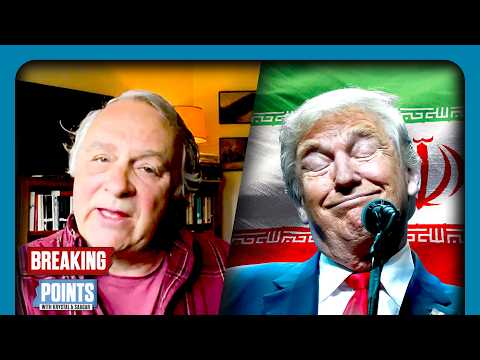
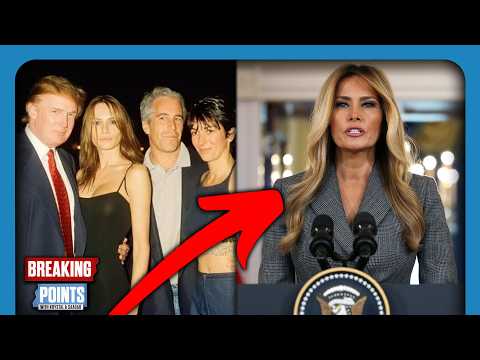
Melania Trump's statement covered three specific denials: she had no close relationship with Jeffrey Epstein, her contact with Ghislaine Maxwell was limited to 'casual email exchanges,' and Epstein did not introduce her to Donald Trump. On that last point, she directed people to her book, Melania, which she says documents how she met Trump by chance in 1998. The statement was unsolicited — no major outlet had just run a damaging story, no court filing had dropped her name. It arrived, as the hosts noted in Melania SHOCKS With Bizarre Epstein Speech on Breaking Points, into a news environment that had largely moved on from her Epstein adjacency.
Releasing a denial when nobody is loudly asking the question is either very confident or very nervous.
The Email That Doesn't Match
The problem with framing Maxwell contact as 'casual correspondence' is a specific email that surfaced in which Maxwell signed off by calling Melania 'sweet pea.' That is not how you address someone you barely know. It is the kind of nickname that implies repeated contact, warmth, and a level of familiarity that the word 'casual' is doing a lot of heavy lifting to cover. The hosts flagged this discrepancy immediately, and it is the detail that makes the entire statement feel less like a clarification and more like a calculated reframe.
Why Now? The Timing Problem
Two theories were put forward on Breaking Points, and neither is particularly reassuring for the White House.
The Brazilian Model Theory
The first theory is that Melania's statement was a pre-emptive move against a former Brazilian model — identified as the ex-girlfriend of a Trump-connected modeling agent — who reportedly recorded an interview containing damaging information about the Trumps. If that interview was about to air, getting your denial on record first is standard crisis PR. You establish the narrative before the counter-narrative lands. Whether the interview ever aired, or what it contained, was not confirmed in the video.
The Limited Hangout Theory
The second theory is more structurally interesting. A 'limited hangout' is an intelligence-world concept: you voluntarily release a smaller, less damaging piece of information to crowd out something bigger that's about to come out anyway. By publicly addressing the Epstein connection on her own terms — keeping it vague, keeping it brief — Melania potentially inoculates the story. Any future revelation gets framed as 'she already addressed this.' It is a move that requires something worse to be coming, which is its own kind of tell. This pattern of using public statements as narrative shields is something worth watching across the broader political landscape, including in cases like the Pete Hegseth defense stock insider trading scandal, where the timing of disclosures raises similar questions.
The Michael Wolff Allegations
The Breaking Points hosts also revisited allegations made by journalist Michael Wolff — allegations Melania has threatened to sue over. Wolff's claims, which remain unconfirmed, suggest that Melania had a prior relationship with Epstein before she met Trump, and that her first sexual encounter with Trump took place on Epstein's plane. These are serious, specific allegations. They are also legally contested. Melania's lawsuit threat has not, as of the video, resulted in a filed case — which is its own data point, since defamation suits over false statements of fact are exactly what lawyers are for.
Threatening to sue and actually suing are two very different things, and the gap between them tends to be informative.
The Modeling World as Context
The hosts were careful to situate all of this within what is now well-documented about the modeling industry during the period when Melania was working in it. Human trafficking, exploitation of young women, and the overlap between modeling agencies and figures like Epstein and his associates have been extensively reported. This doesn't prove anything specific about Melania, but it does mean the environment she was operating in was one where these connections were not unusual — which makes the question of how familiar those connections actually were more pointed, not less. For context on how political figures navigate uncomfortable proximity to scandal, the Tucker Carlson Trump Easter message controversy offers a useful parallel in how messaging gets managed when the optics are bad.
The most telling part of Melania's statement isn't what she denied — it's that she issued it at all. Unprompted denials are almost always prompted by something. The 'sweet pea' email is already public record, which means she knew releasing a statement would immediately invite people to go find it. Either her communications team didn't think that through, or they calculated that a soft contradiction is better than whatever is coming next. Neither option reflects confidence.
The Brazilian model angle is the thread worth pulling. A modeling agent with Trump connections, an ex-girlfriend with recorded testimony, an interview allegedly ready to air — none of that was confirmed, but Breaking Points treated it as credible enough to lead with. If that interview surfaces, Melania's statement stops being a denial and starts being exhibit A in a much messier story.
What's also worth noting is the structural oddity of issuing a statement that simultaneously invites and deflects scrutiny. By naming Maxwell and Epstein explicitly, Melania re-centers herself in a conversation that had cooled. That's a strange choice for crisis communications unless the alternative — saying nothing while something breaks — was judged to be worse. The limited hangout theory gains traction precisely because the statement is so carefully bounded: three denials, no elaboration, no press availability. It has the shape of a document designed to be cited later, not one designed to actually put questions to rest. When a public figure produces something that reads more like a legal exhibit than a genuine rebuttal, the question of what it's pre-empting becomes more urgent than anything it actually says.
Frequently Asked Questions
What did Melania Trump's Epstein statement actually claim, and what contradicts it?
Why did Melania Trump issue an Epstein denial now, when no major story had just broken?
What are Michael Wolff's allegations about Melania Trump and Epstein?
What is a 'limited hangout' and does it apply to Melania Trump's Epstein denial?
How does the Melania Trump and Ghislaine Maxwell emails story fit into the broader Epstein network?
Based on viewer questions and search trends. These answers reflect our editorial analysis. We may be wrong.
Source: Based on a video by Breaking Points — Watch original video
This article was created by NoTime2Watch's editorial team using AI-assisted research. All content includes substantial original analysis and is reviewed for accuracy before publication.