Peter Attia VO2 Max Longevity Research Debunked
Key Takeaways
- •Joseph Everett's video 'Hidden Data: How the Top Longevity Doctor tricked us all' makes a detailed case that Peter Attia has been misrepresenting research, selectively omitting inconvenient data, and aggressively shutting down legitimate scientific challenges.
- •The critique covers three main fronts: that studies Attia cites as proof VO2 max predicts lifespan actually measured treadmill endurance, not VO2 max; that he omitted a key graph showing statins reduce GLP-1 and increase insulin resistance when rebutting a scientific paper; and that he spent an eight-minute pre-podcast monologue discrediting researcher Dave Feldman before interviewing him, then interrupted him 66 times.
- •A 2024 crowdfunded study called KetoCa, which Attia reportedly helped pressure into existence by publicly challenging Feldman, found that metabolically healthy individuals with high LDL on a ketogenic diet showed no increased plaque development.
The VO2 Max Sleight of Hand
Peter Attia has built a significant part of his public brand on one claim: that VO2 max is the single strongest predictor of how long you will live. He says it in interviews, it's in his book, and it has made its way into mainstream health coverage as though it were settled fact. The problem, as Joseph Everett lays out in Hidden Data: How the Top Longevity Doctor tricked us all, is that the studies behind that claim did not actually measure VO2 max. They measured treadmill endurance, which is exercise performance. Those are related things, but they are not the same thing. For most people, especially older adults, the limiting factor during a treadmill test is not their cardiovascular ceiling. It's their legs. Their joints. Their willingness to keep going. Attia reportedly labeled these studies as VO2 max research and built a longevity framework on top of that label, which means the foundation is shakier than the confidence with which he presents it suggests.
The Graph He Left Out
When Attia responded to a scientific paper on statins, he did what critics accuse him of doing regularly: he picked the data that supported his position and quietly left the rest on the cutting room floor. According to Everett's video, Attia omitted a graph from his rebuttal that showed statins reduce GLP-1 levels and contribute to insulin resistance. This is not a minor footnote. Attia simultaneously advocates for aggressive LDL and APOB reduction, often to levels he describes as infant-like, and positions himself as someone who takes metabolic health seriously. Leaving out evidence that one of his preferred interventions actively harms metabolic function is not an oversight. It's a choice. The causality argument Attia relies on, that APOB causes atherosclerosis therefore lower is always better, does not automatically account for what you break on the way down. Related: Testosterone and Mental Health: Beyond Physical Effects
The Dave Feldman Interview Was Not Really an Interview
Dave Feldman is not a doctor. He is a researcher who got curious about his own cholesterol numbers on a ketogenic diet and started running personal experiments. He found he could shift his LDL dramatically in short windows by manipulating caloric intake, which does not fit the standard model of how cholesterol works. He developed something called the lipid energy model, which proposes that high LDL in metabolically healthy individuals, those with high HDL and low triglycerides, may not carry the same cardiovascular risk as high LDL in people with compromised metabolic function. It is a reasonable hypothesis to investigate. Attia's response was to record an eight-minute introduction before the interview that framed Feldman's work as not worth taking seriously, and then interrupt him 66 times during the conversation itself. Calling a research hypothesis 'brain damage' and urging your audience to dismiss it is not scientific skepticism. It's just a louder version of not having a counter-argument.
When the Study You Dismissed Comes Back With Data
After Attia's public dismissal, Feldman did something that should have made for an interesting follow-up conversation. He went and found funding. The low-carb community crowdfunded the KetoCa study, which examined arterial plaque progression in metabolically healthy people on a ketogenic diet who had high LDL. The results, published in 2024, showed no increased plaque development in that population. This is exactly the question Attia implied was too stupid to ask. The study is not the final word on the lipid energy model, and Feldman himself would likely say so. But it is data, it is relevant, and according to Everett's video, Attia has said nothing about it. Silence after demanding someone prove their hypothesis is its own kind of answer.
Confidence as a Substitute for Rigor
There is a version of Peter Attia from his earlier career that comes across, by Everett's account, as genuinely curious and intellectually open. A doctor willing to interrogate mainstream assumptions about diet, exercise, and metabolic health. The 2018 version, the one who sat across from Dave Feldman, reads differently. Everett notes that Attia has admonished others for using definitive language in science while simultaneously declaring, with complete certainty, that there is zero evidence of health risks from Bluetooth headphones. That is not a small inconsistency. The broader pattern Everett identifies is one where confidence functions as a rhetorical tool rather than a reflection of the underlying evidence.
Our Analysis: Everett builds a fair case that Attia has a pattern of using scientific authority to shut down inconvenient ideas rather than engage them. The Feldman interview footage is the most damning part, not because Attia disagreed, but because he prepared to discredit before the conversation even started.
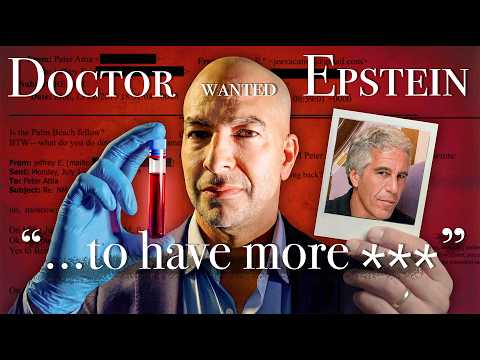
The Epstein material is real and unsettling, but it risks doing too much work here. You don't need a villain origin story to critique someone's research conduct.
Feldman's lipid energy model may or may not hold up. What's harder to dismiss is that the pushback against it looks more like gatekeeping than science.
What this critique ultimately points to is a structural problem in how health influencers accumulate authority. Attia is not a fringe figure — he is widely cited, well-funded, and has shaped how a large segment of the educated public thinks about preventive medicine. That reach makes the stakes of selective presentation higher, not lower. When someone with that platform omits inconvenient data or dismisses a hypothesis before it has been tested, they are not just expressing an opinion. They are setting the terms of what questions get asked at all. The KetoCa study exists in part because Feldman had to crowdfund his way around that kind of gatekeeping. That is an unusual route to scientific inquiry, and it raises a reasonable question about how many other hypotheses never made it that far.
Frequently Asked Questions
Is there a correlation between VO2 max and longevity?
Why is VO2 max declining in the general population?
What specific evidence debunks Peter Attia's VO2 max longevity research claims?
What did the KetoCa study find about high LDL and plaque on a ketogenic diet?
How did Peter Attia handle the Dave Feldman interview, and why does it matter?
Based on viewer questions and search trends. These answers reflect our editorial analysis. We may be wrong.
Source: Based on a video by Joseph Everett — Watch original video
This article was created by NoTime2Watch's editorial team using AI-assisted research. All content includes substantial original analysis and is reviewed for accuracy before publication.