How to Start an Egg Roll Business: $1.8M Success Story
Key Takeaways
- •Started with $1,500 in 2022 — hit $1.8M annual revenue within two years, entirely self-funded with no loans or investors.
- •Dessert egg rolls cost ~$1 to make and sell for $9; savory rolls cost ~$4.50 and sell for $10.50 — average order value sits at $34 per customer.
- •The menu is intentionally limited to four core egg roll types, and zero paid advertising has been used — growth came entirely from word-of-mouth and organic social media.
Starting an Egg Roll Business With Just $1,500
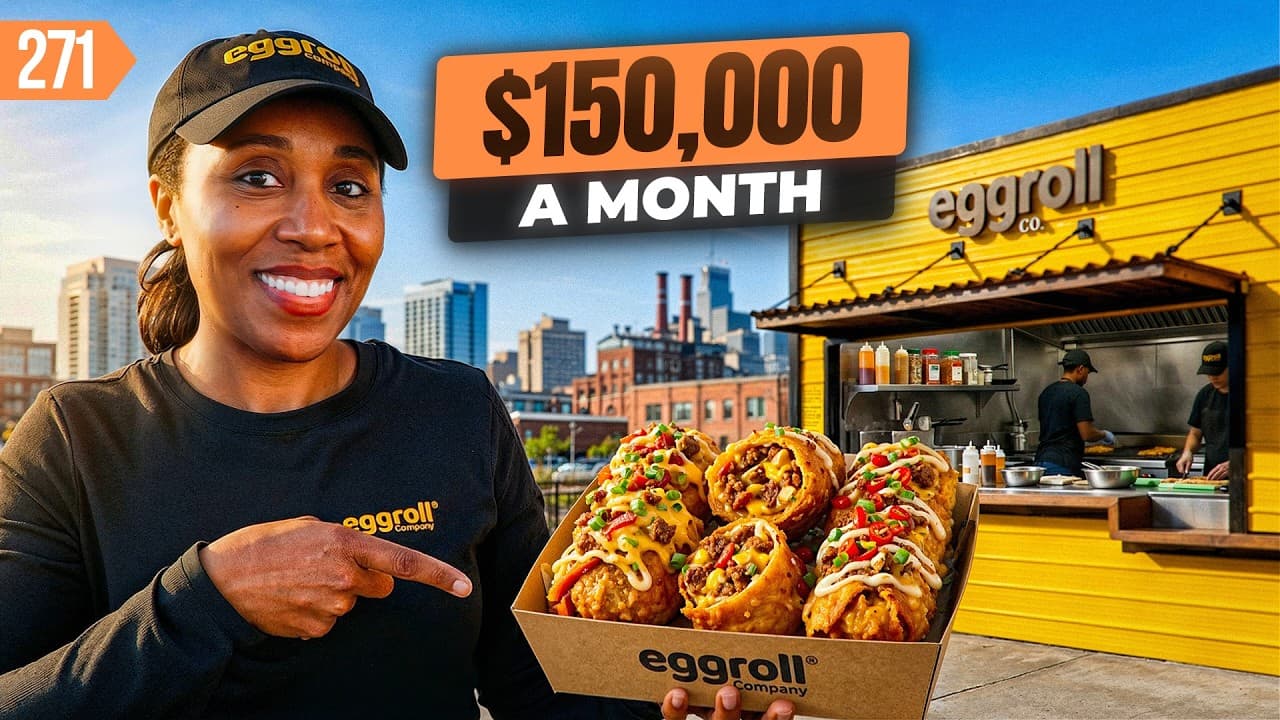
In She Bet it All on Eggrolls and Now Makes $1.8M/Year, UpFlip profiles Dafany, who didn't start with a business plan or a bank loan. She started with $1,500, a tent, and sandwich recipes she already knew how to make — then asked herself what would happen if she wrapped them in an egg roll wrapper instead. The answer, apparently, was a line out the door. The concept wasn't complicated. It was familiar ingredients presented in a format that felt new enough to be interesting and approachable enough that nobody needed convincing.
What she didn't do is just as telling as what she did. No investors. No debt. No outside capital of any kind. Her reasoning was personal — a background that made financial independence non-negotiable — but the outcome was structural: she kept full control of every decision the business made from day one. That's not a small thing when you're scaling fast and someone with a checkbook might otherwise be telling you to franchise before you're ready. Related: Joe Rogan: AI Censorship & Thought Control Algorithms
From Tent to Full Restaurant in 2 Years
The progression went tent → food trailer → food stall → full restaurant, and it happened inside two years. That kind of speed usually means one of two things: either the operator got lucky with timing, or the demand was so obvious that not expanding would have been the strange choice. In this case, it reads like the latter. The business didn't chase growth — it got pulled into it by customers who kept coming back and bringing people with them. Watching a food business scale that fast without a single investor involved is genuinely rare, and it's the part of this story that deserves more attention than it usually gets.
Egg Roll Business Profit Margins: Savory vs. Dessert
The savory egg rolls — chicken bacon ranch, hot honey chicken, uptown steak — cost around $4.50 to produce and sell for $10.50. That's a solid margin. But the dessert side is where the numbers get almost uncomfortable. The apple pie cheesecake egg roll costs approximately $1 to make and retails for $9. On a normal day, they sell around 150 of those alone. The math on that is not subtle. Related: Joe Rogan, Arsenio Hall: comedy club creative freedom phone-free shows
Monthly revenue sits at $150,000. Food costs run about $20,000. Labor comes in around $23,000. Total expenses, including rent, utilities, insurance, and shared sales fees, land at roughly $55,000. That leaves a substantial gap — and it's a gap built on the back of a menu that was designed to be profitable from the start, not retrofitted to be after the fact. Most food businesses get the product right and figure out the margins later. This one seems to have thought about both at the same time.
Why Chicken Bacon Ranch Outsells Higher-Margin Items
The chicken bacon ranch is the top seller by volume. It is not, by Dafany's own account, the most profitable item on the menu. She promotes it anyway — because it's the one that hooks people. It's the flavor that makes someone who's never had an egg roll from this place become a regular. The dessert rolls convert that regular into a $34 average order. Treating your best-selling item as a loss leader when it isn't actually a loss leader is a smarter move than it sounds, and most small food businesses never think about their menu that way. Related: Albinism in Tanzania Dangers: Hunted for Witchcraft
Product Innovation Strategy for Food Businesses
The apple pie cheesecake egg roll has a donut inside it. Not as a gimmick — as a textural decision. Dafany developed it because she loves apple pie and wanted a dessert option that felt genuinely different, not just a sweet version of the savory product. The donut adds a layer that a standard wrapper wouldn't give you. It's a small detail, but it's the kind of detail that makes someone describe the thing to a friend later, which is exactly how word-of-mouth actually works.
New menu items get tested through Instagram and Facebook — posted twice daily, with customer feedback actively solicited before anything becomes permanent. The fried Alfredo Mac is a recent example of something that came directly from that loop. It's a low-risk way to develop a menu because the audience tells you what they want before you've committed to stocking the ingredients at scale.
Our Analysis: The part this video glosses over is the replication problem. Dafany's business works because she built it around a product that is genuinely hard to copy at the same quality — scratch-made sauces, early morning prep, a team that's been trained to her standard. The margins are real, but they depend on operational discipline that doesn't transfer automatically to a second location, let alone a franchise. Every food entrepreneur watching this and thinking "I'll do egg rolls" is about to learn that the wrapper is not the product.
The dessert margin is the actual story here and it barely gets examined. A $1 cost on a $9 item, moving 150 units a day, is the kind of number that should anchor the entire conversation about how this business works financially. The savory rolls get the attention because they're the hook — but the apple pie cheesecake egg roll with a donut inside is quietly doing the heavy lifting on profitability.
There's also something worth naming about the no-investment structure that goes beyond personal preference. Bootstrapping at this pace creates a very specific kind of institutional knowledge — every problem that got solved got solved with the resources the business actually had, not resources borrowed against future performance. That tends to produce operators who understand their unit economics at a granular level, because they had to. Dafany knowing that her chicken bacon ranch is the hook and her dessert roll is the margin engine isn't incidental. It's what you learn when every dollar of expansion has to justify itself before it gets spent.
Frequently Asked Questions
Is an egg roll business profitable?
How do you start an egg roll business with low capital?
How do you scale a food business from a tent to a restaurant?
Can a food business really grow to $1.8 million a year without paid advertising?
Based on viewer questions and search trends. These answers reflect our editorial analysis. We may be wrong.
Source: Based on a video by UpFlip — Watch original video
This article was created by NoTime2Watch's editorial team using AI-assisted research. All content includes substantial original analysis and is reviewed for accuracy before publication.