Atheist Converted to Christianity Near-Death Experience
Key Takeaways
- •A Whaddo You Meme?
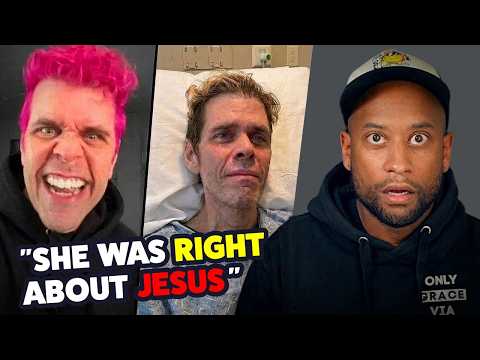
- •video documents the dramatic faith conversion of a prominent internet personality — once celebrated by Forbes as a top web celebrity — who spent years publicly mocking Christianity before a near-fatal illness changed everything.
- •After contracting the flu that spiraled into a stomach ulcer, widespread infection, and organ failure during a 21-day hospital stay, he claims God personally revealed himself in a way he describes as real and tangible.
From Mocking Christianity to Divine Encounter: A Skeptic's Transformation
The Years of Anti-Faith Rhetoric
This wasn't a guy who kept his atheism quiet or private. In This is Why You Don't Mock God..., Whaddo You Meme? documents how he built a significant public profile — Forbes listing him among the top web celebrities for multiple years — partly on the back of tearing people down. Celebrities' children weren't off-limits. Neither was God. He openly questioned the existence of a deity in the face of human suffering, treating faith as something you outgrow, like a bad haircut or dial-up internet.
The framing of his skepticism wasn't passive. It was a performance. And a popular one.
What He Did to Miss California
The clearest example of his hostility toward Christianity came when he was serving as a judge at the Miss USA pageant. He asked Miss California a direct question about same-sex marriage. She answered honestly, grounding her view in her Christian upbringing. His response was to give her a zero score and then take the fight public — launching a campaign against her that went well beyond disagreement into something closer to targeted humiliation.
Her reaction? She said he 'needs Jesus' and prayed for him. No counter-attack, no legal threats. Just that. At the time it probably read as naive. In retrospect, it's the most interesting detail in the whole story.
Our Analysis: Stories like this one are genuinely difficult to categorize, and that's exactly what makes them worth paying attention to. On the surface it reads like a religious conversion narrative — the kind that gets passed around faith communities and dismissed everywhere else. But the specific details here resist easy packaging in either direction.
Consider the structural irony: a man who built cultural capital by performing skepticism in public, who turned his disbelief into content, ends up being the subject of exactly the kind of story he would have once mocked. That's not a minor footnote. That's the whole shape of the thing. The Miss California episode isn't just a colorful backstory detail — it reframes the entire arc. She didn't win the pageant. She absorbed public humiliation from someone with a much larger platform. And her response was to pray for him rather than fight back. Whether or not you share her faith, that's an unusual choice that turned out to have a strange narrative payoff 17 years later.
What Whaddo You Meme? captures well, and what deserves more examination, is the specific texture of his hospital experience. He doesn't describe a gradual softening toward religion or a philosophical rethinking. He describes something that felt direct and personal — a presence rather than a conclusion. That distinction matters, because it puts the story outside the category of intellectual conversion, which is a much more common and arguably more legible kind of faith journey. This is messier and harder to argue with, which is probably why it's harder to dismiss.
There's also a media dynamics angle worth noting. This man had real reach — Forbes-level reach — during the years he was most publicly anti-faith. The audience that celebrated his skepticism isn't going to find this story comfortable, and many won't engage with it at all. That's how these conversions tend to work in the content ecosystem: they travel deep within faith communities and barely register outside them, regardless of how prominent the person involved actually was. Whether this one breaks that pattern depends almost entirely on whether the skeptic community feels enough ownership over his former persona to pay attention to what happened to it.
The 21-day hospital stay, the organ failure, the specific sequence of physical deterioration — these aren't the details someone typically fabricates. They're also not the kind of details that prove anything theological. But they do suggest a genuine crisis, and genuine crises have a way of changing the variables in ways that are hard to model from the outside. What he claims happened in that hospital room is unprovable. What happened to his body is documented. The gap between those two things is where the interesting question lives.
Frequently Asked Questions
Has an atheist ever had a near-death experience that led them to convert to Christianity?
What famous atheist converted to Christianity and what changed in their daily life afterward?
Can prayer actually change someone who is openly hostile to Christianity?
How does a lifelong skeptic suddenly experience God during a hospitalization?
Based on viewer questions and search trends. These answers reflect our editorial analysis. We may be wrong.
Source: Based on a video by Whaddo You Meme? — Watch original video
This article was created by NoTime2Watch's editorial team using AI-assisted research. All content includes substantial original analysis and is reviewed for accuracy before publication.