TYT: Iran War Advocacy Evidence Credibility Questioned
Key Takeaways
- •A poll cited in the TYT segment shows most Iranian-Americans oppose military intervention — directly contradicting advocates who claim to represent diaspora views.
- •The 30,000 IRGC protest death toll cited by war advocates lacks credible sourcing, according to TYT, while the US military's bombing of an Iranian elementary school is presented as a documented war crime the Trump administration never accounted for.
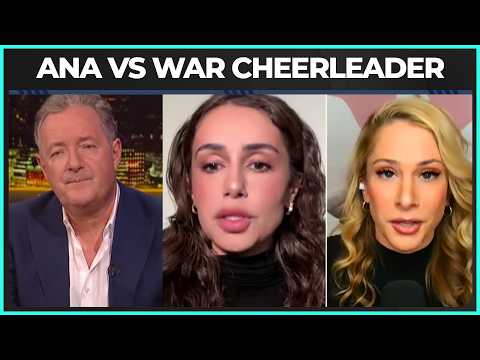
- •Elica Laban, a prominent pro-war voice in the Iranian diaspora, stated on air that military strategy was not her concern — a position TYT treats as disqualifying.
The 30,000 Figure Nobody Can Source
The number gets repeated confidently. Thirty thousand Iranians killed by the IRGC during protests. It sounds precise enough to be credible — and that's exactly the problem. In Ana SHUTS DOWN Iranian War Advocate, The Young Turks (TYT) challenge the figure head-on, demanding the kind of sourcing that would make any journalist comfortable citing it. None materialises. What makes this particularly pointed is the contrast: other casualty figures in adjacent conflicts, backed by reliable reporting chains, are accepted. This one isn't. The argument isn't that the Iranian regime is innocent — it's that a number without a paper trail is propaganda wearing the clothes of a statistic.
Unverified numbers at this scale don't just mislead. They become the moral permission structure for military action that will produce verified casualties of its own.
Double Standards in Who Gets Believed
The segment doesn't let the US off the hook either. According to TYT, the US military bombed an elementary school in Iran — an incident characterised as a war crime, and one for which the Trump administration offered no accountability. That detail lands harder when placed next to war advocates who question every Iranian regime death toll while treating American military action as categorically clean. The selective epistemology here is the real story: believe the numbers that support your conclusion, question the ones that complicate it.
It's the kind of intellectual consistency you'd expect from someone who has already decided where they want to end up and is working backwards from there.
Strategy Is Not Optional
Here is the part that should be disqualifying but somehow isn't: Elica Laban, asked about military strategy and whether force could realistically achieve regime change in Iran, indicated that wasn't her concern. Not her department. She advocates for the war; the mechanics of winning it are someone else's problem. TYT's response is straightforward — if you're calling for military intervention and American soldiers are going to fight it, the question of whether it can work is not a technicality you get to outsource. Advocating for an unwinnable war is not a bold position. It's a reckless one dressed up as conviction.
This echoes broader patterns in foreign policy discourse — as we explored in AOC's vote against Israel military aid and what it revealed about strategic coherence in conflict advocacy — where the loudest voices are often least accountable for the consequences.
Who Actually Speaks for the Iranian Diaspora
Laban presents herself as a voice for Iranians — people inside the country, people who fled it, people who want the regime gone. That's a significant claim. The polling data cited in the segment suggests it's also an inaccurate one: a majority of Iranian-Americans, according to the poll referenced by TYT, oppose military intervention. That doesn't mean the diaspora is pro-regime. It means the diaspora has apparently done the math on what a war actually looks like for the people they still have family ties to.
There's a specific kind of distance that makes war easier to advocate for — the kind that puts an ocean between you and the bombing.
Propaganda Versus Evidence in Foreign Policy Debates
The broader point TYT is making cuts past this specific segment. When casualty figures, atrocity claims, and regime characterisations are accepted or rejected based on which conclusion they support rather than how they were documented, you're not in a policy debate anymore. You're in an information environment where the goal is persuasion, not accuracy. This matters because foreign policy decisions made on the back of bad data — or emotionally compelling but unverifiable figures — have a documented history of producing catastrophic outcomes.
The credibility of the case for or against intervention lives and dies on the quality of the evidence. Skipping that step isn't passion. It's negligence. This dynamic surfaces regularly in political debates where stakes are high and sourcing is thin — as the pattern of declining public trust in 2025 political narratives has shown, audiences are increasingly sensitive to the gap between confident claims and demonstrable facts.
Our Analysis
The most uncomfortable thing about this segment isn't what it says about Elica Laban. It's what it reveals about how war advocacy functions as a genre. There's a template: identify a brutal regime (accurate), cite devastating casualty figures (sometimes accurate, sometimes not), appeal to the suffering of a people (genuine), and then wave away the question of what military intervention actually produces as beside the point. The emotional logic is airtight. The strategic logic is absent.
TYT is right to push on the sourcing question. A figure like 30,000 doesn't become true because it's repeated by people who want it to be true. And the elementary school bombing detail is doing real work here — it's not whataboutism, it's calibration. If you're going to hold the IRGC to an evidential standard on casualties, you don't get to wave away documented US actions in the same breath.
What the segment is less equipped to answer — and what the video doesn't fully address — is what the alternative looks like. Dismantling bad arguments for war is necessary. But the Iranian people living under a regime that does kill protesters aren't served by a debate that ends with 'the evidence is bad.' That's where the conversation needed to go next, and didn't. Representing diaspora sentiment through a single poll is also doing a lot of lifting — polling Iranian-Americans on a binary war question doesn't capture the range of positions between 'bomb it' and 'leave it alone.'
Still. The core demand — show your sources, account for your strategy, stop speaking for people who didn't elect you — is the right one. Foreign policy debates that skip those steps aren't serious. They're loud. Accountability in national security contexts tends to matter most precisely when advocates are most certain they don't need it.
Frequently Asked Questions
What is the actual evidence behind the 30,000 Iranians killed by the IRGC claim?
Do most Iranian-Americans actually support military intervention against Iran?
Is it valid to advocate for war with Iran without a clear military strategy for winning it?
How does Iran war advocacy credibility hold up when casualty figures can't be independently verified?
Why does the US military's bombing of an Iranian elementary school matter in this debate?
Based on viewer questions and search trends. These answers reflect our editorial analysis. We may be wrong.
Source: Based on a video by The Young Turks (TYT) — Watch original video
This article was created by NoTime2Watch's editorial team using AI-assisted research. All content includes substantial original analysis and is reviewed for accuracy before publication.
Related Articles



You Might Also Like
Apr 17
World News | US Retreat: The global power vacuum geopolitical risks you need to know

Apr 10
World News | Dubai Economy Vulnerability: Geopolitical Attacks & Stability
Apr 7
World News | Iran Strait of Hormuz oil control: Global Economy Impact
Apr 7
World News | Strait of Hormuz Disruption: Economic Impact & Global Threat