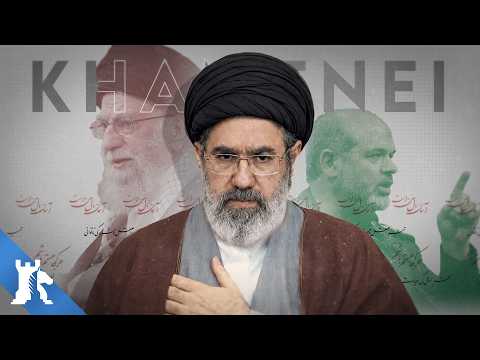
Mojtaba Khamenei Supreme Leader succession in Iran
Key Takeaways
- •Iran has a new Supreme Leader.
- •Mojtaba Khamenei, son of the late Ali Khamenei, was swiftly appointed to the position, with the Islamic Revolutionary Guard Corps (IRGC) acting as the primary force behind his selection rather than Iran's formal religious institutions.
- •In their video "Iran has a new Supreme Leader.
The Man Who Didn't Campaign for the Job
Mojtaba Khamenei did not emerge from Iran's succession process because of some groundswell of clerical support or popular legitimacy. He emerged because the Islamic Revolutionary Guard Corps wanted him there. According to Caspian Report's analysis in Iran has a new Supreme Leader. Does it even matter?, the speed of the appointment was itself the tell. Rapid selections in political systems that nominally involve deliberation usually mean the deliberation already happened somewhere else, behind closed doors, among people who carry guns. That is not a transition of power. That is a confirmation of who already had it.
A Resume Built in Conflict Zones
Mojtaba's background is not that of a scholar or a political administrator. He served in the Iran-Iraq war, and according to the video, he has lost family members in recent airstrikes, which puts the current regional conflict in an entirely different category for him than it would be for a bureaucrat who read about it in briefings. Caspian Report frames this as a defining factor in his likely foreign policy posture. He supports aggressive domestic enforcement and has long advocated for strengthening Iran's proxy networks across the region.
Our Analysis: Caspian Report gets the IRGC angle right. Mojtaba's selection in hours, not weeks, tells you everything about who actually runs Iran. Religious legitimacy is now a costume the Guards put on whoever they need.
What the video underweights is the succession trap this creates. The IRGC made him, which means they can unmake him. A Supreme Leader who owes his throne to generals has no throne. Watch the internal fractures more than the external war pressure. That is where this breaks first.
There is also a generational dimension worth sitting with. Ali Khamenei spent decades cultivating ambiguity as a tool of statecraft — keeping factions off-balance, playing rivals against each other, never fully committing to any one power center. Mojtaba does not have that luxury. He arrives pre-labeled as the IRGC's man. That forecloses the strategic ambiguity his father used as a survival mechanism. The clerical establishment, already diminished, now has every incentive to quietly undermine him rather than play along. That is a slow bleed, not a coup — but slow bleeds have ended stronger institutions than the Assembly of Experts.
The proxy network question is also more complicated than a hawkish résumé suggests. Iran's regional assets — Hezbollah, the Houthis, various Iraqi factions — have each absorbed serious damage in recent years and are operating under their own internal pressures. A new Supreme Leader who personally favors escalation does not automatically translate into proxy networks that can execute it. The gap between ideological preference and operational capacity is where Iran's regional strategy has quietly been failing, and nothing about Mojtaba's appointment closes that gap. If anything, a leader who has suffered personal losses in this conflict may push for action faster than the networks are ready to absorb. That mismatch between command impulse and ground reality is the underappreciated risk in this transition.
Finally, consider what this moment signals to Iran's population. The succession was fast, opaque, and made no pretense of popular consultation. For a government that has spent years managing protest movements fueled in part by legitimacy deficits, installing a Supreme Leader whose primary credential is military adjacency rather than religious authority does not help. It may not matter in the short term — the IRGC has demonstrated it can suppress domestic dissent — but it narrows the regime's options for any future moment when suppression alone is not enough.
Frequently Asked Questions
Who is Mojtaba Khamenei and how did the Supreme Leader succession happen so fast?
Is Iran's new Supreme Leader actually in charge, or does the IRGC run the country now?
Will Mojtaba Khamenei's military background make Iran more aggressive in the region?
Does it matter who Iran's Supreme Leader is if the IRGC holds the real power?
Based on viewer questions and search trends. These answers reflect our editorial analysis. We may be wrong.
Source: Based on a video by Caspian Report — Watch original video
This article was created by NoTime2Watch's editorial team using AI-assisted research. All content includes substantial original analysis and is reviewed for accuracy before publication.
Related Articles


You Might Also Like
Apr 2
World News | US military deployment Iran 2025: A Reckless Buildup?
Mar 31
World News | Middle East Peace Negotiations Failing: Why They're Doomed
Mar 31
World News | Iran Asymmetric Warfare Strategy: Tehran's Calculated Agenda
Mar 31
World News | Israel Iran Conflict: Territorial Expansion or Stability?