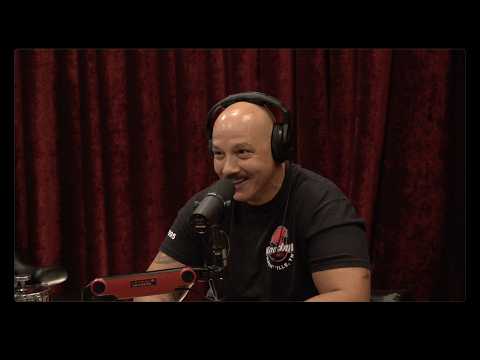
Joe Rogan #2475: Andrew Jarecki on Alabama Prison Crisis

Key Takeaways
- •Alabama's prison system is killing people, and a new documentary wants you to know why.
- •Andrew Jarecki, director of The Jinx, joined PowerfulJRE for episode #2475 to discuss his latest film 'The Alabama Solution,' co-directed with Charlotte Kaufman, which exposes rampant deaths, guard-run drug trafficking, and a state government that responded to a damning DOJ report by hiring construction companies instead of fixing anything.
- •The Alabama prison system human rights abuses detailed in the film — from unchecked violence to forced labor echoing convict leasing — paint a picture of a system designed, whether intentionally or not, to fail the people inside it.
What 'The Alabama Solution' Reveals About Alabama Prison System Human Rights Abuses
Jarecki's core argument is simple: when you make something invisible, the people running it can do whatever they want.
Alabama's correctional facilities operate, in his words, like 'black sites' — no cameras, minimal outside scrutiny, and virtually no accountability for what happens inside. The result is a body count that would dominate headlines if it were happening anywhere else.
Death and Violence in Alabama Prisons: A Crisis of Oversight
Inmate deaths in Alabama's facilities routinely go uninvestigated, according to what Jarecki outlines in the film and discussed on Joe Rogan Experience #2475 - Andrew Jarecki on PowerfulJRE.
The Alabama Department of Corrections has no meaningful external watchdog, and the media can't report what it can't see. That combination — low visibility, unchecked authority — is, per Jarecki, a reliable recipe for abuse.
How Corruption and Low Guard Wages Enable Contraband Trafficking
Guards in Alabama earn wages that make the job genuinely difficult to do honestly.
That's not an excuse — it's a structural problem that the state has left unaddressed for years, and the consequences are predictable. When you underpay the people with keys, some of them start selling what they can.
Guards Selling Drugs and Cell Phones: Inside Prison Corruption
A substantial share of inmates inside Alabama facilities are addicted to drugs — many of which came in through the guards themselves, according to 'The Alabama Solution.'
Jarecki describes the Alabama Department of Corrections as having effectively become a large-scale drug distribution operation, which is a grim sentence to have to write about a government agency. Cell phones are sold the same way, at markup, by the same people supposed to be running a secure facility.
Why Building More Prisons Worsens the Crisis
The U.S. Department of Justice issued a report on Alabama's prisons that was clear about what needed fixing: corruption, brutality, and systemic failures inside existing facilities.
Alabama's response was to announce new prison construction. Jarecki frames this as the state creating what amounts to a Department of Construction — expensive, politically connected, and entirely beside the point.
The DOJ's Ignored Recommendations for Reform
The DOJ's recommendations focused on conditions and accountability, not square footage. Building new prisons doesn't address guard corruption, inmate violence, or the lack of rehabilitation programs — it just moves the same problems into newer buildings, at dramatically higher cost to taxpayers.
The beneficiaries, per Jarecki's analysis, are construction companies and their political allies, not the incarcerated population the spending is nominally meant to help.
Prisons as Dumping Grounds for Mental Illness and Addiction
A significant portion of the people inside Alabama's prisons have mental health conditions or substance use disorders that were never treated before incarceration.
Prison, as Jarecki puts it, doesn't treat those conditions — it accelerates them. Mentally ill inmates are more likely to end up in conflict situations, more likely to be punished, and more likely to leave in worse shape than they arrived.
How Incarceration Exacerbates Rather Than Treats Underlying Issues
Drug addiction inside prisons is, paradoxically, easier to sustain than outside them — because guards are selling.
Someone who enters with a dependency can leave with a more entrenched one, then cycle back in. The system is not designed to interrupt that loop, and in some cases appears to profit from it continuing.
The Profit Motive Behind Inmate Exploitation
Private companies have found a reliable revenue stream inside American correctional facilities, and Alabama is not an exception.
Video visitation companies, for instance, have replaced in-person family visits in some facilities — charging fees for what used to be free contact between inmates and their families. Jarecki draws a direct line between this and the older practice of convict leasing.
From Convict Leasing to Modern Prison Labor and Video Visits
Inmates in Alabama perform labor for minimal or no wages, with the economic benefit flowing to the institution or its contractors rather than to the people doing the work.
The parallel to 19th-century convict leasing — where incarcerated people were hired out to private interests at near-zero cost — is one Jarecki makes explicitly in 'The Alabama Solution,' now streaming on HBO Max.
Education and Community Investment as Crime Prevention
Jarecki points to programs like the Doe Fund and Maine's comparatively humane prison model as evidence that a different approach produces different results.
The argument isn't complicated: invest in people before they end up incarcerated, and fewer of them will be.
Breaking the Cycle of Incarceration Through Prevention
Poverty and lack of early educational opportunity are, per Jarecki's framing, the actual feeders of the incarceration pipeline — not moral failure or individual bad decisions in isolation.
Addressing those upstream conditions costs money, but according to the economics he outlines, considerably less than building new prisons that don't work and filling them repeatedly with the same people.
Our Analysis: Jarecki and Rogan are right that Alabama's prisons are a human rights disaster, but the conversation stays safely at the horror-story level without pushing on why reform efforts keep dying — money talks louder than DOJ reports.
This fits a broader pattern of prestige documentary culture: expose the rot, collect the awards, watch nothing change.
The more interesting next story isn't another prison exposé — it's who's actively lobbying to keep the "Alabama Solution" playbook alive in other states, and whether any filmmaker is willing to follow that money on camera.
Source: Based on a video by PowerfulJRE — Watch original video
This article was created by NoTime2Watch's editorial team using AI-assisted research. All content includes substantial original analysis and is reviewed for accuracy before publication.
Related Articles


You Might Also Like
May 1
Health | Joe Rogan & RZA: Unlocking Exercise Mental Health Anxiety Clarity

May 1
Entertainment | Joe Rogan: Comedy Scene Gatekeeping Australia vs America - The Shocking Truth

Apr 26
Life Stories | Why Do Ancient Flood Narratives Across Cultures Exist? Rogan Explores

Apr 24
Life Stories | Rogan & Gomez: content moderation YouTube pandemic lab leak