Albinism in Tanzania Dangers: Hunted for Witchcraft
Key Takeaways
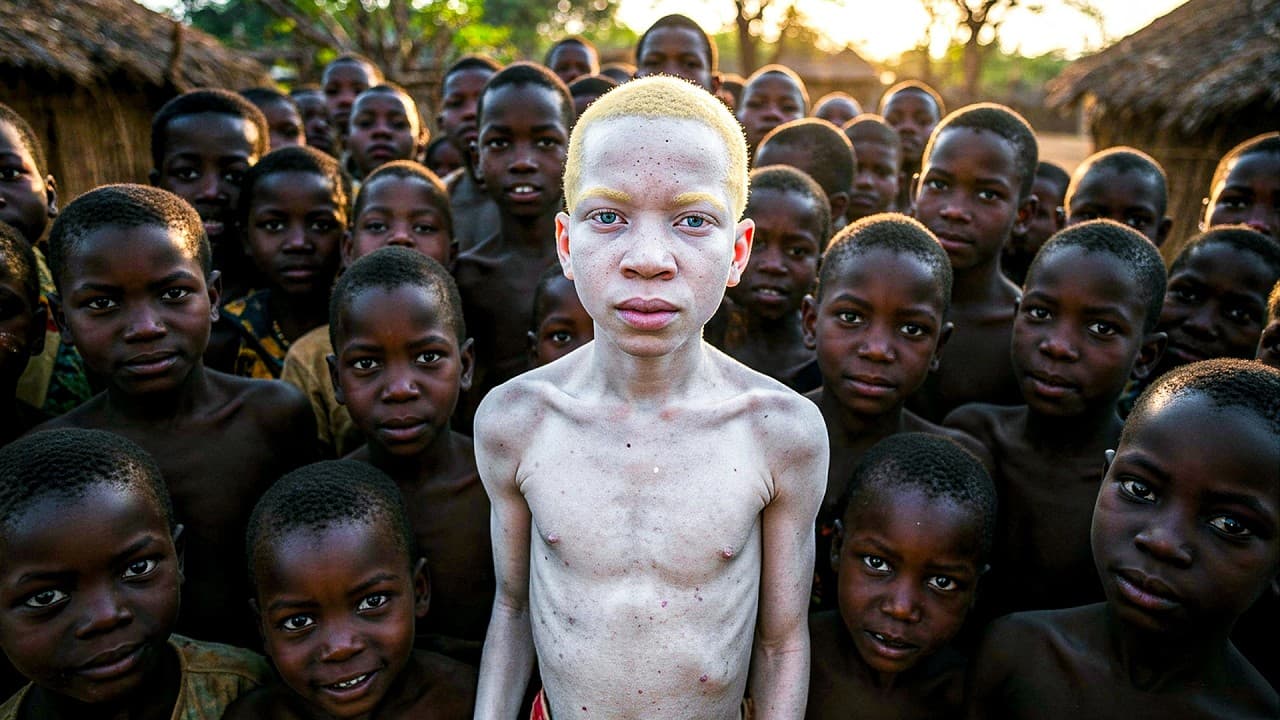
- •Albinos in Tanzania are targeted for their body parts due to superstitious beliefs that they bring wealth — attacks come from strangers and, in documented cases, from their own families.
- •Sister Martha, who survived a suicide attempt linked to her own experience with albinism, runs a shelter for roughly 50 abandoned albino children that operates entirely on donations.
- •Tanzania has a significantly higher prevalence of albinism than the global average, making the scale of the problem locally far larger than most people realise.
The Price Put on a Body
In Tanzania, having albinism means more than navigating daily hardship. It means being hunted. Body parts from people with albinism are sold for use in witchcraft rituals, with the belief that they carry properties that bring wealth and good fortune. That belief has a market. And where there's a market, there are people willing to act on it. According to Drew Binsky's The Dark Reality of Being Albino in Africa, albinos in Tanzania are forced to live in fear and, in many cases, in hiding — not from strangers alone, but from people they know. The fact that a superstition this lethal has persisted long enough to become an organised threat is the part that should keep you up at night.
When the Danger Comes from Home
One of the young men at Sister Martha's shelter — 19 years old at the time of filming — recounts his own father attempting to kill him. Not a stranger. His father. Another resident describes the fear of going out alone, rooted in the knowledge that someone might see their skin as a commodity rather than a person. These aren't isolated incidents; family rejection and violence against albino children by relatives is a documented pattern in the video. The betrayal embedded in that — the people who are supposed to protect you becoming the threat — adds a layer of psychological damage that no shelter, however good, can fully undo.
Sister Martha's Shelter — and Why It Has to Be Secret
Sister Martha runs a ministry that houses approximately 50 abandoned albino children. The location is kept discreet. That detail alone tells you everything about the environment these children are being protected from. Inside, they receive shelter, education, and what the video describes as a genuine sense of community. Sister Martha actively seeks out albinos in need rather than waiting for them to find her, and some families do eventually reconnect with their children — though the shelter remains a permanent refuge for many who have nowhere else to go. The children attend schools and, according to the video, perform well academically. Several have expressed ambitions to become lawyers and doctors. The aspirations are ordinary. The circumstances that made a secret shelter necessary are not.
What Sister Martha's Own Story Actually Explains
Sister Martha has albinism herself. She describes feeling rejected by her family and community, which led to a suicide attempt. A spiritual experience, she says, redirected that pain into a mission. That backstory isn't just humanising detail — it explains why the shelter functions the way it does. She isn't running a charity from the outside looking in. She knows exactly what the children in her care have survived because she survived a version of it herself. That kind of credibility is hard to manufacture and impossible to replace.
Why Tanzania Specifically
The prevalence of albinism in Tanzania is notably higher than the global average. The video doesn't drill into the genetic reasons behind this, but the demographic reality matters: a larger population of albinos means the scale of the threat is proportionally larger too. Protective measures and awareness campaigns that might be adequate elsewhere are simply insufficient here given the numbers involved. The higher prevalence also means more families confronting the condition without education or support, which is where harmful myths fill the gap.
What Public Life Looks Like
Stares, Slurs, and the Calculation of Going Outside
Even outside the most extreme violence, daily life for albinos in Tanzania involves a constant low-level threat assessment. The video documents public discrimination — derogatory names, fear responses from strangers who believe misconceptions about albino skin, and the specific danger of being out alone, particularly in rural areas or at night. Sister Martha accompanies the children on outings to the city, which functions both as a protective measure and as a form of normalisation — giving them experience of public life in a context where someone is watching out for them. The fact that a trip to the city requires a safety strategy is a precise illustration of how constrained their freedom actually is. As we've seen in stories like Don's recovery from addiction, the environments people are forced to navigate shape their sense of what's possible — and for these children, the outside world has been defined almost entirely by threat.
The Funding Problem
The shelter generates no income. It is a ministry, not a business, and it runs entirely on donations. That means every meal, every school fee, every tube of sunscreen for skin that burns faster than most — all of it depends on whether enough people outside Tanzania decide it matters. Sister Martha also mentions the high cost of skin cancer treatment, which is an additional medical reality for people with albinism living in equatorial sun. The financial fragility of an operation this important, protecting this many children, is the kind of structural vulnerability that tends to go unaddressed until something breaks. The children's resilience is real. The funding model is precarious. Those two things exist simultaneously, and only one of them is inspiring. For more on how personal stories of survival intersect with systemic failures, the critique of how institutions fail vulnerable people covers related ground worth reading.
Our Analysis: The video does something useful by putting faces and names to a crisis that most Western audiences have never engaged with beyond a headline. Sister Martha's personal history is the strongest element — her credibility isn't borrowed, it's lived. But the documentary format does let one significant question go unasked: where is the Tanzanian government in all of this? A secret shelter run on donations is a workaround, not a solution. The absence of any discussion about law enforcement, prosecution rates for attackers, or state-level protective policy leaves a gap that the warmth of the shelter footage quietly papers over.
Tanzania's albino population is large enough that this cannot be treated as a niche welfare issue requiring private charity. The children in Sister Martha's care are doing well by any measure — academically, emotionally, in terms of future ambition. That's a direct result of one woman's intervention. It shouldn't depend on one woman.
There's a broader pattern worth naming here: when states fail to protect minority populations, the vacuum tends to get filled by individuals operating on faith, personal history, and donor goodwill. Sister Martha's shelter works — demonstrably, meaningfully — but its existence is also an indictment. Every child housed there represents a failure upstream: a family that was never educated about albinism, a community where myth was never challenged, a legal system that hasn't made prosecution of attackers routine enough to function as a deterrent. The shelter addresses the consequences. None of those root causes are being systematically dismantled. That's not a criticism of Sister Martha — it's a criticism of the conditions that made her necessary in the first place.
Frequently Asked Questions
What are the specific dangers of albinism in Tanzania compared to other countries?
Why are albinos hunted in Tanzania — what's the belief behind it?
How does Sister Martha's shelter protect albino children in Tanzania?
Do albino children in Tanzania face danger from their own families?
Is albinism more common in Tanzania than elsewhere, and does that make the persecution worse?
Based on viewer questions and search trends. These answers reflect our editorial analysis. We may be wrong.
Source: Based on a video by Drew Binsky — Watch original video
This article was created by NoTime2Watch's editorial team using AI-assisted research. All content includes substantial original analysis and is reviewed for accuracy before publication.