Trump DOJ dropped 23000 criminal cases in 6 months
Key Takeaways
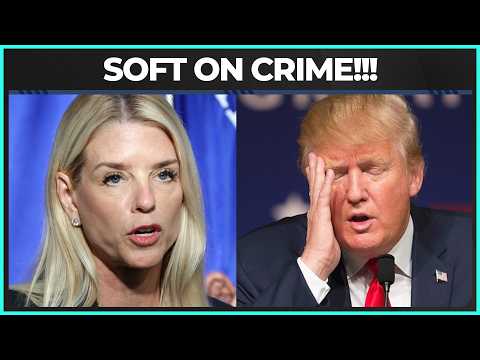
- •The Trump administration's Department of Justice dropped over 23,000 criminal cases in the first six months of Trump's second term, according to a ProPublica investigation covered by The Young Turks (TYT) in their video 'REVEALED: Trump Is SOFT On Crime.' While Attorney General Pam Bondi publicly championed Trump's law-and-order credentials, the DOJ simultaneously declined to prosecute nearly 5,000 federal drug law violations, over 1,300 national security cases, and hundreds of labor fraud and white-collar crime cases.
- •The driving force behind the shift was a deliberate redirection of federal prosecutorial resources toward immigration enforcement, with 32,000 immigration cases filed in that same six-month window.
- •The internal fallout was significant too, with DOJ units closed, directives abandoned, and nearly 300 prosecutors signing an open letter on their way out the door.
23,000 Cases Dropped in Six Months
A ProPublica investigation found that the Trump administration's Department of Justice dismissed more than 23,000 criminal cases during the first six months of Trump's second term. That number isn't a rounding error or a clerical backlog being cleared out. It represents a prosecutorial retreat from serious federal crime categories on a scale that has no clear precedent in recent administrations. The cases dropped span national security, drug trafficking, financial fraud, and labor crime. The administration made a choice, and the data makes that choice legible in a way that press conferences simply cannot walk back. In REVEALED: Trump Is SOFT On Crime, The Young Turks (TYT) break down exactly what that choice looks like on paper — and the numbers are difficult to dismiss. Even as Attorney General Pam Bondi "championed Trump's law-and-order credentials," the DOJ was simultaneously stepping back from thousands of serious federal prosecutions.
How Immigration Became the Only Priority
In the same six-month period when 23,000 criminal cases were dismissed, the DOJ filed 32,000 immigration cases. Visa overstays. Illegal border crossings. The full weight of federal prosecutorial machinery pointed almost exclusively at immigration status offenses. This wasn't a shift in emphasis. It was a near-complete substitution of one law enforcement mission for another. Resources are finite, and when you pour them into immigration enforcement, something else empties out. In this case, it was most of the traditional federal criminal docket, as we explored in our coverage of how
Our Analysis: TYT lands the core finding cleanly. Dropping 23,000 cases while prosecuting 32,000 immigration offenses is not a crime policy, it is a resource transfer. The math tells the story better than any framing either side could apply to it.
What the video glosses over is the white-collar angle. Gutting fraud and racketeering enforcement hands a quiet victory to financial criminals who have nothing to do with immigration politics. That is the piece most viewers will miss.
Watch the federal program fraud dismissals. If that number grows into year two, the downstream cost to taxpayers will become the harder story to ignore.
There is also a structural problem worth naming. Federal prosecutorial capacity is not a faucet you can turn back on overnight. When experienced prosecutors walk out — and nearly 300 of them signed an open letter doing exactly that — they take institutional knowledge with them. Case histories, source relationships, ongoing investigations that never make it to indictment. That expertise does not get rebuilt by hiring cycles. It evaporates. The DOJ that exists at the end of this administration will not be the same instrument the next one inherits, regardless of political affiliation.
The national security dismissals deserve more scrutiny than they have received. Over 1,300 cases dropped in that category alone. National security prosecutions are among the most resource-intensive and sensitive in the federal system. They are not opened casually, and they are not dropped without consequence. What happens to those investigations? Do they go cold? Are cooperating witnesses left exposed? The public record does not say, and that silence is itself a data point.
The broader pattern here is one of deliberate institutional thinning. Units closed. Directives abandoned. Dockets cleared. This is not administrative inefficiency — it is a policy posture. Whether voters intended to elect an administration that would deprioritize drug trafficking enforcement, financial fraud, and national security cases in favor of visa overstay prosecutions is a question the coverage of this story has largely failed to ask directly. TYT asks it. That is worth crediting, even if the full downstream accounting remains incomplete.
Frequently Asked Questions
What criminals did Trump pardon, and does that connect to the DOJ dropping 23,000 criminal cases?
How many of Trump's executive orders have been revoked, and did any of them drive the DOJ's shift away from criminal prosecutions?
What specific types of federal crimes has the Trump DOJ stopped prosecuting?
Why did the Trump DOJ prioritize immigration cases over drug trafficking and white-collar crime prosecutions?
Is Pam Bondi responsible for the DOJ dropping thousands of federal cases?
Based on viewer questions and search trends. These answers reflect our editorial analysis. We may be wrong.
Source: Based on a video by The Young Turks (TYT) — Watch original video
This article was created by NoTime2Watch's editorial team using AI-assisted research. All content includes substantial original analysis and is reviewed for accuracy before publication.