Hassan Piker Democratic Party Backlash: Why the Split?
Key Takeaways
- •Hassan Piker's past comments — including remarks justifying the October 7th attacks and saying America 'deserved' 9/11 — are now actively costing Democratic candidates who associate with him.
- •The Democratic Party is strategically moving toward moderate candidates, with powerful donors reportedly backing centrist figures over progressive ones.
- •Tim Pool argues Piker isn't chasing outrage for clicks — he genuinely reflects his progressive base, which is exactly why he's become a liability for a party trying to broaden its appeal.
Who Is Hassan Piker and Why Are Democrats Distancing From Him?
Hassan Piker built one of the largest left-wing streaming audiences in the country by saying out loud what a lot of progressives think but won't post under their real names. That worked fine when Democrats were leaning into the progressive lane. It's working considerably less fine now.
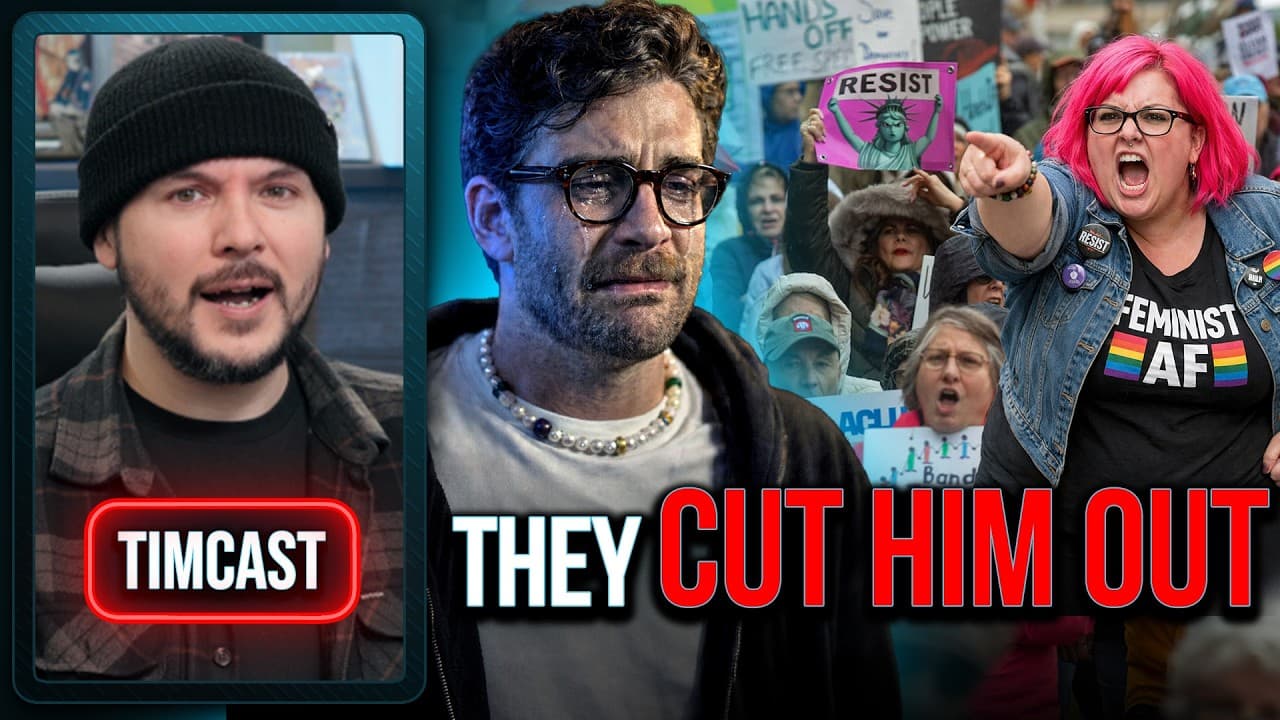
According to Tim Pool, in his video They did it, he's done, Democratic politicians are increasingly refusing to be associated with Piker — comparing him, in terms of political toxicity, to figures like Nick Fuentes and Candace Owens on the right. The comparison is deliberately provocative, but the underlying point is real: Piker has become someone candidates are told to avoid, not court.
Tim Pool's read is that Piker isn't manufacturing controversy for engagement. He's articulating what his base actually believes — the same way Candace Owens tells her audience what it wants to hear. The problem is that audience is now a political anchor, not a bridge.
Hassan Piker's Controversial Past Statements on Israel and 9/11
The specific statements doing the damage aren't new, but they're getting new attention. Piker made comments that were interpreted as justifying the October 7th attacks, and separately made a remark that America 'deserved' 9/11 — something he later apologized for. Neither has gone away. Related: Sykes-Picot Agreement Middle East borders Explained
In Michigan, Democratic candidate Dr. Abdul al-Sayed reportedly faced direct pressure to cut ties with Piker, with party figures arguing that the association was politically dangerous in a state with a significant Arab-American population already navigating complex feelings about US foreign policy. The irony of that geography is not subtle — and it's the kind of situation that makes party strategists lose sleep.
The Democratic Party's Strategic Shift Away From Progressive Influencers
Recent primary results in Illinois and Texas, as Pool describes them, point toward a party that is quietly but deliberately moving toward the center. Moderate Democrats are winning. The fringe — on both ends — is being managed out. Related: Pam Bondi Attorney General Firing: The Real Story
The money is moving too. Pool notes that powerful investors are reportedly backing more centrist candidates, which is the kind of structural shift that doesn't make headlines but absolutely determines who gets resources and who doesn't. Progressive influencers who were useful amplifiers in one political moment are becoming liabilities in the next. The party isn't announcing this shift — it's just happening.
How Hassan Piker Became a Political Liability for Democratic Candidates
The mechanism here is straightforward. Piker's audience is large and loud, which made him attractive to candidates who wanted online reach. But his back catalogue of statements on Israel, US foreign policy, and geopolitical violence is extensive — and opposition researchers know how to use a search bar. Any candidate photographed with Piker now owns every clip that surfaces afterward.
Pool frames this as a natural consequence of the attention economy colliding with electoral politics: the same visibility that makes a streamer powerful also makes every controversial moment permanently retrievable. Piker didn't change. The political calculus around him did. That's a genuinely uncomfortable position to be in — built an audience by being unfiltered, now being punished for exactly that.
The Decline of Overt 'Woke' Messaging in Democratic Strategy
Pool is direct about this: 'woke is broke.' Not as a culture war taunt, but as a strategic assessment. The argument is that overt progressive messaging — the kind Piker embodies — has become a losing formula at the ballot box, and Democratic strategists are reading those results.
The shift isn't ideological surrender, according to Pool. Some progressive policy goals may still be pursued, just without the branding and without the high-profile progressive influencers attached. It's the difference between believing something and making it your campaign's loudest talking point. Democrats, the argument goes, are learning to tell that difference — finally, and possibly too late in some races.
Hassan Piker's Foreign Policy Inconsistencies and Political Hypocrisy
Pool raises a specific critique of Piker's foreign policy positions that goes beyond the headline controversies. Piker criticized Mr. Beast's cataract surgery initiative as a 'game show' approach to humanitarian issues, and condemned US military involvement in the Middle East — positions Pool says he initially agreed with. But Piker then supported funding for Ukraine, which Pool sees as a direct contradiction, given the same military-industrial complex logic applies.
Our Analysis: Pool's defense of Piker — that he's reflecting his audience rather than manufacturing outrage — is actually the more damning critique, not the charitable one. If Piker is genuinely saying what his progressive base believes, then the Democratic Party isn't just distancing itself from one streamer. It's distancing itself from a significant chunk of its own voters. That's a much bigger strategic problem than one guy with controversial clips, and Pool doesn't fully reckon with what that implies.
The framing of 'woke is broke' as a strategic retreat also glosses over something real: the policies don't disappear just because the branding does. Candidates can drop the vocabulary and keep the positions, or drop both. Which one Democrats are actually doing will only become clear in the next cycle's platform fights — not in who they refuse to take photos with.
There's also a longer-term cost worth naming: the progressive online infrastructure that helped Democrats dominate digital organizing in the 2018 and 2020 cycles was built, in part, on the goodwill of creators like Piker. Burning those bridges may produce cleaner optics in the short run, but it hollows out a distribution network that took years to build. The party may be trading a short-term liability for a long-term organizing deficit — and doing so without any public acknowledgment that a trade-off is even being made.
Frequently Asked Questions
Why is there a Hassan Piker Democratic Party backlash, and what actually triggered it?
What did Hassan Piker say about 9/11 and Israel that made him controversial?
Are Democrats actually moving away from progressive influencers, or is this just right-wing spin?
Is Hassan Piker being cancelled by Democrats, or is this just the party quietly repositioning?
How does Hassan Piker compare to right-wing figures like Candace Owens or Charlie Kirk in terms of political influence?
Based on viewer questions and search trends. These answers reflect our editorial analysis. We may be wrong.
Source: Based on a video by Tim Pool — Watch original video
This article was created by NoTime2Watch's editorial team using AI-assisted research. All content includes substantial original analysis and is reviewed for accuracy before publication.
Related Articles

You Might Also Like
Mar 31
World News | Abdul El-Sayed Michigan Senate Race 2024 Controversy
May 1
Health | Joe Rogan & RZA: Unlocking Exercise Mental Health Anxiety Clarity
May 1
Entertainment | Joe Rogan: Comedy Scene Gatekeeping Australia vs America - The Shocking Truth

Apr 26
Life Stories | Why Do Ancient Flood Narratives Across Cultures Exist? Rogan Explores