Abdul El-Sayed Michigan Senate Race 2024 Controversy
Key Takeaways
- •Michigan Senate candidate Dr.
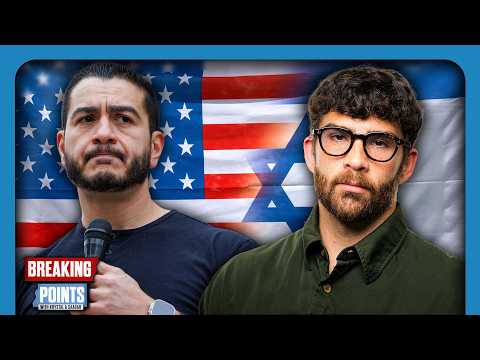
- •Abdul El-Sayed is taking fire from inside his own party after hosting a campaign rally with Twitch streamer Hasan Piker, drawing coordinated attacks from AIPAC and rival candidate Malerie McMorrow.
- •In a wide-ranging interview on Breaking Points, El-Sayed pushed back hard, arguing the backlash reveals a Democratic establishment more interested in controlling its base than winning it.
Who is Abdul El-Sayed? The Progressive Michigan Senate Candidate Under Attack
Dr. Abdul El-Sayed is a physician, former Detroit Health Commissioner, and two-time Michigan political candidate running for the U.S. Senate seat in the Abdul El-Sayed Michigan Senate race 2024 on a platform built around universal healthcare, removing corporate money from politics, and labour rights.
He's not new to this. His 2018 gubernatorial run put him on the map as one of the party's more unapologetically progressive voices — and that reputation is exactly why he's now a target.
The Hasan Piker Controversy: How One Rally Exposed Democratic Party Divisions
The moment El-Sayed announced a campaign rally featuring Hasan Piker — a left-wing Twitch streamer with millions of followers — his opponents moved fast.
Rival candidate Malerie McMorrow compared Piker to right-wing extremists, accusing him of making offensive comments for clicks and calling the association a disqualifier.
El-Sayed's response was direct: the same people criticising him for engaging Piker's audience had previously supported outreach to politically opposite online personalities, and the inconsistency was hard to miss.
AIPAC's Role in the Smear Campaign Against El-Sayed
AIPAC jumped in almost immediately, framing the Piker rally as evidence of extremism — a move El-Sayed described in Breaking Points' Dem Party Civil War Over Hasan Piker as part of a broader pattern of conflating criticism of Israeli government policy with anti-Semitism.
He anticipates the group will spend heavily to defeat him, and says that pressure is already shaping how other Democratic figures in Michigan are positioning themselves against his campaign.
El-Sayed's Defense: Why Engaging Controversial Streamers Matters for Democrats
El-Sayed's core argument is straightforward: young, disengaged voters exist on Twitch, not at town halls, and a party that refuses to meet them there is choosing comfort over votes.
He frames the backlash not as a genuine ethics concern but as gatekeeping — an establishment reflex to keep progressive politics out of spaces it doesn't control.
The Gaza and Palestine Question Dividing the Michigan Democratic Primary
Michigan has a large Arab-American population, and the state's Democratic primary has become one of the most visible fault lines in U.S. politics over Gaza. El-Sayed has been explicit: he considers what is happening in Gaza to constitute war crimes and genocide, and he holds the Israeli government — not Jewish people broadly — responsible.
That distinction matters to him. He has condemned anti-Semitism clearly and repeatedly, while arguing that criticism of a state's military actions is a separate question entirely.
Our Analysis: El-Sayed's critics are doing him a favor — nothing consolidates a grassroots base faster than AIPAC throwing a fit about your podcast appearances.
The broader trend here is real: legacy gatekeepers are losing the plot on where political audiences actually live, while simultaneously complaining about losing them to the right.
What's particularly striking about this episode is how it exposes the Democratic establishment's selective definition of "acceptable" outreach. The same party infrastructure that spent years agonizing over how to win back disaffected white working-class voters — including entertaining some genuinely uncomfortable messengers to do it — draws a hard line the moment a progressive tries to reach disaffected young voters through a left-leaning streamer. The double standard isn't subtle, and younger voters are not missing it.
There's also a longer game worth watching here. El-Sayed's campaign is essentially a stress test for whether small-dollar, grassroots-driven progressive politics can survive a coordinated institutional pushback in a competitive primary. If AIPAC and establishment Democrats successfully kneecap him over a Twitch stream, that outcome sends a very loud signal to every other progressive considering a run — and it further narrows the lane for candidates who refuse corporate PAC money. That matters well beyond Michigan.
The Gaza dimension adds another layer that the party has consistently failed to handle with anything resembling coherence. Michigan's Arab-American community delivered a pointed message during the 2024 presidential primary, and the state's Democratic leadership has largely responded by hoping the issue fades rather than engaging it directly. El-Sayed is forcing that conversation back to the surface at exactly the moment the establishment would prefer it stay buried.
Watch Michigan. If El-Sayed wins, every Democrat currently clutching pearls over Hasan Piker will quietly start booking Twitch streams by 2026.
Frequently Asked Questions
Why is AIPAC targeting the Abdul El-Sayed Michigan Senate race 2024?
What did Malerie McMorrow actually say about Hasan Piker, and does the comparison hold up?
How does El-Sayed's Gaza stance play with Michigan's Arab-American voters?
Is engaging Twitch streamers like Hasan Piker actually an effective campaign strategy?
Does the backlash against El-Sayed reveal a broader Democratic Party conflict over corporate money?
Based on viewer questions and search trends. These answers reflect our editorial analysis. We may be wrong.
Source: Based on a video by Breaking Points — Watch original video
This article was created by NoTime2Watch's editorial team using AI-assisted research. All content includes substantial original analysis and is reviewed for accuracy before publication.