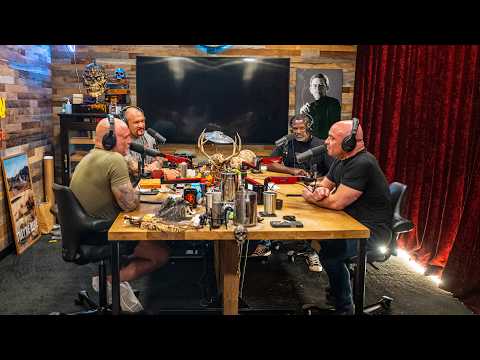
Joe Rogan: Comedy Scene Gatekeeping Australia vs America - The Shocking Truth

Key Takeaways
- •Australia's comedy festival circuit is dominated by one controlling entity, limiting opportunities for comedians who don't fit a specific ideological mold.
- •American venues like The Mothership operate on a merit-only basis — political views are irrelevant, being funny is the only currency that matters.
- •New York's comedy scene is currently thriving; LA's is perceived as losing energy, largely due to the absence of touring headliners.
One Gatekeeper, One Ideology
According to McCann on the Joe Rogan Experience #2488 - James McCann, Australia's comedy festival circuit isn't really a circuit — it's a funnel. A single entity exerts enough control over the major festivals that comedians who don't align with a particular ideological worldview find doors quietly closing before they ever get to knock. It's not a blacklist. It's more subtle than that. It's just that the right rooms never seem to have space for certain people. McCann frames this not as a conspiracy but as a structural reality, the kind that doesn't require anyone to be malicious — just consistent in who they champion and who they overlook. The fact that a comedian can be genuinely talented and still get frozen out because of their politics isn't a bug in the Australian system; by McCann's account, it's closer to a feature.
The Mothership Standard
Contrast that with what Rogan and McCann describe at The Mothership in Austin. The criterion is singular and brutal in its simplicity: are you funny? No ideological vetting. No festival committee. No industry insider deciding whether your worldview is palatable enough for a slot. The American road-based model — where established comedians bring up newer talent and lineage matters more than institutional approval — creates a different kind of meritocracy. It's not perfect, but the filter is at least nominally about the work. As we explored in David Cross's journey from Boston open mics to a national career, the American system rewards persistence and adaptability in ways that festival-gated scenes structurally cannot.
New York Up, LA Coasting
Rogan and McCann both land on New York as the current hotspot — a scene with genuine momentum and comedians pushing each other. LA, by contrast, gets a more complicated read. The theory they float is specific: touring headliners aren't there. When the people at the top of the food chain aren't in the room regularly, the energy at the bottom dissipates. It's a reasonable diagnosis, even if it sidesteps the question of why headliners stopped showing up in the first place. The geography of comedy opportunity, it turns out, is not evenly distributed — and the cities that win are the ones with enough infrastructure to keep talent concentrated and competing.
The Undiscovered Genius Problem
The conversation surfaces a genuinely uncomfortable truth about comedy: talent alone doesn't create a career. Rogan and McCann point to comedians like Brian Holtzman — described as an undiscovered genius — who, despite exceptional ability, struggled to gain wider recognition without external support for marketing and touring. The implication is that the comedy industry, in any country, doesn't automatically surface its best practitioners. It surfaces its most visible ones. Self-promotion isn't a nice-to-have; it's load-bearing. The saddest version of this story is the comedian who is objectively brilliant and completely unknown, not because the audience wouldn't love them, but because no one ever put them in front of that audience — and that happens in both systems, just for different reasons.
Our Analysis: McCann's critique of the Australian festival circuit is pointed, but it raises a question the conversation doesn't fully sit with: gatekeeping based on ideology and gatekeeping based on personal relationships aren't actually that different in practice. The American lineage system — where who brings you up matters enormously — is its own form of access control. It just feels more meritocratic because the criteria are less visible. The Mothership being ideology-agnostic is real, but it's also one venue in one city.
What's more interesting is the LA diagnosis. Blaming the energy dip on absent touring headliners is probably right, but it's also a symptom of something larger — LA comedy became about industry adjacency rather than craft, and the comedians who care most about the work quietly relocated to places like Austin and New York where the rooms still have stakes.
Frequently Asked Questions
What is the comedy scene gatekeeping problem in Australia vs America?
How do comedians break into the industry when festival circuits are controlled by gatekeepers?
Why is the New York comedy scene stronger than LA right now?
Does ideological bias actually affect which comedians succeed in festival circuits?
Based on viewer questions and search trends. These answers reflect our editorial analysis. We may be wrong.
Source: Based on a video by Joe Rogan Experience — Watch original video
This article was created by NoTime2Watch's editorial team using AI-assisted research. All content includes substantial original analysis and is reviewed for accuracy before publication.
Related Articles

You Might Also Like
May 1
Health | Joe Rogan & RZA: Unlocking Exercise Mental Health Anxiety Clarity
Apr 26
Life Stories | Why Do Ancient Flood Narratives Across Cultures Exist? Rogan Explores
Apr 24
Life Stories | Rogan & Gomez: content moderation YouTube pandemic lab leak
Apr 11
Sports | MMA Scoring System Flaws Grappling: Rogan Breaks It Down