Canada Economic Growth Decline vs US: Poilievre Interview
Key Takeaways
- •Pierre Poilievre, leader of Canada's Conservative Party and widely expected to become the country's next Prime Minister, sat down with Steven Bartlett on The Diary of a CEO to make his case for a radically different economic direction for Canada.
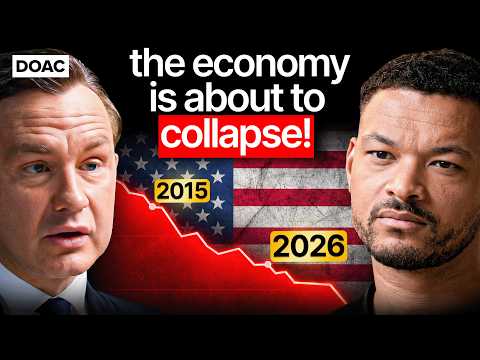
- •In the video titled 'Pierre Poilievre, The Next Prime Minister of Canada?: The Economy Is About To Collapse!', Poilievre argues that Canada's GDP growth is slowing relative to the United States and other nations, and that the culprit is a combination of excessive taxation, wage stagnation, bloated government, and immigration policies that suppress wages while inflating housing costs.
- •His proposed fix draws heavily from the economic models of Switzerland and Singapore, two countries he holds up as proof that small government and free enterprise produce prosperity even without natural resources.
Why Canada Is Losing the GDP Race It Should Be Winning
Canada has oil, uranium, vast land, and a stable democracy. The United States is showing stronger GDP growth. That gap is the central embarrassment Poilievre keeps returning to throughout his conversation with Steven Bartlett on Pierre Poilievre, The Next Prime Minister of Canada?: The Economy Is About To Collapse! on The Diary of a CEO. Forecasts, according to the video, show Canada's growth rate slowing in the coming years while the US pulls further ahead, a trajectory Poilievre frames not as bad luck but as the predictable result of deliberate policy choices. The uncomfortable part is that he's not entirely wrong to frame it that way.
The Tax and Wage Trap Squeezing Canadian Workers
Poilievre's diagnosis of Canada's economic malaise centers on a specific chain of cause and effect. Excessive taxation reduces business investment. Reduced investment means wage stagnation. Stagnant wages, combined with a rising cost of living, means workers are effectively getting poorer while the government takes credit for programs designed to help them. He specifically flags occupational licensing barriers as a structural problem, pointing out that professionals who could be contributing to the labor market are instead locked out by credentialing systems that protect incumbents more than they protect consumers. It is the kind of policy architecture that manages to hurt the people it claims to help, which is either an accident or a feature depending on how cynical you are. Related: Kristi Noem Book Controversy: Dog Shooting & Kim Jong Un Claim
What Switzerland and Singapore Figured Out That Canada Hasn't
The free enterprise comparison Poilievre leans on most heavily involves two countries that, notably, have no significant natural resources to fall back on. Switzerland and Singapore, he argues on The Diary of a CEO, have built some of the wealthiest, lowest-inflation economies in the world by keeping government small, taxes low, and entrepreneurship relatively unencumbered by regulatory friction. The implied question hanging over the entire segment is obvious: if Singapore can do it without oil, what exactly is Canada's excuse? His proposed path for Canada involves eliminating the industrial carbon tax, streamlining regulations, and unlocking natural resource development to strengthen the Canadian dollar, which he sees as a prerequisite for broader affordability and geopolitical relevance.
The Immigration Math That Nobody Wants to Do Out Loud
The immigration section of the conversation is where Poilievre is most direct about a politically uncomfortable calculation. Canada, he contends, has been bringing in temporary foreign workers and international students at a pace that outstrips the country's ability to house, employ, or provide healthcare to them. The result, in his framing, is a labor market where multinational corporations benefit from a suppressed wage floor while domestic workers compete against a larger pool for the same jobs. He proposes capping immigration numbers to align population growth with actual infrastructure and housing capacity, and argues that many vacant positions could be filled by unemployed Canadians if employers were required to offer fair wages rather than accessing cheaper labor through immigration programs. This is the kind of argument that sounds reasonable in an economics seminar and lands very differently in an election campaign, which Poilievre is clearly aware of. Related: Oil Trade Scandal Reignites Congressional Insider Trading
Housing as the Root of the Birth Rate Problem
One throughline in the economic argument that Poilievre keeps returning to is housing. The cost of housing in Canada is not just a real estate problem in his telling; it is the upstream cause of wage stagnation feeling worse than the numbers suggest, of young people unable to become financially independent, and of a declining birth rate that compounds every other demographic and fiscal pressure the country faces. Government policies, he argues, have actively made this worse, citing anti-housing regulations and zoning restrictions as examples of well-intentioned rules that end up functioning as barriers to the construction that would naturally bring prices down. As we explored in the context of Our Analysis: Poilievre gets a sympathetic platform here, and the economic anxiety driving his support is real. But framing Canada's future around being a compliant resource supplier to the United States is not a growth strategy. It is a dependency trap dressed up as pragmatism. The Switzerland and Singapore comparisons are doing heavy lifting they cannot support. Both are small, densely networked trading states without Canada's geographic exposure or resource volatility. The model does not travel that cleanly. Watch the immigration framing. If Canadian growth stalls the way this video projects, that debate gets uglier fast, and no party has a credible answer ready. Based on viewer questions and search trends. These answers reflect our editorial analysis. We may be wrong. Source: Based on a video by The Diary of a CEO — Watch original video This article was created by NoTime2Watch's editorial team using AI-assisted research. All content includes substantial original analysis and is reviewed for accuracy before publication.Frequently Asked Questions
Is Canada declining economically compared to the US?
Who has more debt, Canada or the USA?
Why is Canada's economy slowing down despite having so much oil and natural resources?
Can free enterprise models like Singapore and Switzerland actually work for Canada?
Does Canada's immigration policy actually suppress wages for Canadian workers?
Related Articles