Rob Ford Toronto Mayor 2010 Election: Rise of a Controversial Figure
Key Takeaways
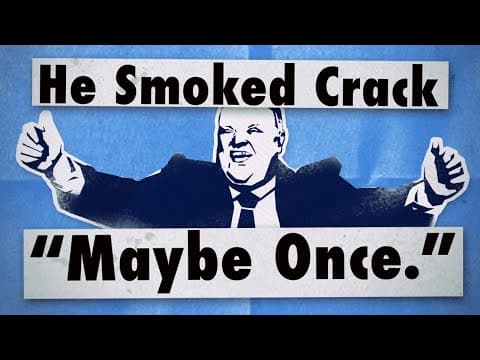
- •Rob Ford won the Rob Ford Toronto mayor 2010 election in a landslide that almost nobody saw coming — and Bobby Broccoli's video 'Meet Canada's Most Infamous Mayor' breaks down exactly how a polarizing suburban councillor with a crack cocaine habit in his future managed to bulldoze a crowded field of establishment candidates.
- •The short answer involves a garbage strike, a forced city merger nobody voted for, and a campaign team sharp enough to weaponize public rage into a movement called Ford Nation.
- •The longer answer involves a family dynasty, a phone number handed out to strangers, and a political myth-making machine that's still running.
The Rise of Rob Ford: Toronto's Most Controversial Mayor and the 2010 Election
Rob Ford is one of only two mayors in recorded history caught on video smoking crack cocaine. The other is Marion Barry. That's a short list — and Ford earned his spot on it after years of being exactly the kind of politician his voters wanted: loud, accessible, and furious about city spending.
His story doesn't start with the scandal, though. It starts in Etobicoke, with a family that treated local politics like a second business.
The Ford Family Dynasty: From Etobicoke to Toronto Politics
Doug Bruce Ford Sr. grew up poor and built Deco Labels into a successful printing operation — the kind of origin story that plays well on a campaign flyer. He entered provincial politics in 1995, and that was enough to establish the template: work hard, distrust government, spend carefully, win elections.
His sons Rob and Doug Jr. both worked at Deco, and both absorbed the family brand of fiscal conservatism. In Meet Canada's Most Infamous Mayor, Bobby Broccoli describes the Fords as a kind of "new money" political dynasty — the Canadian Kennedys, but more suburban, more skeptical of bureaucracy, and significantly less photogenic at press events.
From Grassroots Councillor to Mayor: Ford's Personal Touch Strategy
What actually built Rob Ford's base wasn't ideology — it was his phone number. He handed it out personally, took calls from constituents about potholes and parking tickets, and showed up. For residents in Toronto's outer suburbs who felt like City Hall had forgotten them, that mattered more than any policy platform.
It was a genuinely unusual approach to local politics, and it worked. By the time Ford started eyeing the mayor's office, he had years of goodwill banked in communities that traditional Toronto politics tended to overlook — immigrant neighbourhoods, lower-income suburbs, people who'd never felt like insiders.
Toronto Amalgamation and the Megacity: Setting the Stage for Ford
To understand why Ford's "stop the gravy train" message landed so hard, you have to go back to 1998, when Premier Mike Harris forced six separate municipalities — including Toronto and Etobicoke — into a single megacity through Bill 103, without a public mandate.
Local referendums opposed it. Residents opposed it. Didn't matter. Harris's "Common Sense Revolution" pushed it through anyway, promising cost savings that never materialized — budgets went up, not down, and the resentment that came with being overruled by Queen's Park never fully went away.
That simmering frustration with top-down decisions and expanding bureaucracy became the emotional soil Ford's campaign grew in. The megacity created the grievances; Ford just gave them a name.
How David Miller's Garbage Strike Led to Ford's Victory
Mayor David Miller was a progressive lawyer who cared about transit and the environment. He was also the guy in charge when 24,000 city workers walked off the job in 2009, and garbage piled up in public parks for weeks during a Toronto summer.
Miller's position was awkward from the start — he needed union support but was also trying to claw back concessions on wages and sick-day banks during a recession. The result pleased nobody. Taxpayers thought he was too soft; unions thought he'd sold them out. His approval ratings cratered, he declined to run again, and the field opened up.
The 2010 Toronto Mayoral Election and the Gravy Train Message
The 2010 race was crowded and chaotic — no political parties, which means name recognition does a lot of heavy lifting. George Smitherman emerged as the centrist frontrunner. Rob Ford was, initially, considered a long shot at best.
Ford's platform was thin on specifics and heavy on vibe. "Stop the gravy train" was the whole pitch, really — cut waste, end the nonsense, make City Hall accountable. It resonated precisely because it was vague enough to mean whatever the listener needed it to mean.
Campaign Strategy That Won: Nick Kouvalis and the Ford Campaign
Nick Kouvalis ran the campaign, and one of his cleaner strategic moves was keeping John Tory out of the race. With Tory sidelined, right-leaning voters had nowhere else to go — Ford consolidated that support and held it.
The campaign also proved surprisingly good at scandal management, deflecting a series of controversies that might have sunk a less disciplined operation. Outer suburban and immigrant communities — the ones Ford had been calling directly for years — turned out for him in numbers that polling hadn't predicted. The result wasn't close. Ford Nation was real, and it had just elected a mayor. Just as Our Analysis: Broccoli nails the grassroots mechanics of Ford's rise but undersells how Harris's amalgamation was the original sin — merging suburban tax-skeptics with urban progressives into one electorate basically built Rob Ford's coalition by accident. This connects to a broader political science pattern: forced municipal mergers reliably generate populist backlash because they create identity grievances alongside fiscal ones. Going forward, Toronto still hasn't resolved that structural tension — the next Ford-shaped candidate is just waiting for the next garbage strike equivalent to light the fuse. Based on viewer questions and search trends. These answers reflect our editorial analysis. We may be wrong. Source: Based on a video by Bobby Broccoli — Watch original video This article was created by NoTime2Watch's editorial team using AI-assisted research. All content includes substantial original analysis and is reviewed for accuracy before publication.Frequently Asked Questions
What actually won Rob Ford the 2010 Toronto mayor election — his message or his opponents' weaknesses?
Why did Toronto's 1998 amalgamation make voters so angry by the time the 2010 election came around?
How did Rob Ford build a political base before he ran for mayor — was it really just his personal phone number?
Is the comparison between Rob Ford and Marion Barry fair?
Did the 2009 Toronto garbage strike actually cost David Miller the 2010 election, or would Ford have won anyway?
Related Articles
You Might Also Like