Oil Trade Scandal Reignites Congressional Insider Trading
Key Takeaways
- •A massive oil futures trade executed just 16 minutes before a White House announcement about Iran de-escalation has reignited the debate over congressional insider trading — and this time, the brazenness of it was hard to ignore.
- •How Money Works breaks down the incident in their video "So...
- •We Aren't Even Trying To Hide it Anymore?", using it as a lens to examine how public officials consistently exploit privileged government information for personal financial gain.
The Oil Trade That Was Too Perfectly Timed
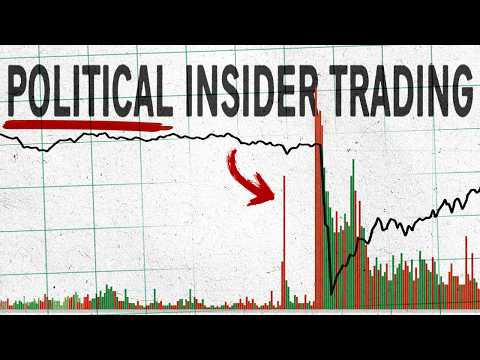
Sixteen minutes. That is the gap between a massive spike in oil futures trading and a White House statement announcing de-escalation talks with Iran. The announcement was the kind that moves markets immediately — lower geopolitical tension means lower oil prices, which means anyone holding the right position just before that news broke stood to pocket tens of millions of dollars. According to How Money Works, the trade involved hundreds of millions in notional value and was executed within a single minute, which is not the behavior of someone who stumbled into a lucky guess. The incident became a flashpoint precisely because it was so difficult to explain away with coincidence.
Congressional Insider Trading Has a Tells-You-Everything Timing Pattern
This wasn't an isolated weird trade. In their video So... We Aren't Even Trying To Hide it Anymore?, How Money Works points out that government announcements have followed a remarkably consistent pattern when you step back and look at them: positive news, like deferred tariffs, tends to drop on Monday mornings, right as markets open and can react with a rally. Negative news, like new tariffs or military actions, reliably appears on Friday nights or over weekends, when markets are closed and the immediate damage is blunted. That pattern has existed as a political communications tactic for years, but it takes on a different meaning when suspicious trades keep appearing in the hours before those announcements. The timing is so consistent it almost functions as a schedule. For more context on how U.S.-Iran tensions have driven policy decisions with major economic ripple effects, the breakdown in So... We Aren't Even Trying To Hide it Anymore? is worth watching in full.
Our Analysis: How Money Works is right that the real scandal isn't the trades themselves. It's that the disclosure system exists precisely to look like accountability without providing any. A filing nobody can parse is not transparency.
What the video underweights is the policy distortion angle. Officials who profit from geopolitical tension have a financial incentive to sustain it. That's not a side effect of corruption. That's the mechanism.
Watch what happens to trading reform bills every time they gain momentum. The pattern is more telling than any single suspicious trade.
There's also a structural problem that rarely gets named directly: the very committees with oversight authority over financial markets and national security are the same ones whose members show the most suspicious trading activity. That's not a bug in the system — it's the system working exactly as the people inside it prefer. Oversight without consequence is just theater, and everyone on the inside knows it.
The Iran oil trade is useful precisely because it's so clean as an example. There's a discrete event, a discrete timestamp, and a discrete beneficiary. Most of the time, the corruption is messier and easier to dismiss. But the cleaner cases reveal the baseline: this is what it looks like when someone isn't even bothering to disguise it. The sloppiness is itself a signal — a sign that whoever executed that trade had no real fear of consequence. That confidence doesn't emerge from nowhere. It's earned over years of watching reform efforts die quietly in committee.
The deeper issue is that financial disclosure laws were written by the same class of people they're meant to regulate. The STOCK Act, passed in 2012 with considerable fanfare, was quietly amended months later to remove the most meaningful transparency provisions. The pattern of reform-then-rollback is so well established at this point that new legislative pushes almost feel performative — something to cite during a campaign, not something designed to actually change behavior. Until the enforcement mechanism has real teeth and the disclosure system is genuinely accessible to ordinary citizens, the 16-minute oil trade will remain an illustration of a problem, not an exception to a rule.
Frequently Asked Questions
Can members of Congress legally do insider trading?
How many Congress members have actually been punished for violating the STOCK Act?
What specific patterns reveal congressional insider trading?
Is there a bill in Congress to stop insider trading by its own members?
How can you actually track what stocks members of Congress are trading?
Based on viewer questions and search trends. These answers reflect our editorial analysis. We may be wrong.
Source: Based on a video by How Money Works — Watch original video
This article was created by NoTime2Watch's editorial team using AI-assisted research. All content includes substantial original analysis and is reviewed for accuracy before publication.