Birthright Citizenship Supreme Court Case: Trump's Loss
Key Takeaways
- •The Supreme Court's birthright citizenship case is shaping up to be a near-certain loss for the Trump administration, with even some conservative justices appearing ready to vote against it.
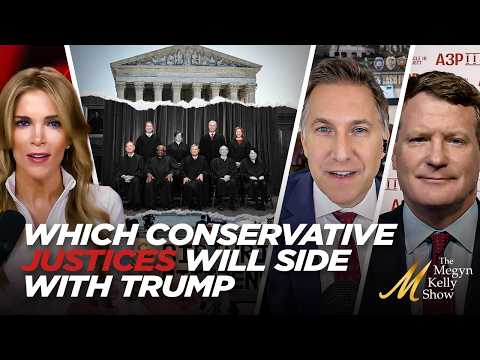
- •In a video titled 'Which Conservative Justices Will Likely Rule AGAINST Trump in SCOTUS Birthright Citizenship Case,' Megyn Kelly and her guests break down oral argument questioning from justices like Brett Kavanaugh and Neil Gorsuch, analyzing what their lines of inquiry signal about how the court will rule.
- •The central legal fight is over whether the 14th Amendment's 'subject to the jurisdiction' clause extends birthright citizenship to children of undocumented immigrants and birth tourists, with the 1898 Wong Kim Ark precedent looming large over everything.
The Birthright Citizenship Supreme Court Case, Explained Quickly
The Trump administration issued an executive order attempting to restrict automatic citizenship for children born in the U.S. to parents who are either undocumented or present on temporary visas. That order collided almost immediately with the 14th Amendment, which states that all persons born in the U.S. and 'subject to the jurisdiction thereof' are citizens. That one phrase, seven words sitting in a 157-year-old amendment, is now doing an enormous amount of legal heavy lifting in the most closely watched birthright citizenship Supreme Court case in modern history. In Which Conservative Justices Will Likely Rule AGAINST Trump in SCOTUS "Birthright Citizenship" Case, Megyn Kelly and her guests frame the administration's core argument: that 'subject to the jurisdiction' was never intended to cover people with no lawful, permanent ties to the country.
What Wong Kim Ark Actually Said, and What It Did Not
The government's opponents keep pointing to United States v. Wong Kim Ark, decided in 1898, as proof that birthright citizenship is settled law. And it is a strong card. The Supreme Court ruled that a child born in the U.S. to Chinese immigrant parents was a citizen at birth. But here is the detail that keeps coming up in Kelly's discussion: Wong Kim Ark's parents were lawful, permanent residents. They were not undocumented. They were not tourists who flew in, had a baby, and flew home. The administration's legal team argues that the ruling was never meant to extend to people with no lawful status, and that applying it that way is a stretch of both history and text. Whether the current court buys that distinction is the whole ballgame.
Our Analysis: The legal debate here keeps circling Wong Kim Ark without grappling with its actual limits. That 1898 ruling covered children of lawful permanent residents, not temporary visitors or undocumented migrants. Treating it as a blanket precedent is intellectually lazy, and several justices clearly know it.
Kavanaugh's framing is the tell. If he is already reasoning that Congress would have spoken differently post-Wong Kim Ark, he is building a soft exit ramp away from the administration's position, not a bridge toward it.
Watch Gorsuch. His jurisdictional questioning was the sharpest in the room, and where he lands will matter more than anyone is currently predicting.
What is underappreciated in most coverage of this case is how much the court's eventual ruling could reshape the architecture of immigration law well beyond birthright citizenship. A narrow ruling — one that simply upholds the lower court injunctions on procedural grounds — would kick the substantive 14th Amendment question down the road, leaving the executive order in legal limbo while lower courts continue fighting over it. A broad ruling on the merits, in either direction, would be far more consequential and far harder to walk back.
There is also a federalism dimension that is not getting enough attention. Several states have built social and legal infrastructure around the assumption that birthright citizenship is universal and permanent. A ruling that chips away at that assumption, even modestly, would create administrative chaos at the state level that Congress is not remotely prepared to manage. The justices know this. Whether it changes their calculus is another matter, but it almost certainly affects how carefully they will try to write any majority opinion.
Finally, the politics of this case do not map cleanly onto the legal questions, which is part of what makes it genuinely interesting. Justices who are institutionally conservative — meaning skeptical of sweeping doctrinal change — may find themselves siding against the Trump administration not out of sympathy for its opponents, but because blowing up 125 years of settled citizenship practice is itself a radical act. The administration walked into this argument asking the court to do something enormous. The oral argument signals suggest a majority is not willing to go there.
Frequently Asked Questions
What is the birthright citizenship Supreme Court case actually about?
Does the Wong Kim Ark case actually settle the birthright citizenship debate?
Which conservative justices are expected to rule against Trump on birthright citizenship?
Is birth tourism actually a significant legal problem the Supreme Court could address here?
How does Elk v. Wilkins relate to the current birthright citizenship case?
Based on viewer questions and search trends. These answers reflect our editorial analysis. We may be wrong.
Source: Based on a video by Megyn Kelly — Watch original video
This article was created by NoTime2Watch's editorial team using AI-assisted research. All content includes substantial original analysis and is reviewed for accuracy before publication.