Sonic Employee Teaches How to Handle Entitled Customers at Work

Key Takeaways
- •A Sonic Drive-In employee named Andrew became a case study in how to handle entitled customers after he refused to give free refills to a woman arriving with old, dirty cups and no receipt — and didn't flinch when she threatened to call corporate.
- •MoistCr1TiKaL broke down the confrontation alongside a second incident at a gas station, where a customer's aggressive refund demands over non-refundable lottery tickets raised serious suspicions of a quick-change scam.
- •Both videos expose how badly customer service workers are routinely treated, and how rarely they fight back.
What 'Entitled Customer' Actually Means in Practice
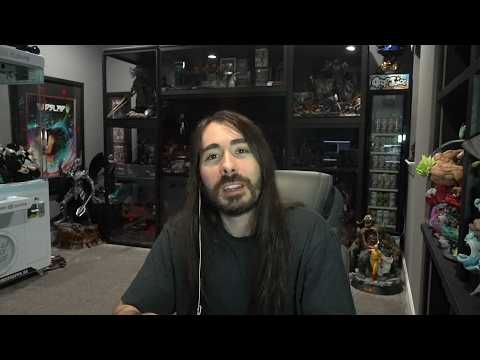
There's a difference between a difficult customer and an entitled one. In his video This is How You Handle Entitled Losers, penguinz0 (MoistCr1TiKaL) breaks down exactly what that distinction looks like in practice. Difficult customers have a legitimate grievance and handle it badly. Entitled customers believe the rules simply don't apply to them — and they've usually built a whole private mythology around why that's justified. The woman who walked into Sonic with a collection of old, grimy cups and expected free refills wasn't confused about the policy. She knew exactly what she was doing. The lack of a receipt wasn't an oversight; it was the whole strategy.
This matters because the response to each type is completely different. Difficult customers can be de-escalated with empathy and solutions. Entitled ones interpret empathy as weakness and solutions as an opening to demand more. Understanding "which situation you're in is the first practical skill" any customer service worker needs. Most training programs don't bother to teach that distinction, which is a significant reason so many of these interactions go sideways so fast. Related: Don's Crystal Meth Addiction Recovery Story: Trauma & Healing
The Sonic Standoff
Andrew's approach was disarmingly simple: no receipt, no refill. He didn't apologize for it, didn't offer alternatives to soften the blow, and didn't visibly react when the customer escalated. According to the video, the customer arrived with multiple old cups — the kind that make it obvious this wasn't a first attempt — and when Andrew refused her, she went straight to threats, warning she'd contact corporate.
He didn't care. That's the part that matters. Related: Will's Critique of Public Education System on Soft White Underbelly
The threat of a corporate complaint is the nuclear option in most entitled customer playbooks, and it works because most employees are terrified of it. Andrew treated it like background noise. His position didn't shift, his tone didn't change, and the interaction ended on his terms. It's genuinely rare to watch someone in a customer-facing role hold a line that cleanly, and the fact that the customer was filming the whole thing — apparently expecting the footage to vindicate her — makes the outcome even more pointed.
Why Andrew's Response Actually Worked
Firmness without aggression is a harder thing to maintain than it sounds. The natural human responses to being yelled at are fight or appeasement, and Andrew did neither. He was consistent. Consistency is what breaks the entitled customer dynamic, because that dynamic runs entirely on the assumption that enough pressure will eventually produce a yes. Related: YouTuber Bald and Bankrupt: Russian Prison Arrest Charges Defamation
The moment an employee shows uncertainty, softens language, or offers a partial concession, the entitled customer treats it as confirmation that the original demand was reasonable and doubles down. Andrew gave her nothing to work with. No uncertainty, no softening, no concession. The customer's anger had nowhere to go, which is exactly how that kind of confrontation ends — not with resolution, but with the entitled party running out of leverage.
Whether Andrew faces any professional consequences for this remains an open question, and frankly, it shouldn't be.
The Gas Station: A Different Kind of Problem
The second incident in the video is less straightforward and arguably more disturbing. A male customer at a gas station spent an extended period verbally berating a cashier over a refund he claimed she didn't know how to process. He insulted her repeatedly, filmed her, accused her of incompetence, and described his refund demands in increasingly convoluted terms that involved scratch-off lottery tickets and a gas pump.
Here's the relevant legal detail: in Florida, lottery tickets are non-refundable. Full stop. That's not a store policy — it's state law. So whatever story this customer was constructing around his supposed refund, the foundation of it was already legally impossible before he finished his first sentence.
Even a bystander in the store apparently questioned the details of the man's payment, which he bulldozed straight through. The cashier eventually called the police. That's the correct move, and it's worth stating clearly: when a customer's behavior crosses from difficult into harassment, law enforcement involvement is not an escalation — it's a proportionate response.
Recognizing the Quick-Change Pattern
The quick-change scam works by overwhelming a cashier with complexity. The customer creates a transaction with multiple moving parts — partial payments, returns, exchanges, multiple items — and talks rapidly through each step, sometimes backtracking, sometimes paying in stages, until the cashier loses track of what's been exchanged for what. The goal is to walk out having received more than was paid.
The gas station customer's behavior fits the pattern uncomfortably well. Non-refundable items, multiple separate grievances bundled into one interaction, aggressive misdirection when the cashier tried to slow down and think — all of it creates noise that's hard to process under pressure. The insults aren't incidental to the scam; they're load-bearing. Stress degrades working memory. A cashier who's being called names while simultaneously trying to calculate a refund is a cashier who's easier to confuse.
Whether or not that's what was happening in this specific case, customer service workers in cash-handling roles should understand that pattern exists and know what it looks like. It's one of the more insidious forms of retail fraud precisely because it hides behind the appearance of a legitimate complaint. For workers navigating a range of high-pressure or manipulative interactions — similar to the systemic pressures explored in related coverage — recognizing the mechanics of a scam before it fully unfolds is the difference between holding your ground and getting taken.
Our Analysis: What makes penguinz0 (MoistCr1TiKaL)'s breakdown in This is How You Handle Entitled Losers genuinely useful isn't the schadenfreude of watching entitled customers lose — it's the implicit framework underneath both incidents. Andrew's composed refusal at Sonic and the gas station cashier's decision to call police represent two different but related responses to the same underlying problem: customer service roles structurally disadvantage the worker, and the people who exploit that know it. The entitled customer playbook exists because it works more often than it fails. Corporate complaint threats, filming as intimidation, manufactured confusion — these are tactics refined through repetition against workers who have been trained to absorb abuse rather than redirect it. What's striking about both cases isn't that the workers held their ground; it's how unusual that is. Most of these interactions never get filmed because they end in capitulation. The cashier gives the refill. The manager overrides the policy. The entitled customer walks away confirmed in the belief that pressure works. Andrew and the gas station cashier are outliers, and the fact that their responses are being celebrated as exceptional says something uncomfortable about how normalized the alternative has become. The quick-change angle deserves particular attention precisely because it reframes what looks like an emotional dispute into something more calculated. Retail fraud through social engineering doesn't require technical skill — it requires only that the target be stressed, rushed, and afraid of making a scene. Those are baseline conditions for most customer-facing workers on a busy shift. Training that addresses the emotional mechanics of these interactions, not just the procedural scripts, would go a long way. Neither of these workers should have needed to go viral to be considered competent at their jobs.
Frequently Asked Questions
How do you deal with rude entitled customers without getting fired?
How do you shut down an entitled person without escalating the confrontation?
How to handle entitled customers at work when they threaten to call corporate or film you?
What is a quick-change scam, and how does it work at a gas station or retail counter?
Do customer service employees have any legal protection against abusive or harassing customers?
Based on viewer questions and search trends. These answers reflect our editorial analysis. We may be wrong.
Source: Based on a video by penguinz0 (MoistCr1TiKaL) — Watch original video
This article was created by NoTime2Watch's editorial team using AI-assisted research. All content includes substantial original analysis and is reviewed for accuracy before publication.