YouTuber Bald and Bankrupt: Russian Prison Arrest Charges Defamation
Key Takeaways
- •Travel YouTuber Bald and Bankrupt, known for filming across the former Soviet Union, was arrested in Siberia and charged under Russian criminal law for comments he had published online about the war in Ukraine and for linking to a Ukrainian refugee charity.
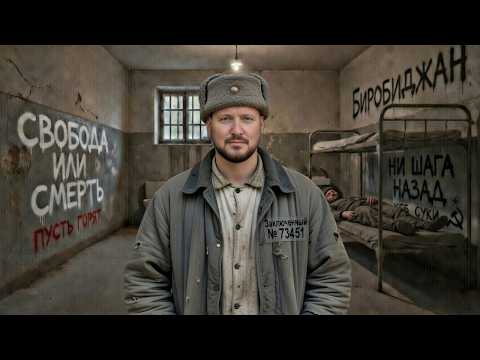
- •In the video 'How I Survived Being Thrown In A Russian Prison,' he walks through the charges against him, including defaming the president and the military, which carried a potential sentence of up to seven years.
- •He describes the interrogation process, the conditions inside a Siberian prison cell, and the courtroom strategy he used to avoid a lengthy sentence.
What Russian Defamation Law Actually Looks Like in Practice
Most people have a vague sense that Russia punishes dissent. Fewer people know exactly what that looks like when it lands on a foreigner sitting in a police station in Siberia. In How I Survived Being Thrown In A Russian Prison, Bald and Bankrupt describes charges rooted in Russian criminal code provisions covering defamation of the president and the military operation, plus what authorities classified as "raising money for the enemy" — the last charge stemming from a link to a Ukrainian refugee charity he had published online. These were not grey areas in the law as it currently stands. They were the law. The gap between posting an opinion online and facing a potential seven-year prison sentence is, in Russia right now, disturbingly small.
The Arrest Nobody Saw Coming
He had returned to Russia to continue filming his travel series. The arrest came in Birobidzhan, and the charges had nothing to do with his visa status, which is what he initially assumed the problem was. Authorities had been tracking comments and content he had already published. The interrogation moved fast once it started. He was stripped of his personal items, placed in a bare cell, and left to sit with the reality that the charges being read to him were not administrative. They were criminal. Panic, by his own account, was the accurate word for what followed. Related: Chánov: Romani communities Czech Republic poverty drug addiction
Inside the Cell
A Siberian prison cell in this context is not a holding room with a bench and a phone call. It was isolated, basic, and deliberately disorienting. He had nothing. No phone, no possessions, no clear sense of what was coming next. The physical conditions were secondary to the psychological weight of not knowing whether the next conversation would end with a fine or a multi-year sentence. For anyone curious about what marginalised isolation looks like in institutional settings, the psychological mechanics here are not entirely different from what researchers describe in studies on solitary confinement and social deprivation, though the political context is entirely its own category.
Constantine and the Warning That Mattered
The shift in tone came through a prison guard named Constantine. When the narrator learned that Constantine's son was actively fighting in Ukraine, he apologised for the comments he had made online. Constantine accepted it. What followed was not warmth exactly, but it was something. Constantine shared food with him and then gave him a clear, direct piece of advice: someone was coming to question him, and his answers would decide whether he walked out or stayed. That warning, delivered quietly by a man with obvious personal stakes in the war being discussed, was arguably the most consequential conversation in the entire ordeal. It is the kind of human moment that gets lost in broader political narratives about authoritarian states, and it deserved to be in this story. Related: A Professional Cuddling Service in Tempe, Arizona
The Interrogation and the Choice
The formal questioning was conducted on camera, explicitly framed as material that would be passed to a judge. The official conducting it laid out the range of outcomes plainly: a fine on one end, seven years on the other. Bald and Bankrupt describes making a conscious decision in that room to prioritise getting out over making any kind of principled stand. He reasoned, with some dark clarity, that a comfortable life outside a prison camp was preferable to being a martyr no one would particularly notice. That is not cowardice. It is a rational calculation that most people would make and very few would admit to as honestly as he does here. The stories that resonate most are rarely the heroic ones, as anyone who has read Our Analysis: Bald and Bankrupt is at his best when the camera stops being a shield. This story works because he admits, plainly, that he chose his freedom over his principles. No spin on that. The "naive Englishman" act in front of the judge is the most honest moment in the whole thing. It was a performance, he knew it was a performance, and it worked. That self-awareness is what separates this from typical travel-danger content. What the video skirts around is the question nobody asks him directly. How many more arrests before the math stops working in his favor? There is also a broader question worth sitting with: what happens to the genre itself when the access disappears? The former Soviet Union travel niche has always depended on a particular kind of friction — the awkwardness of a foreigner navigating post-communist spaces, the generosity of people who have every reason to be suspicious. A three-year ban does not just end a series. It ends a specific mode of storytelling that required physical presence, accumulated trust, and a willingness to look ridiculous in the service of something real. Whether anyone picks up where this leaves off, and whether they can do it without the decade of goodwill he had built, is the unanswered question underneath all of it. Based on viewer questions and search trends. These answers reflect our editorial analysis. We may be wrong. Source: Based on a video by Bald and Bankrupt — Watch original video This article was created by NoTime2Watch's editorial team using AI-assisted research. All content includes substantial original analysis and is reviewed for accuracy before publication.Frequently Asked Questions
Is defamation a crime in Russia?
What is the prison sentence for defaming the Russian president or military?
What happens during a Russian police interrogation for social media comments?
What are the consequences of speaking against the Russian government or military online?
Can a foreigner be arrested in Russia for comments posted online outside the country?