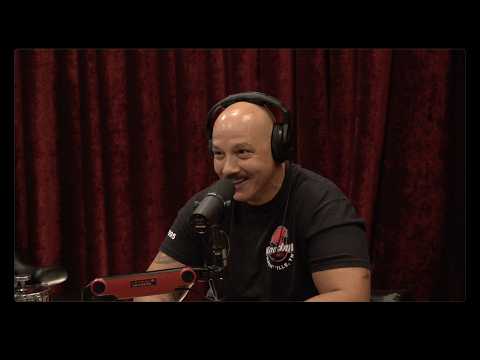
Will's Critique of Public Education System on Soft White Underbelly
Key Takeaways
- •In a Soft White Underbelly interview titled 'Child Prodigy interview-Will,' a man named Will describes how he left the public school system at age 11, completed middle and high school curricula through homeschooling, and enrolled in community college at 13, graduating by 15.
- •His critique of traditional education goes beyond the personal — he argues the system functions as a conditioning mechanism, with bullying dynamics actively enforcing conformity and administrators punishing students who defend themselves more harshly than the aggressors.
- •Will's account raises uncomfortable questions about what public schools are actually designed to do.
Is the Public School System Built to Produce Graduates or Compliant Citizens
Will doesn't frame his exit from public school as a sad story. He frames it as an escape. In the Child Prodigy interview-Will on Soft White Underbelly, he describes the system as a 'matrix' — his word — designed less to educate than to condition. The goal, as he sees it, isn't critical thinking. It's compliance. And once you start looking at how Arizona schools handled discipline during his time there, it's genuinely hard to argue with him.
The Bully Who Never Gets Sent Home
Here's the specific mechanism Will points to, and it's the part of this interview that sticks. He observed, repeatedly, that when a bullied student finally snapped and fought back, the administrators came down harder on that student than on the original aggressor. Not slightly harder. Noticeably harder. His interpretation is that this isn't accidental mismanagement — it's the system doing exactly what it's designed to do, which is punish anyone who disrupts the established order, regardless of who started it. The bully, in this reading, is just an unpaid enforcer of institutional norms. That's either a paranoid theory or an uncomfortably accurate description of every school you've ever attended.
What His Mother Noticed That the School Didn't Advertise
Will's exit from public school came when his mother did the math on how much actual instruction time he was getting each day. The answer, apparently, was not much. After pulling him out at age 11, she ran an accelerated homeschooling program that let him move through middle and high school curricula at his own pace. The result was a 13-year-old sitting in a community college classroom. The homeschooling movement has always argued that the pacing of traditional school is calibrated to the slowest acceptable rate, not the fastest possible one — Will's trajectory is a pretty clean case study for that argument.
The Community College That Almost Said No
Getting in wasn't frictionless. Will describes one administrator who told him, to his face, that his application was an insult to the institution. That's a specific kind of bureaucratic hostility — the kind that reveals more about the system's assumptions than it does about the applicant. He got in anyway, and the environment turned out to suit him better than high school had. Adult learners showed up to class with actual reasons for being there, which is a different social ecosystem entirely from one populated by teenagers who had no choice. He graduated community college at 15. For anyone curious about what happens when education systems encounter children who don't fit their timelines, this is worth sitting with — and it connects to broader patterns of how rigid structures respond to people who fall outside expected categories, something Our Analysis: Will is the rare interview subject who sounds genuinely unfinished rather than performing humility. The medicine pivot, the acting detour, the finance chapter — none of it reads like failure. It reads like someone who keeps testing the walls to find the real door. The most honest moment is buried: losing someone close reordered everything faster than any career decision ever did. Mark Laita mostly let that pass. He shouldn't have. Will's education critique lands better than most because he lived both sides of it. He is not theorizing from resentment. That difference matters. What the interview gestures at but never fully develops is the selection effect at work in stories like Will's. The children who escape systems that aren't built for them tend to be the ones with a parent who noticed, had the flexibility to act, and possessed enough confidence to absorb the institutional pushback. Will's mother did the math, pulled him out, and absorbed an administrator telling her 13-year-old son that he was an insult to a community college. Not every parent can do that — financially, logistically, or psychologically. The question the interview implicitly raises, without quite asking it, is what happens to the kids with the same capacity and the same mismatch but without that one person in their corner. Will's story is genuinely encouraging. It also has a shadow version that goes untold. There's also something worth noting about how institutions process their own failures. The administrator who called Will's application an insult didn't say the institution wasn't equipped to handle him. He said Will was the problem. That framing — locating the disruption in the person rather than the system — is exactly what Will's critique of K-12 discipline is describing. The same logic appears at two different levels of the same pipeline. That's not a coincidence. It's a pattern worth naming. Based on viewer questions and search trends. These answers reflect our editorial analysis. We may be wrong. Source: Based on a video by Soft White Underbelly — Watch original video This article was created by NoTime2Watch's editorial team using AI-assisted research. All content includes substantial original analysis and is reviewed for accuracy before publication.Frequently Asked Questions
What is the biggest problem with public education?
What are the real drawbacks of public schooling that schools don't talk about?
Why do schools punish kids who fight back against bullies more than the bullies themselves?
Is homeschooling actually better than public school for advanced learners?
Can a 13-year-old actually enroll in community college?
Related Articles