Jolina Giselle Pokemon Card Collection Authenticity Doubts
Key Takeaways
- •The Jolina Giselle collection is estimated at $20-25 million and includes two Illustrator Pikachu cards — one reportedly the first ever graded — but a private Saudi royal collection is believed to be more valuable.
- •Jolina claims her family is not rich and built the collection over 10 years through dedication, a story that collapses under basic scrutiny given the collection's value and the mansion it lives in.
- •The elaborate public unveiling — including a professionally produced short film — looks less like a showcase and more like a sales pitch targeting a single ultra-wealthy buyer.
Claims vs. What the Cameras Actually Show
The Jolina Giselle Pokemon card collection is being called the most valuable publicly displayed collection in the world. That qualifier matters. According to penguinz0 (MoistCr1TiKaL), a member of the Saudi royal family reportedly owns a private collection that dwarfs it — you just can't see it. What you can see is Jolina's: thousands of cards, an opulent mansion setting, and an estimated value of at least $20-25 million. The 'most valuable publicly displayed' framing is doing a lot of heavy lifting there.
The Cards That Make the Number Real
The collection's headline items are two Illustrator Pikachu cards — among the rarest Pokemon cards in existence. One of them is reportedly the first Illustrator Pikachu ever professionally graded. Cards like these aren't just rare in the collector sense. They're the kind of asset that moves the needle on a net worth statement. Even before accounting for the rest of the collection, those two cards alone push the total into multi-million dollar territory without much argument.
The Illustrator Pikachu Problem
Having one Illustrator Pikachu is extraordinary. Having two raises a different kind of question — not about authenticity, but about access. These cards don't appear at your local card shop or even most major auctions. Acquiring two of them requires either extraordinary timing, extraordinary connections, or extraordinary money. Probably all three. The cards are real. The question is who actually has the resources to assemble them.
The Origin Story That Doesn't Add Up
A Childhood Request and a Decade of Dedication
Jolina's explanation for how the collection came to exist goes roughly like this: as a child, she asked her father to buy all the Pokemon cards, and the family spent the next ten years building it out of passion rather than wealth. That's the story. The problem is that the cards in this collection were expensive a decade ago too — some of them were already commanding serious money before Pokemon card prices went stratospheric. 'Dedication' doesn't grade an Illustrator Pikachu. Capital does.
A Family That Is Definitely Not Rich (In a Mansion)
Jolina states directly that her family is normal and not rich. The collection is displayed inside what is clearly a high-end property. The surroundings visible in the promotional material are not consistent with a family that stumbled into a $20 million collection through sheer enthusiasm. MoistCr1TiKaL flags this contradiction plainly — the setting alone contradicts the stated background before you even get to the card values. It's the kind of claim that might work if no one looked at the footage, which is an odd gamble when you're releasing a short film about yourself.
A Sale Dressed Up as a Showcase
The Short Film Nobody Asked For
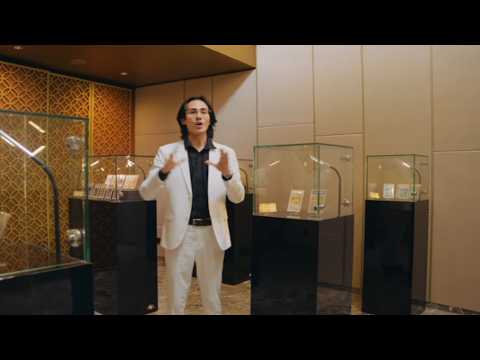
Private collectors of genuinely valuable items — art, watches, rare assets — do not typically commission professional short films to announce that they own those items. Jolina's public unveiling includes exactly that: polished promotional material, a carefully constructed narrative, and a statement that she's ready to 'pass on' the collection as a whole. MoistCr1TiKaL's read is that this is a marketing campaign aimed at finding a single buyer wealthy enough to take the entire collection off her hands — what he calls a 'turbo whale.' The elaborate presentation makes a lot more sense as a sales strategy than as a personal passion project going public. It's a strange amount of effort for someone who just wants people to know they love Pokemon. As a way to attract a nine-figure buyer, it's actually pretty smart.
What's Real and What Isn't
MoistCr1TiKaL is clear on one point: the cards themselves are almost certainly genuine. Expert collectors can trace the transaction history of cards at this level, and faking an Illustrator Pikachu at scale isn't a realistic proposition. The authenticity problem isn't with the cards — it's with everything around them. The 'normal family' claim, the vague Swiss background, the origin story that skips over the part where someone spent millions of dollars, the conflicting timelines. None of it holds together under mild pressure. The collection is real. The story told to explain it is something else entirely. Similar patterns — where the asset is legitimate but the narrative around it is constructed for an audience — show up in other high-value spaces too, like the MrBeast streamer competition where the prize money is real but the framing is always doing work beyond the surface.
The most telling detail in this whole situation is the display itself. MoistCr1TiKaL criticises it for being sterile — cards in rack-style storage inside a luxury property — but that sterility is actually informative. A collector who spent a decade building something out of genuine passion tends to have opinions about how it looks on a wall. What's described here sounds more like inventory management than curation. You store things you're planning to move. You display things you love.
The 'normal family' line is also a strange choice if the goal was credibility. Saying nothing about your background is invisible. Claiming normalcy when the evidence contradicts it actively invites scrutiny. Either the family underestimated how closely people would look, or the claim was never meant to survive close inspection — just to soften the optics of extreme wealth long enough to get the film distributed. That's a very specific kind of calculated.
Frequently Asked Questions
Is there a Pokémon card worth $1,000,000?
What is the $5.275 million Pokémon card?
What are the actual inconsistencies in the Jolina Giselle Pokemon card collection authenticity story?
Is the Jolina Giselle collection unveiling a genuine showcase or a marketing strategy to sell?
What are the most faked Pokémon cards?
Based on viewer questions and search trends. These answers reflect our editorial analysis. We may be wrong.
Source: Based on a video by penguinz0 (MoistCr1TiKaL) — Watch original video
This article was created by NoTime2Watch's editorial team using AI-assisted research. All content includes substantial original analysis and is reviewed for accuracy before publication.