Single Stem Tomato Trellising Method: Grow 500 Tomatoes
Key Takeaways
- •Single stem string trellising — the method commercial growers use — can produce 500+ full-sized tomatoes from a small raised bed by directing all plant energy into one vertical leader.
- •Weekly removal of side shoots (suckers) is non-negotiable; skip it and the system collapses into the same dense, disease-prone tangle you were trying to escape.
- •This method only works for indeterminate tomato varieties — determinate types and cherry tomatoes have fundamentally different growth habits that make single-stem training counterproductive.
Why the Cage Is Lying to You
Most home gardeners buy a wire cage, drop it over their tomato plant, and consider the job done. The plant looks great for a few weeks — lush, full, aggressively alive. Then it becomes a problem. Without pruning, every side shoot that sprouts becomes its own competing stem, and by midsummer you have a dense, airless tangle that traps moisture, invites fungal disease, and produces fruit that's more "consolation prize than harvest." In The ONE Way to Grow Tomatoes That Works, Next Level Gardening walked through exactly this cycle before concluding that the cage, without pruning, is essentially a disease incubator with decorative wire around it.
The Commercial Grower's Actual Method
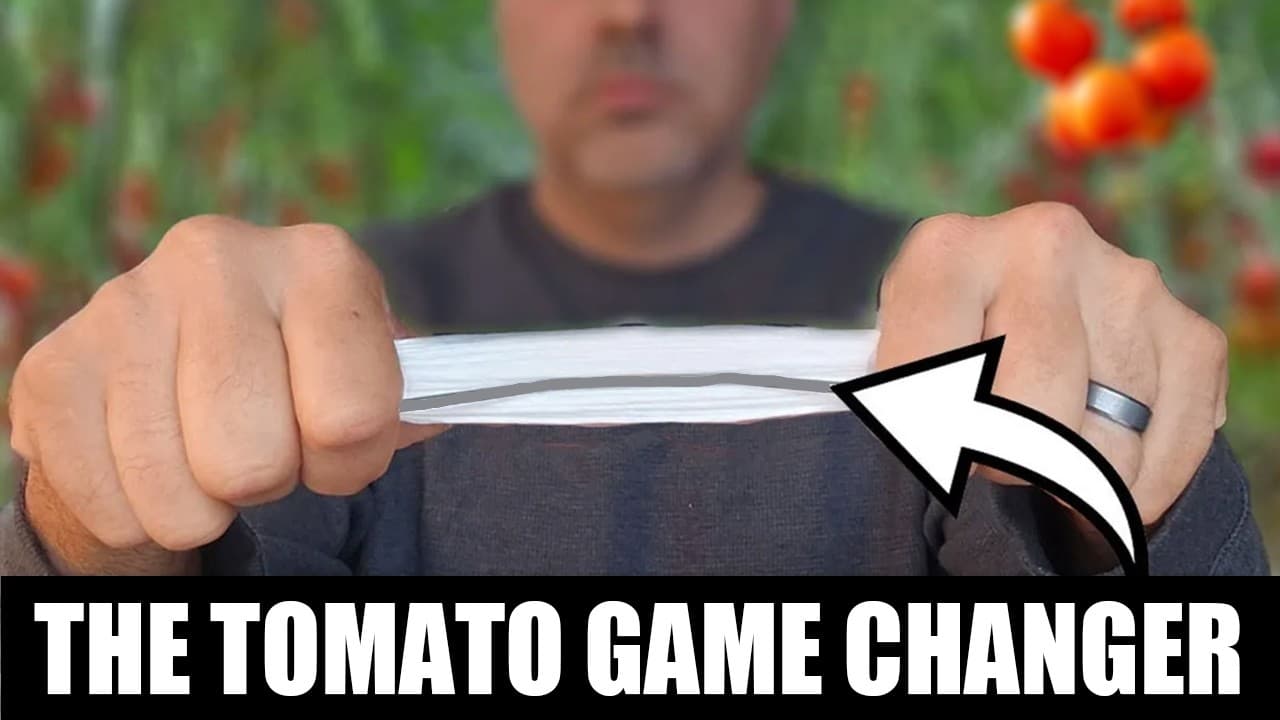
The single stem string trellising system works on one principle: one plant, one stem, all energy going up and into fruit. Every side shoot — called a sucker — that emerges from the junction between the main stem and a leaf branch gets removed. What's left is a single vertical leader that the plant winds around a taut string as it grows. No clips, no ties, no fussing. The string does the structural work; the pruning does the metabolic work. Commercial growers have used this for decades because it scales, it's predictable, and it produces. The fact that home gardeners are only now catching on says more about how gardening advice gets passed down than about the difficulty of the technique.
Airflow Is Doing More Work Than You Think
One of the less obvious benefits of the single-stem system is what happens to the space around the plant. With only one stem growing vertically, air moves freely through the growing area, which keeps foliage drier and dramatically reduces the conditions that fungal diseases need to establish. You can also actually see the plant — spot early pest damage, identify yellowing leaves, catch problems before they spread. It's a small thing until you've lost a crop to something you didn't notice until it was too late.
Building the Support Structure
The vertical system needs a string positioned directly above each plant — not offset, not approximate, directly above. The string runs from an overhead horizontal bar down to the base of the plant, where it's either buried a few inches or pinned with a landscape staple. Tension matters: a slack string won't support the plant as it climbs and won't give it anything to grip. The plant winds around the string naturally as it grows, which means no clips, no weekly tying sessions, no hardware. Spacing between plants in this system drops to 12 to 18 inches — significantly tighter than traditional methods — because the vertical orientation means plants aren't competing for horizontal light.
The String Placement Detail Most People Get Wrong
Positioning the string directly above the plant isn't just aesthetic — it determines whether the plant grows straight or leans, and a leaning plant puts uneven stress on the stem as it winds. Get this wrong at planting and you're correcting it all season. It's the kind of setup detail that sounds fussy until you understand why it matters, and then it sounds obvious. If you're the type who thinks carefully about how plant starts are established before they ever go in the ground, this will feel like a natural extension of that thinking.
Sucker Removal: The Weekly Non-Negotiable
Suckers grow fast. Miss a week and a small, easily-snapped shoot becomes a woody secondary stem that takes real effort to remove without damaging the plant. The maintenance schedule for this system is weekly, and the task itself is quick — a few minutes per plant once you know what you're looking for. The sucker emerges from the axil, the junction between the main stem and a leaf branch. Remove it when it's small, ideally by pinching with your fingers. The plant redirects that energy upward and into the fruit clusters already forming on the main stem. It's repetitive in the way that good maintenance always is — not exciting, but the reason the system works.
Tomato Hooks and the Continuous Harvest
In climates with long growing seasons — USDA hardiness zones 7 through 11 — a tomato plant trained to a fixed string will eventually reach the top of its support structure and stop. Tomato hooks solve this by allowing the string to be released and the entire plant lowered incrementally, creating slack at the top for continued upward growth. The bottom of the plant, now closer to the ground, can be allowed to rest on the soil or a clean surface. The result is a single vine that keeps producing fruit for a dramatically extended period rather than hitting a ceiling and stalling. For gardeners in shorter-season climates, this is less critical — but for anyone in a warm zone, skipping the hooks means leaving a significant portion of the season's potential on the table.
Which Tomatoes Actually Qualify
This is where the method gets selective. Single stem string trellising is built for indeterminate tomato varieties — the ones that keep growing and producing until frost kills them. Determinate varieties are genetically programmed to reach a fixed height, set their fruit all at once, and stop. Training a determinate tomato to a single stem doesn't extend its season or increase its yield; it just makes the plant smaller and more confused. Cherry tomatoes are a separate case: their side shoots actually contribute meaningfully to fruit production, so removing them costs you harvest rather than adding to it. The system is powerful, but it's not universal, and applying it to the wrong variety will produce worse results than doing nothing. If you're still figuring out which varieties to start with, the same careful thinking that goes into starting seeds indoors for optimal results applies here — variety selection is upstream of everything else.
Our Analysis: The video makes a compelling case for single stem trellising, but it glosses over the learning curve on sucker identification. For a first-season grower, distinguishing a sucker from a flowering branch is genuinely confusing, and removing the wrong growth — especially early in the season — can set a plant back weeks. A method that depends on weekly precision pruning needs to spend more time on what not to cut, not just what to remove.
There's also something worth sitting with in the 500-tomato claim. That number comes from a specific setup, a specific season, and a specific variety — none of which are detailed clearly enough to be replicable. It's a real result, probably, but presenting it as the benchmark for what this method delivers sets expectations that most first attempts won't meet, which is how people conclude the technique failed when the conditions just weren't matched.
What the video does get right — and what often gets buried in technique-focused gardening content — is the systems thinking underneath the method. Single stem trellising isn't just a trellis choice; it's a decision about how you want to manage energy, space, and time across an entire season. Home gardeners who adopt it aren't just changing how they support a plant; they're committing to a different relationship with the garden, one that requires showing up weekly rather than periodically. That's a bigger ask than the video fully acknowledges, and it's probably why the technique stays confined to commercial operations and enthusiast circles despite being genuinely accessible. The barrier isn't complexity — it's consistency.
Frequently Asked Questions
What is the single stem tomato trellising method and how does it work?
How do commercial tomato growers get so many tomatoes from a small space?
How often do you need to remove tomato suckers, and what happens if you miss a week?
Does growing tomatoes vertically on a single stem actually reduce disease?
Does the single stem string trellising method work for all tomato varieties?
Based on viewer questions and search trends. These answers reflect our editorial analysis. We may be wrong.
Source: Based on a video by Next Level Gardening — Watch original video
This article was created by NoTime2Watch's editorial team using AI-assisted research. All content includes substantial original analysis and is reviewed for accuracy before publication.