What to Plant in May Garden: 13 Crops for Your Best Harvest Yet
Key Takeaways
- •May is prime time for planting watermelons, basil, dill, garlic chives, summer squash, arugula, hot peppers, beets, carrots, zinnias, and portulaca — if soil temps are above 45°F for root crops.
- •Hot peppers need partial shade during peak midday sun, but too much shade has been shown to drastically cut yields — it's a narrow window to get right.
- •Garlic chives pull double duty: their strong odor deters Japanese beetles and other pests, while their fibrous roots suppress weeds and retain moisture as ground cover around fruit trees.
13 Best Crops to Plant in May
May is one of those months where the garden can genuinely get away from you — in the best possible way. Soil temperatures are climbing, frost risk is dropping, and the window for planting both cool-season holdovers and warm-season heavyweights is wide open. In a recent video, Epic Gardening runs through 13 specific crops worth getting in the ground right now, with enough variety detail to actually be useful rather than just aspirational.
Watermelon Varieties Worth Growing
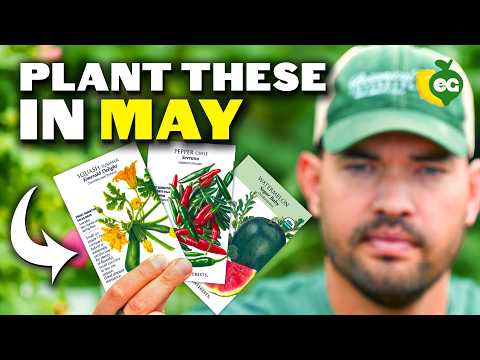
Watermelon gets top billing, and it earns it. Epic Gardening recommends planting in mounds to give the vines room to sprawl, and highlights four distinct varieties depending on what you're after. In 13 Crops You Can Start In May RIGHT NOW!, the breakdown covers "Cream of Saskatchewan for smaller harvests with an unusual color profile, Crimson Sweet as the reliable classic, Charleston Gray for disease resistance, and Mountain Sweet Yellow for vibrant flesh." The advice to harvest field-warm is the kind of detail that sounds small until you've actually done it.
Cream of Saskatchewan vs. Crimson Sweet vs. Charleston Gray
The variety breakdown matters more than it might seem. Cream of Saskatchewan suits gardeners with shorter seasons or limited space. Crimson Sweet is the crowd-pleaser for a reason — high sugar content, large fruit, wide adaptability. Charleston Gray is the practical choice if disease pressure is a real concern in your region. Mountain Sweet Yellow is the wildcard, and honestly the most interesting one to try if you have the room. Choosing between them isn't just aesthetic — it's about matching the variety to your actual growing conditions.
Herbs to Plant in May for Culinary and Garden Benefits
Dill as a Companion Plant and Pollinator Attractor
Dill is doing more work in the garden than most people give it credit for. Beyond the obvious culinary uses — fresh fronds, dried seeds — it actively draws in beneficial insects including butterflies and ladybugs. Bouquet dill is flagged for its showy flowers and its role supporting caterpillars, while Tetra dill is the better pick if you want leafy growth for cooking. As we explored in direct sowing vegetables in spring, herbs like dill are often better started directly in the ground than fussed over indoors. The dual-use angle — herb and spice from the same plant — is the kind of efficiency a small garden genuinely benefits from.
Growing Basil from Seed in May
Basil is straightforward if you respect its preferences. Epic Gardening recommends shallow planting in moist, sifted potting mix, with a warm and sheltered spot for germination. Italian Genovese is the standard for a reason — intense aroma, reliable performance. Holy Basil (Tulsi) and Thai Basil both bring distinct flavor profiles that transform specific cuisines in ways the Genovese variety simply can't replicate. The continuous harvesting tip — cutting regularly to prevent bolting — is the difference between a plant that lasts the season and one that gives up in July. Basil rewards attention, and May is exactly the right moment to start giving it some.
Using Garlic Chives for Natural Pest Control
Garlic chives are the underrated workhorse of companion planting. Their strong odor is genuinely off-putting to Japanese beetles, making them a practical planting choice around fruit trees where beetle pressure tends to concentrate. As ground cover, they suppress weeds and help retain soil moisture — particularly valuable in hot climates where bare soil bakes and dries out fast. Their fibrous root system also adapts well across different soil types, which means they're not fussy about where you put them. The fact that they're perennial makes this a one-time planting decision with compounding returns, which is the kind of math that makes sense in any garden. If you're thinking longer-term about food production, the approach families use to grow the majority of their groceries at home leans heavily on exactly this kind of perennial infrastructure.
Hot Pepper Planting Tips for May
Shade Requirements for Hot Peppers
Hot peppers are sun-lovers with a limit. Epic Gardening makes the case for offering some shade during the most intense midday hours — enough to prevent stress and sun damage, but not so much that you tank the plant's productivity. A prior experiment cited in the video confirmed that excessive shading causes a dramatic drop in yield, which means this is a calibration exercise, not a binary choice. Habanero and Scotch Bonnet are the specific varieties recommended for gardeners who want serious heat, and both benefit from this careful light management during establishment. The shade advice sounds counterintuitive for a heat-loving crop right up until you've watched a pepper plant wilt and stall in August.
Summer Vegetables to Start in May
Slow-Bolt Arugula and Summer Squash Varieties
Summer squash has a reputation for overwhelming gardeners, and it's earned. Epic Gardening's answer is to choose varieties worth eating — Emerald Delight zucchini and Early Prolific Straightneck yellow squash — and harvest them young before they hit the size where they become a problem. Staking the plants improves airflow, cuts disease risk, and makes harvesting less of a treasure hunt through dense foliage. Slow-bolt arugula is the smart play for continuous harvesting: succession planting keeps it coming, and it tucks in well around larger crops like tomatoes. For cool-season root vegetables like Touchstone Gold beets and Carnival Blend carrots, the threshold is soil temperature above 45°F — hit that and May planting is entirely viable even with a late frost date. The combination of zinnias for pollinators and portulaca for arid ground cover rounds out a planting list that covers a genuinely wide range of garden conditions. If you're running vertical space alongside all of this, the single-stem tomato trellising method is worth considering to keep things manageable.
Where to Buy Seeds for May Planting
All the varieties mentioned throughout the video are available through Botanical Interests — both via botanicalinterests.com and through a wide network of physical retail stores. For a video covering this many specific cultivars, having a single reliable source for the seeds is genuinely useful rather than leaving viewers to hunt across multiple suppliers.
The video is solid practical content, but it's quietly optimistic about how much a single gardener can realistically manage. Thirteen crops planted simultaneously in May means thirteen different watering schedules, pest profiles, and harvest windows converging in June and July. The companion planting advice — garlic chives near fruit trees, dill near brassicas — is genuinely useful, but it assumes a level of spatial planning that the video never quite addresses. Most people watching this will plant half the list and wonder why the other half underperformed.
The shade guidance for hot peppers is the most practically nuanced moment in the video, and it's buried near the end. The finding that too much shade tanks yield is the kind of hard-won experimental result that deserves more than a passing mention — it's the difference between a tip and actual gardening knowledge. That detail alone is worth more than three of the variety recommendations.
Frequently Asked Questions
What should I plant in my May garden for a successful summer harvest?
Is mid-May too late to start planting a garden?
What is the 70/30 rule in gardening?
Do garlic chives actually repel Japanese beetles, or is that overstated?
What's the difference between Italian Genovese, Holy Basil, and Thai Basil for home gardeners?
Based on viewer questions and search trends. These answers reflect our editorial analysis. We may be wrong.
Source: Based on a video by Epic Gardening — Watch original video
This article was created by NoTime2Watch's editorial team using AI-assisted research. All content includes substantial original analysis and is reviewed for accuracy before publication.