Jake Paul boxing career accusations lawsuits: Paul to Sue
Key Takeaways
- •Jake Paul is pursuing lawsuits against people who've publicly claimed his boxing matches were rigged or that he uses steroids, betting that legal discovery will force accusers to produce actual evidence.
- •Paul argues that media narratives — not reality — drive most public perception of celebrities, using a chance encounter with Jeff Bezos as his proof of concept.
- •He's planning a foundation to support parents of autistic children, citing personal family connections as the motivation.
Jake Paul's Legal Battle Against Boxing Accusations
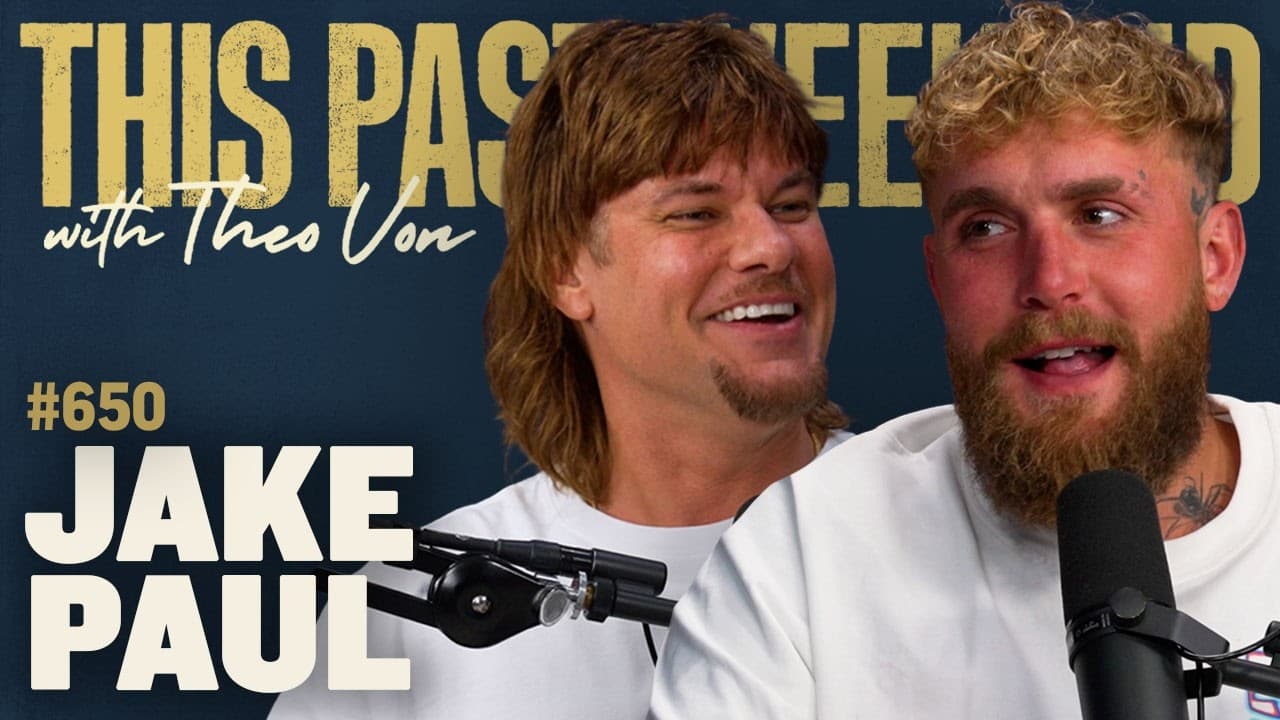
The accusations have been loud and consistent: Jake Paul's boxing matches are staged, and he's chemically assisted. Paul's response, as he laid out on Jake Paul | This Past Weekend w/ Theo Von #650, isn't to argue on Twitter. It's to sue. His reasoning is straightforward — social media lets people say anything without consequence, but a courtroom requires evidence. He believes the discovery process will expose accusers who have nothing factual to back their claims.
Rigged Fights Allegations and Court Response
Paul describes the rigged fight narrative as one of the more persistent pieces of misinformation attached to his boxing career. He frames the lawsuits not as a defensive move but as an offensive one — a way to drag the conversation into a space where speculation has to become proof or disappear entirely. Whether that strategy actually works in court is a separate question, but as a PR posture, it's a harder target to mock than a tweet.
Steroid Use Claims and Defense
The steroid allegations seem to bother him more than the rigging claims, which tracks — one questions his business, the other questions his body and his work ethic. He told Theo Von that his training commitment makes the accusation particularly offensive, and that he sees litigation as the only mechanism that forces accusers to either substantiate or retract. It's the kind of frustration that's hard to fake, even if the legal outcomes remain to be seen.
How Jake Paul is Combating False Narratives in Boxing
Paul's broader argument is that the information environment around boxing — and celebrity sports more generally — has become so entertainment-driven that truth is basically optional. He and Von discussed how the hunger for views pushes creators toward sensationalism, which means a dramatic accusation travels faster and further than a boring correction. Paul's answer to this is to make the accusation expensive. As we've seen in other corners of media criticism, as Kurtis Conner explores with performative masculinity on social media, the gap between a public persona and the actual person underneath it can be enormous — and the audience rarely goes looking for the difference.
Media Misconceptions vs. Reality in Professional Boxing
Paul used a story about running into Jeff Bezos at a summit — specifically, finding themselves at adjacent urinals — to make a point about how completely media images can detach from the actual human being. His takeaway was that Bezos is just a person, and that the towering public construction of him has almost nothing to do with that reality. It's a small anecdote doing a lot of philosophical lifting, but the underlying point about celebrity perception is genuinely worth sitting with.
The Role of Conspiracy Theories in Sports Criticism
Von and Paul landed on a diagnosis for why boxing conspiracy theories stick: people don't trust mainstream sports media, they're bored, and a dramatic narrative about a rigged fight is simply more entertaining than the mundane truth of two people training and competing. The distrust isn't irrational — corporate media has earned a lot of skepticism — but it creates a vacuum that gets filled with whatever is most compelling rather than most accurate. The irony is that Paul, who built his entire early career on being a spectacle, is now frustrated that people won't take him seriously as an athlete. He made that bed.
Jake Paul's MVP Promotion and Boxing Credibility
Beyond his own fights, Paul has been building MVP, his boxing promotion, as a longer-term play for credibility in the sport. He mentioned a Netflix MMA card on May 16 as part of that broader push. The legal battles over his personal reputation feed directly into this — a promoter who can't shake accusations of staging fights has a credibility problem that extends to every event on his card. Clearing his name isn't just personal; it's structural to the business. For a comparison in how public figures navigate the gap between their constructed image and audience expectations, the Lex Fridman and Rick Beato conversation on skill development shows a very different model — one built on demonstrated craft rather than spectacle.
Paul's lawsuit strategy is interesting precisely because it's not obviously correct. Suing for defamation over sports commentary is a high bar — opinion is generally protected, and "I think this fight was fixed" sits uncomfortably close to protected speech territory. If the suits get dismissed early, he's handed his critics a win that's more damaging than the original accusation. The courtroom-as-truth-machine framing only works if the courtroom actually delivers.
What the conversation on Von's podcast doesn't really grapple with is that Paul's credibility problem is partly self-inflicted. He spent years manufacturing controversy for clicks, which trained his audience to treat everything he does as performance. Asking that same audience to now evaluate him as a serious athlete requires them to unlearn a behavior he deliberately cultivated. Lawsuits won't fix that.
Frequently Asked Questions
What are the legal issues with Jake Paul?
How much did Matchroom or Netflix sue Jake Paul for?
What specific accusations has Jake Paul faced in his boxing career, and how is he responding legally?
Is Jake Paul's MVP promotion legitimate, or is it tied to his boxing controversy?
Why do boxing conspiracy theories about Jake Paul keep spreading?
Based on viewer questions and search trends. These answers reflect our editorial analysis. We may be wrong.
Source: Based on a video by Theo Von — Watch original video
This article was created by NoTime2Watch's editorial team using AI-assisted research. All content includes substantial original analysis and is reviewed for accuracy before publication.
Related Articles


You Might Also Like
May 1
Faith | Theo Von's Prayer: Spiritual Transformation, Fear of Change, Christianity
Apr 24
Life Stories | Rogan & Gomez: content moderation YouTube pandemic lab leak
Apr 21
Life Stories | Alex's 331 Days: The Unseen Battles of Sobriety Recovery Early Stages

Apr 17
Life Stories | Cystinosis genetic disorder symptoms treatment: Hannah's Story